






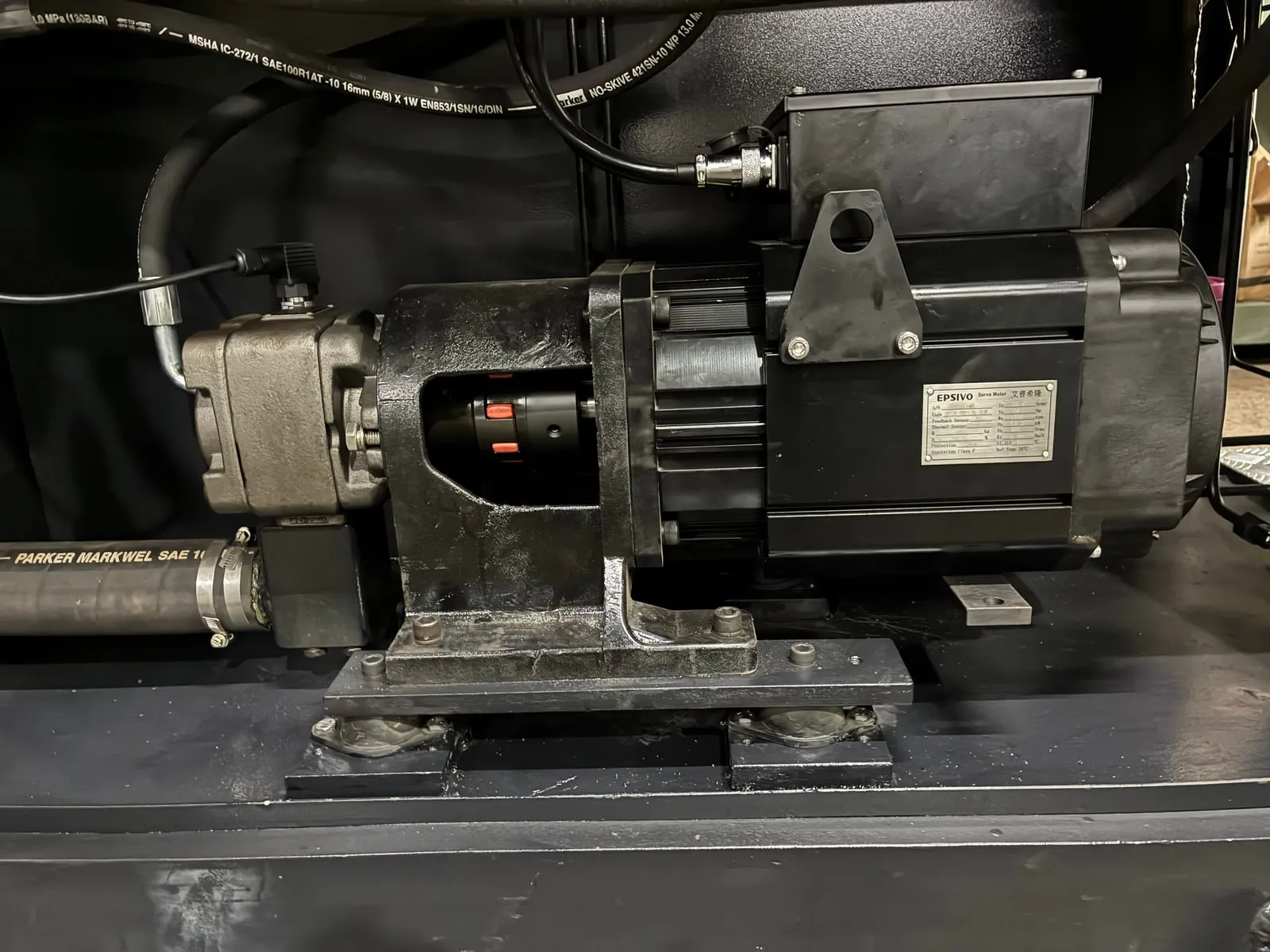
Two Platen Injection Moulding Machines (PHM Series)
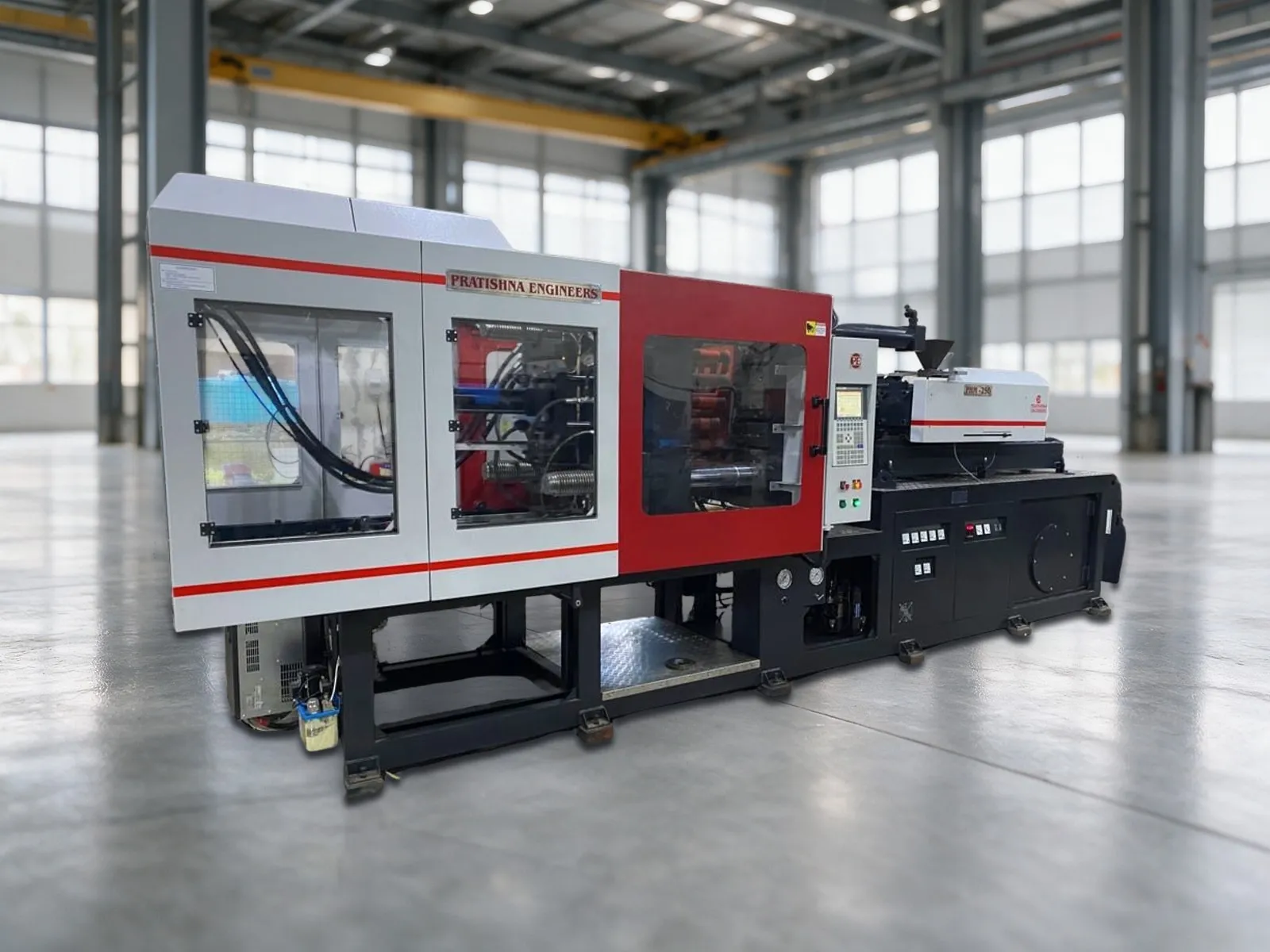
Pratishna Engineers builds PHM Series two platen injection moulding machines widely used for producing large plastic parts such as buckets, crates, dustbins, storage boxes, chairs, stools, battery containers and appliance housings. A two platen machine uses a fixed platen and a moving platen, with the clamping force applied directly at the tie bars, so it can open wide for deep moulds while taking less floor space than a toggle machine of similar tonnage.
Pratishna Engineers is one of the top and trusted two platen injection moulding machine manufacturers in India. Based in Mumbai, the company brings 35+ years of machine-building experience and has supplied 9,000+ machines to 1,000+ customers, and its hydro-mechanical two platen machines were among the first of their kind developed in India, backed by in-house engineering and after-sales support.
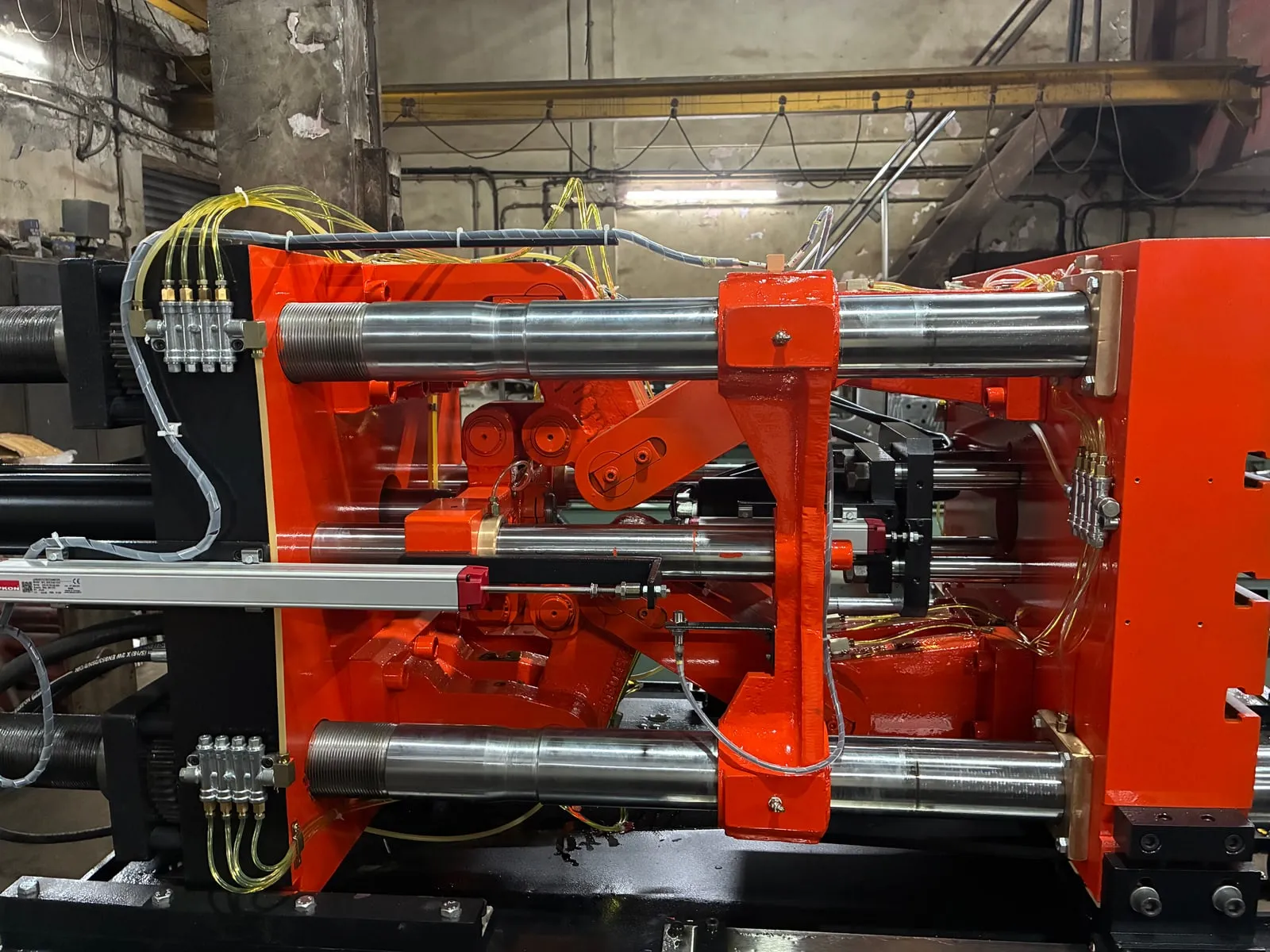
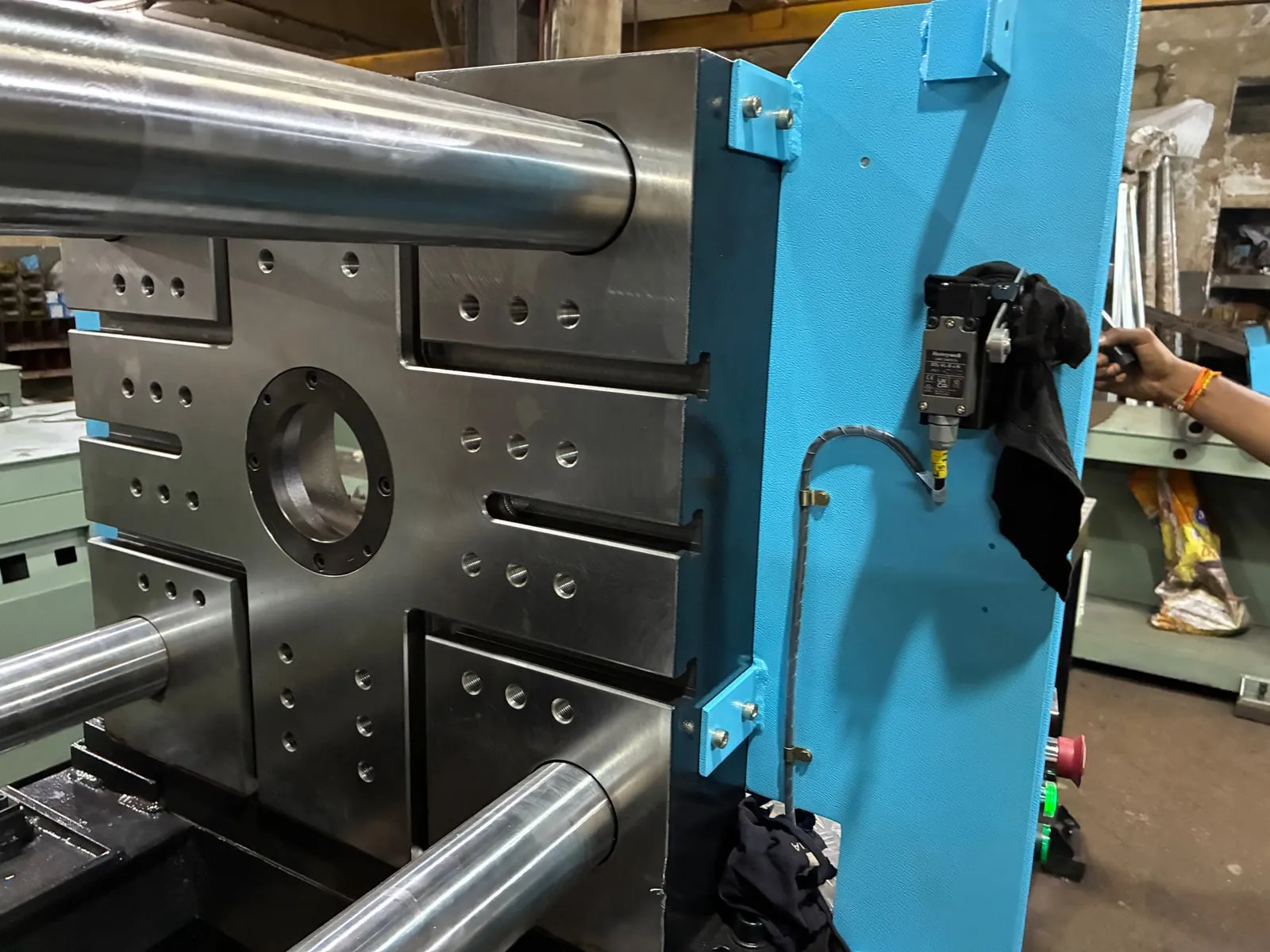
The PHM Series uses hydro-mechanical locking, which applies balanced clamping force across the mould face and reduces corner flash on large, flat parts. The moving platen runs on a linear motion guide, which avoids guide pin wear and keeps the platens parallel. On the models from 160 to 350 tons, mould clamping stroke ranges from 1000 to 1350 mm, daylight opening from 1225 to 1650 mm and platen size up to 1195 × 1250 mm, with longer ejector strokes and higher ejector force than a comparable toggle machine.
The right PHM model depends on the projected area of the part, mould size and height, opening stroke needed to release the part, shot weight and output. Share your product, mould dimensions and production requirement with Pratishna Engineers to identify a suitable two platen injection moulding machine.
- Clamping force
- 160 – 350 T
- Models
- 5
- Hydro-mechanical clamp
- Two-platen
Looking for a Two Platen Injection Moulding Machine Manufacturer?
Contact Pratishna Engineers to discuss your plastic injection moulding requirements and request machine specifications, application guidance and a quotation.
Two Platen Injection Moulding Machines by Tonnage
The PHM Series is available in four clamping-force options: 160, 200, 250 and 350 tons. The 160 to 350 ton models each offer two screw options, so shot weight and injection pressure can be matched to the part, with maximum shot weight from 343 to 1492 g (PS).
Select a model by projected area, mould size, mould height and opening stroke. Clamp force and opening stroke can be increased on demand for applications that need more than the standard specification.
Two Platen specifications by model
Two build variants (A / B) are offered per model; injection-side figures below span both.
Locking unit | PHM-160 | PHM-200 | PHM-250 | PHM-350 | |
|---|---|---|---|---|---|
| Specification | Unit | ||||
| Mould clamping force | Tons | 160 | 200 | 250 | 350 |
| Mould clamping stroke | mm | 1000 | 1100 | 1150 | 1350 |
| Mould thickness (min – max) | mm | 225 – 645 | 240 – 655 | 250 – 700 | 300 – 800 |
| Max. daylight opening | mm | 1225 | 1340 | 1400 | 1650 |
| Space between tie bars (H × V) | mm | 460 × 440 | 560 × 540 | 640 × 640 | 720 × 720 |
| Platen size | mm | 800 × 815 | 935 × 960 | 1080 × 1128 | 1195 × 1250 |
Injection unit | PHM-160 | PHM-200 | PHM-250 | PHM-350 | |
|---|---|---|---|---|---|
| Specification | Unit | ||||
| Screw diameter | mm | 45 – 50 | 55 – 60 | 65 – 70 | 75 – 80 |
| Max. shot weight (PS) | g | 343 – 424 | 588 – 700 | 836 – 969 | 1311 – 1492 |
| Rate of injection | cc/sec | 143 – 177 | 214 – 254 | 325 – 377 | 406 – 462 |
Hydraulic ejector | PHM-160 | PHM-200 | PHM-250 | PHM-350 | |
|---|---|---|---|---|---|
| Specification | Unit | ||||
| Ejector stroke | mm | 150 | 200 | 200 | 250 |
| Ejector force | Tons | 7.5 | 7.5 | 9.5 | 12 |
General | PHM-160 | PHM-200 | PHM-250 | PHM-350 | |
|---|---|---|---|---|---|
| Specification | Unit | ||||
| Servo driven pump | kW | 24.1 | 31.4 | 36.1 | 48.2 |
| Heating capacity | kW | 14.5 | 19.2 | 26.1 | 32.8 |
| Total connected load | kW | 38.6 | 50.6 | 62.2 | 81.0 |
| Tank capacity | Litres | 440 | 550 | 770 | 1000 |
Looking for the Right Injection Moulding Machine?
Tell us your production requirements and get a suitable Pratishna machine recommendation.
Why Choose Pratishna Engineers?
- Application-Based Machine Selection
- In-House Engineering & Manufacturing
- Multiple Machine Series
- Production-Focused Solutions
- End-to-End Technical Support
- Industry-Specific Solutions
- Machine Lifecycle Support
About Pratishna Engineers: Injection Moulding Machine Manufacturer in India
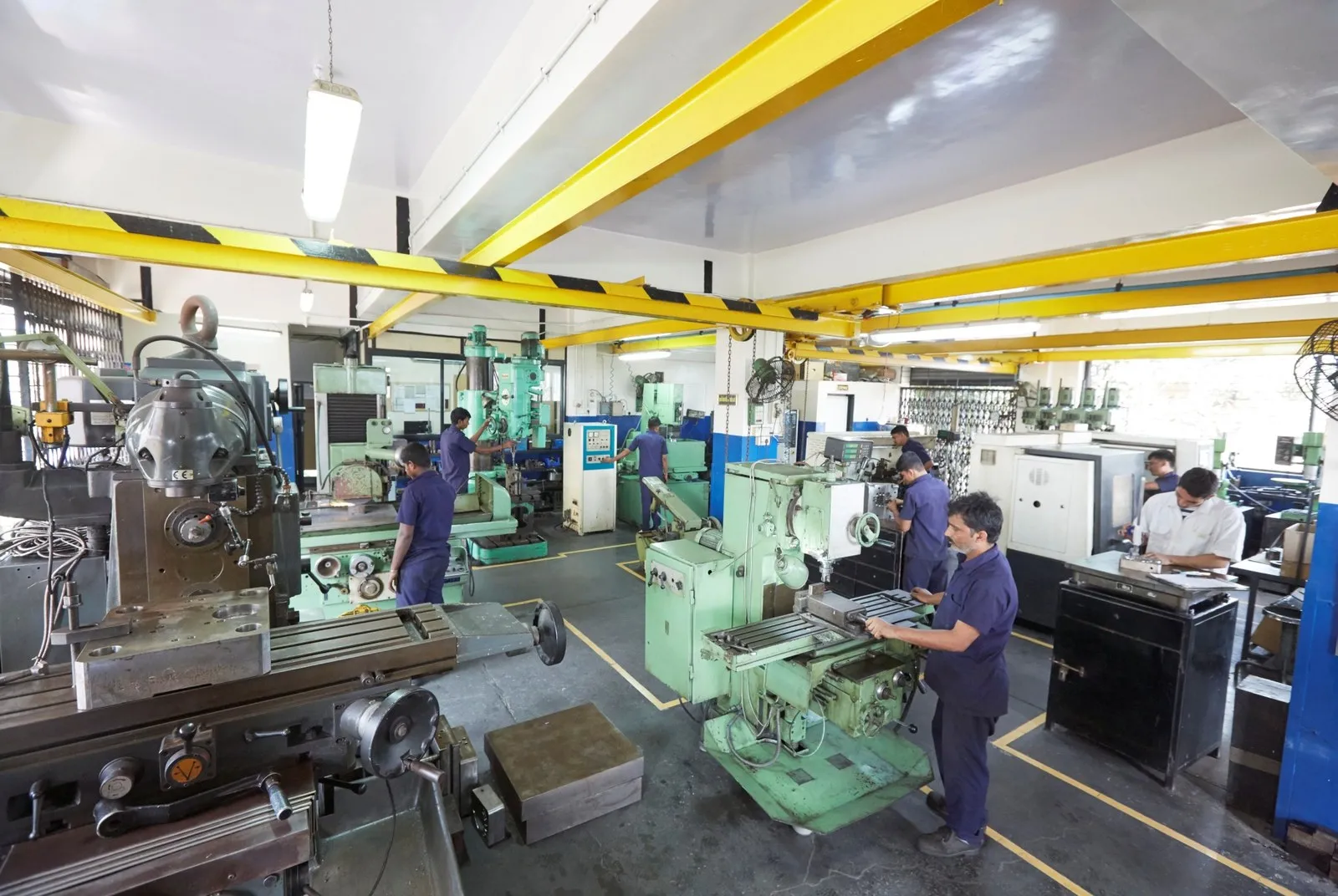
Pratishna Engineers Limited is a Mumbai-based manufacturer of plastic injection moulding machines in India, with 35+ years of machine-building experience. The company has in-house capabilities for machine design, manufacturing, assembly, testing and service, providing injection moulding solutions for different plastic processing requirements.
Pratishna Engineers manufactures horizontal, PET, special purpose, two-platen (PHM Series), hybrid and vertical injection moulding machines. Machines are configured according to the plastic component, mould, material, production volume and application requirements.
With 9,000+ machines supplied to 1,000+ customers, Pratishna Engineers serves manufacturers across automotive, packaging, electrical and electronics, medical, consumer products, agriculture and industrial applications in India and international markets.
- 9,000+
- Machines Supplied
- 1,000+
- Customers
- 35+
- Years of Engineering
- 25,000sq. ft.
- Manufacturing Facility
More About Two Platen Injection Moulding Machines

What Is a Two Platen Injection Moulding Machine?
A two platen machine clamps the mould between a fixed platen and a moving platen, with the clamping force applied at the tie bars instead of through a toggle linkage and a third platen.
Read More: What Is a Two Platen Injection Moulding Machine?
How Does Hydro-Mechanical Clamping Work?
The moving platen travels fast to close the mould, then locks mechanically to the tie bars and short-stroke cylinders build the clamping force evenly across the platen.
Read More: How Does Hydro-Mechanical Clamping Work?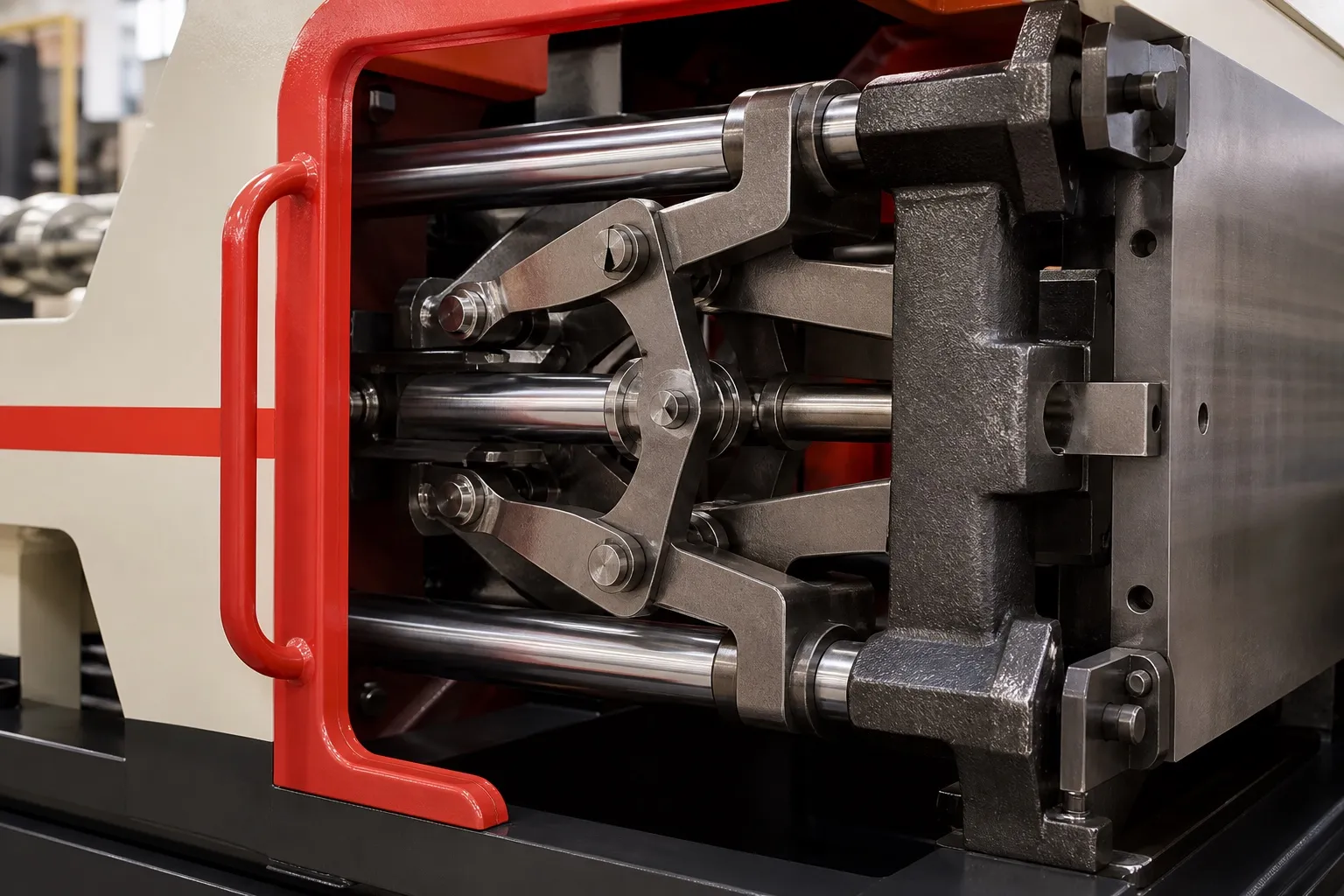
Two Platen vs Toggle Injection Moulding Machines: Key Differences
Two platen machines give a longer opening stroke in a shorter machine and more even clamping force, while toggle machines suit fast cycles on smaller moulds.
Read More: Two Platen vs Toggle Injection Moulding Machines: Key DifferencesImportant Specifications to Consider Before Buying a Two Platen Machine
Clamping force, tie-bar space, platen size, mould thickness range, opening stroke, daylight, shot weight and ejector stroke should all be checked against the mould.
Read More: Important Specifications to Consider Before Buying a Two Platen Machine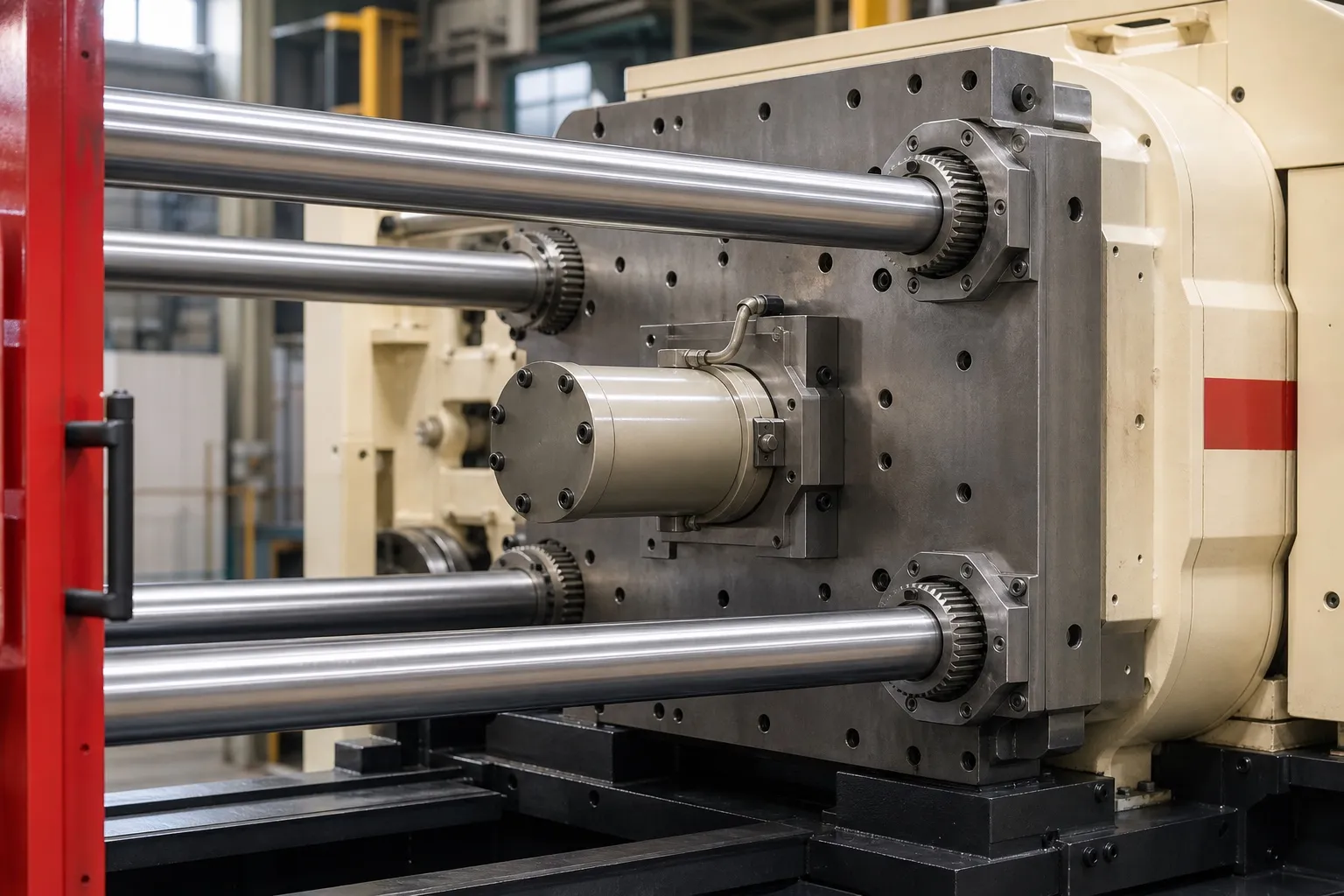
Applications of Two Platen Injection Moulding Machines
Buckets, crates, dustbins, storage boxes, stools, tables, battery containers, appliance housings and other large or deep parts.
Read More: Applications of Two Platen Injection Moulding Machines
Injection Moulding Machine Buyer Resources
Download practical resources to help you select, size and specify the right horizontal injection Moulding machine.
- Image to be provided by client
Two Platen Injection Moulding Machine Brochure
The PHM Series range from 160 to 350 tons, with screw options, clamping and ejector data, controller features and the details needed to request a quotation.
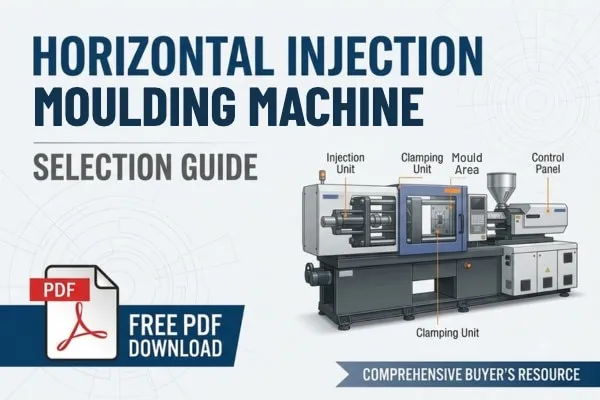
Injection Moulding Machine Selection Guide
A step-by-step guide covering the key inputs needed to select the right machine: product weight, projected area, number of cavities, plastic material, required clamping force, shot / injection capacity, mould dimensions, production quantity, cycle time and automation requirement.
Download PDFPDF · 265 KB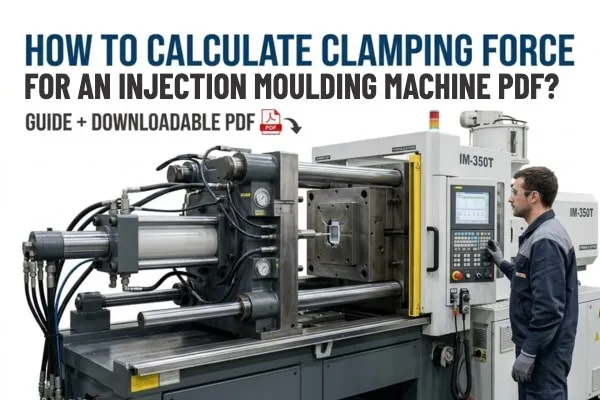
Clamping Force & Shot-Size Calculation Guide
A clear method for calculating the clamping force and shot size your part needs, covering projected area, injection pressure, safety factor, number of cavities, part and runner weight, and material.
Download PDFPDF · 363 KB
FAQs / Buyer Questions
The answers our engineers give most often, before a specification is agreed.
What Is the PHM Series Two Platen Injection Moulding Machine?
It is Pratishna’s range of hydro-mechanical two platen injection moulding machines from 160 to 350 tons, built for large and deep moulds that need high clamping force and a long opening stroke.What Is the Advantage of a Two Platen Machine Over a Toggle Machine?
A two platen machine gives a longer opening stroke and larger daylight in a shorter machine, applies clamping force more evenly across the mould and suits large, flat or deep parts. It also uses less oil than a ram or direct-lock hydraulic machine, which lowers power consumption.Which Products Are Made on Two Platen Machines?
Buckets, crates, dustbins, storage boxes, stools and small tables, battery containers, appliance housings, sharps bins, litter trays and other large parts where projected area or mould depth sets the machine size.Which PHM Model Is Suitable for My Mould?
The model depends on projected area, mould width, height and thickness, the opening stroke needed to release the part and the shot weight. Share the mould drawing and Pratishna Engineers will confirm the model.What Opening Stroke and Platen Size Do PHM Machines Offer?
On the 160 to 350 ton models, mould clamping stroke is 1000 to 1350 mm, daylight opening is 1225 to 1650 mm and platen size ranges from 800 × 815 mm to 1195 × 1250 mm. Opening stroke can be increased on demand.Why Does Balanced Clamping Reduce Flash?
In a two platen machine the clamping force is applied at each tie bar, so the load spreads evenly across the platen. This keeps the mould faces closed at the corners of large parts, where uneven force on other machines can cause flash.
What Controller Is Used on PHM Machines?
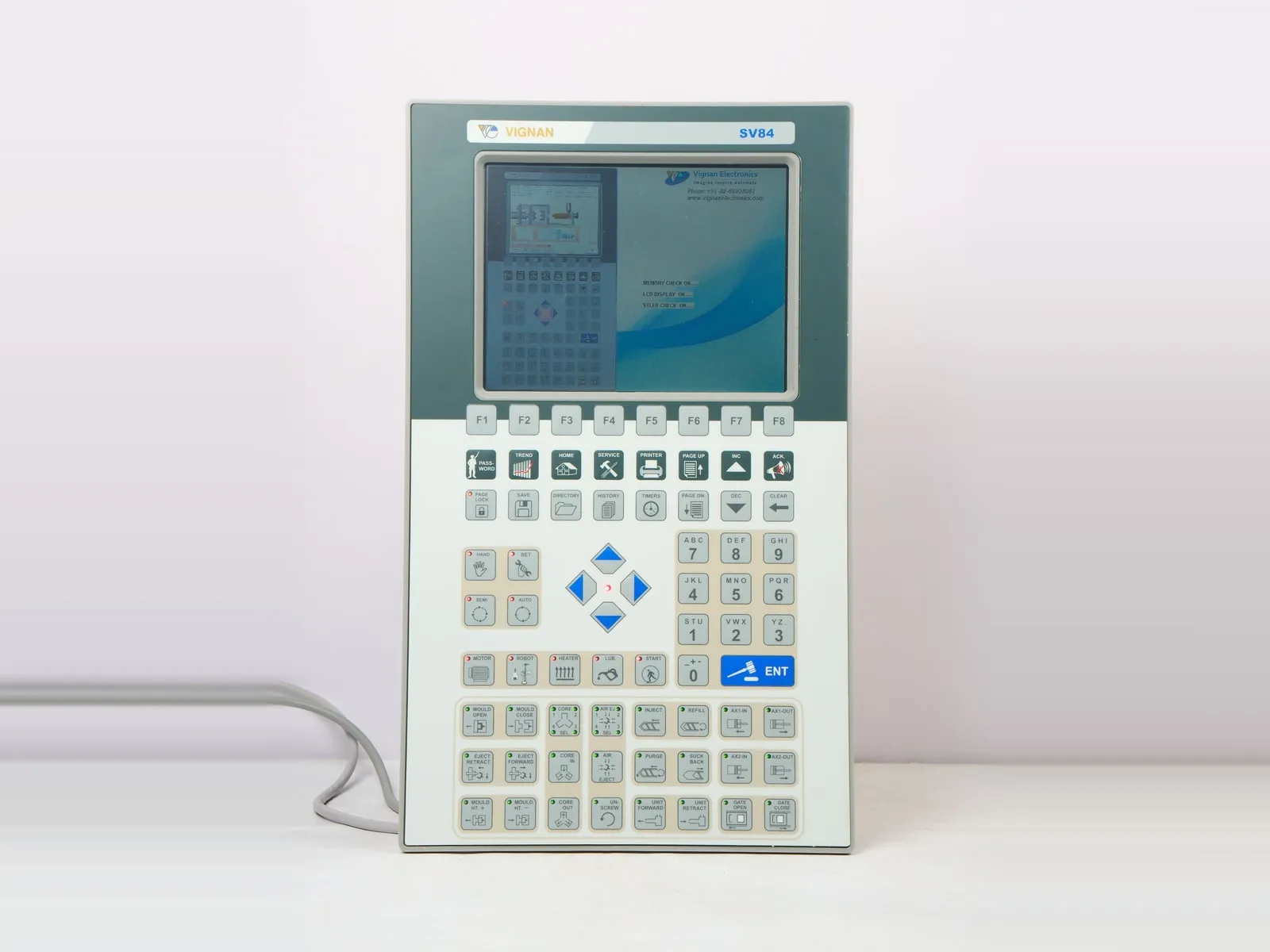
PHM machines use the Vignan SV 84 controller with a 32-bit ARM processor, 1 ms machine scan time, storage for 150 mould programs, USB, Ethernet and RS232 ports and a 2 GB history database. GSM and voice annunciation modules are optional.Can the Clamping Force Be Increased?
Yes. Clamp force and opening stroke can be increased on demand for applications that need more than the standard specification, subject to evaluation of the mould and part.Are PHM Machines Energy Efficient?
Yes. They use a servo-driven pump and need much less oil than ram or direct-lock machines, which lowers power consumption and oil handling.What Is the Price of a Two Platen Injection Moulding Machine?
There is no single fixed price. Cost depends on tonnage, screw option, opening stroke, ejector requirement, automation and other selected features. Pratishna Engineers provides a quotation based on your mould and production requirement.Can Pratishna Check Whether My Existing Mould Will Fit a PHM Machine?
Yes. Share the mould dimensions, mould height, tie-bar requirement, mould weight, opening stroke and ejector requirement, and Pratishna Engineers will check compatibility.Does Pratishna Provide Installation and Operator Training?
Yes. Pratishna Engineers provides installation, commissioning, operator training and after-sales technical support. The exact scope of support is confirmed with the quotation and machine supply terms.
Related Blogs, Guides & Articles
Deep Moulds and Long Opening Strokes: Planning Mould Height and Daylight
Plan mould height and daylight for deep moulds: opening at 2.5 times part height, two platen vs toggle opening, ejector stroke and a worked example.
Hydro-Mechanical Clamping Explained: Balanced Force and Flash-Free Parts
How hydro-mechanical clamping works, why even clamp force cuts flash on large flat parts, and how to set tonnage without crushing vents or cracking moulds.

Moulding Buckets, Crates and Dustbins on Two Platen Machines
Choosing a bucket and crate moulding machine: opening stroke for deep pails and dustbins, clamp force for crates, PP grades and barrel size.
Two Platen vs Toggle Injection Moulding Machines: Which Suits Large Moulds?
Two platen vs toggle for large moulds: compare opening stroke, mould height, clamp force setting, floor space and lock-up speed, with a worked example.
Talk to Our Engineers
Planning a New Injection Moulding Project?
Share your component, material, mould and production target. Our engineering team will help you identify the right machine configuration.
- Machine Sales
- +91 99690 38542
- Service Support
- +91 97689 28259
- Sales Email
- [email protected]