






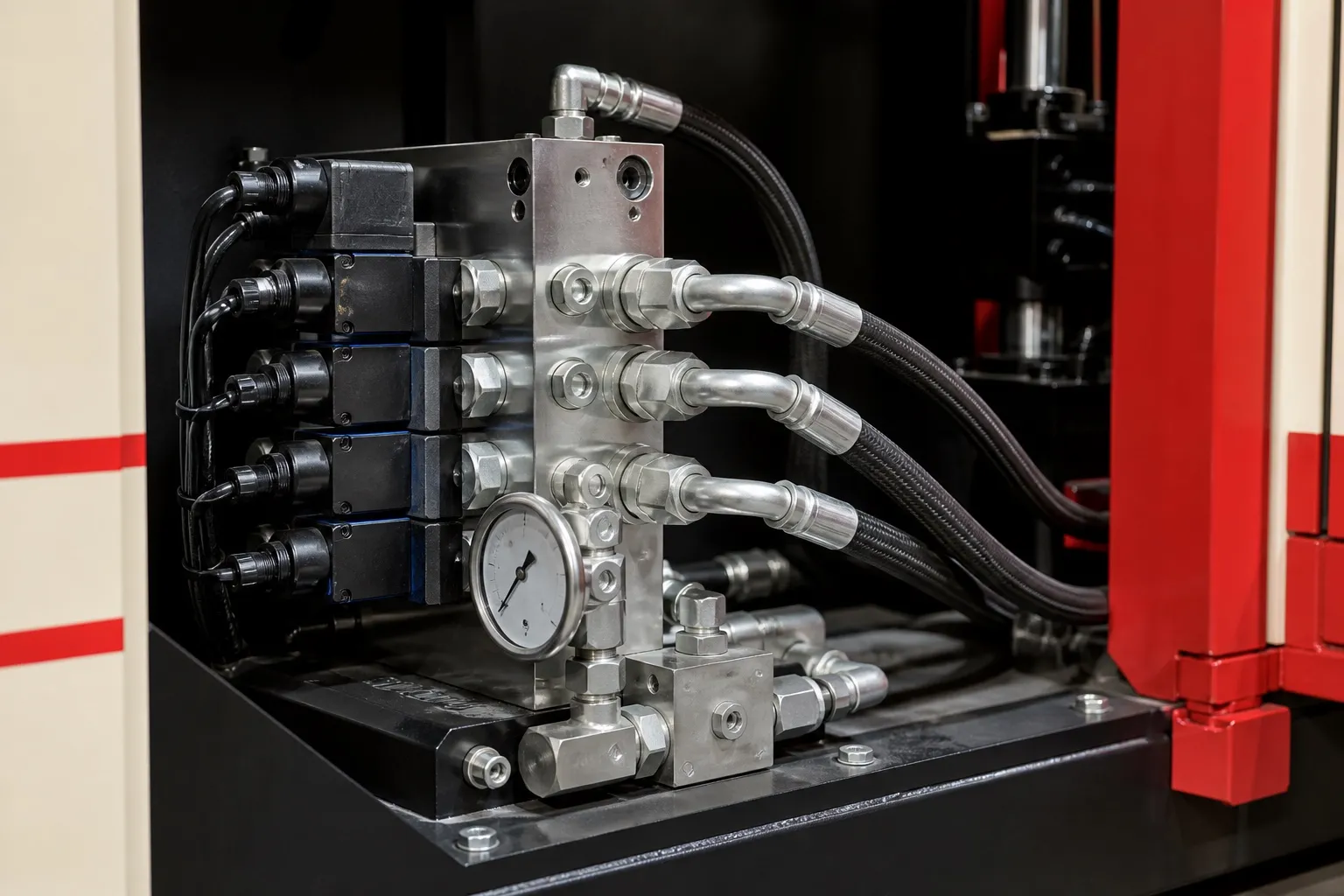

Hydraulic vs electric injection moulding is usually framed as a two-way choice, but a hybrid sits between them. This table gives the short answer before the detail.
Hydraulic, hybrid and all-electric machines at a glance
| Point | Hydraulic | Hybrid (electric injection, hydraulic clamp) | All-electric |
|---|---|---|---|
| Injection drive | Oil pressure on a ram | Servo motor and ball screw | Servo motor and ball screw |
| Clamp drive | Hydraulic | Hydraulic | Servo motor through a mechanism |
| Base load | Can be 75% or more of energy | About 10 to 20% | About 10 to 20% |
| Hydraulic oil | Full system | Clamp side only | None |
| Purchase price | Lowest of the three | Between the two | Highest |
| Repair skills | Hydraulic | Hydraulic and servo | Servo and electronics |
| Strong fit | Large, thick, high-tonnage parts | Precision and multi-cavity parts | Clean, precise small to medium parts |
In short, hydraulic is the low-cost, high-force option. All-electric gives the closest control and no oil, at the highest price. A hybrid puts electric control on the shot and keeps hydraulic clamping, landing between the two on price while matching all-electric machines on base load.
Key Takeaways
- Hydraulic machines cost least to buy, but a standard one can carry a base load of 75% or more of its energy.
- Hybrid and all-electric machines have a base load of about 10 to 20%, mostly barrel heating.
- Pick the drive by the tolerance and part consistency you must hold, then check energy.
- Over ten years, energy usually costs more than the machine, so price the power bill, not just the quotation.
Hydraulic vs electric injection moulding: where does a hybrid sit?
A hybrid takes the electric side of the argument for injection and the hydraulic side for clamping. You get servo control of speed, position and pressure on the shot and a familiar hydraulic clamp for the force, at a purchase price between hydraulic and all-electric machines.
Xometry's machine guide places hybrid prices and maintenance between the other two types. It also describes hydraulic machines as the least expensive, most rugged and easiest to source and repair, and all-electric machines as the usual choice for clean rooms and small to medium medical parts. Hybrid designs vary, so the what is a hybrid article in this series lists what to ask about which motions are electric.
The choice need not be all one type. A plant can run a mix, putting each job on the drive that suits its tolerance, size and running hours, and keeping hydraulic machines for the big, forgiving work.
Which drive uses the least power on your job?
Usually the one with the lowest base load, the power drawn whether or not parts are being made. An energy guide by ExxonMobil, AMI and Tangram puts that at 75% or more on a standard hydraulic machine and about 10 to 20% on hybrid and all-electric machines.
Base load matters because machines do not mould all the time. Energy consultant R. Kent, writing in PlasticsToday, measured idling machines drawing 52% to 97.5% of their full moulding energy, and suggests idle periods longer than 1.5 hours may be cheaper to switch off and restart. A drive that draws power only when it moves wastes less in those gaps.
Hydraulic machines have closed some of the gap. The same guide says modern hydraulic machines are at least 25% more efficient than 1997 machines, and Kent recorded one hydraulic machine using 22% less energy with its variable frequency drive switched on. The guide also warns that a high base load can mean the machine is too large for the job.
Which drive holds tolerance and part weight best?
Electric injection, on a hybrid or an all-electric machine, usually repeats shot weight more closely, because it drives and measures the screw directly instead of through oil. A modern hydraulic machine with good controls holds many tolerances well, so the gain pays only where tolerance is tight.
The mechanics are covered in the ball screw article in this series. Our flat opinion: choose the drive by the tolerance and part consistency you must hold, then check energy. For a shop moulding PP household goods to wide tolerances, a modern servo-pump hydraulic machine is the sensible buy. The hybrid earns its place where shot consistency, not only power, is the problem.
For energy figures, use your own tariff. In Maharashtra, MERC issued an order on 25 March 2026 on MSEDCL's tariff petition after the Bombay High Court and the Supreme Court sent the matter back, affecting HT and LT industrial consumers. Take rates from your latest bill, not an old circular.
What does each drive cost to keep running, beyond power?
Hydraulic machines need oil, filters, seals and oil cooling, and leaks cost both oil and floor safety. All-electric machines need servo drive, encoder and ball screw care. A hybrid needs a smaller version of both, so the deciding factor is often the service skill available near your plant.
Xometry notes that hybrid repairs need technicians familiar with both hydraulic and electric systems, and that hybrid parts may not be readily available. It also says all-electric repairs can be more complex and specialised than hydraulic ones. Before buying, ask which spares are stocked in India, how quickly a servo drive can be replaced, and whether your staff will be trained on both sides.
Oil has a quieter cost too. The water that keeps hydraulic oil at working temperature comes from the plant cooling system, so a smaller hydraulic circuit also lightens the load on cooling towers or chillers.
How should you decide between the three?
List your parts by tonnage, tolerance and running hours. Put large, loose-tolerance parts on hydraulic machines, precision multi-cavity work on hybrid or all-electric machines, and oil-free clean-room jobs on all-electric machines. Then price ten years of energy for each option. See the hybrid injection moulding machine page for hybrid options.
Frequently Asked Questions About Hydraulic, Hybrid and All-Electric Machines
Are all-electric machines always more energy efficient than hydraulic ones?
Not always. A modern hydraulic machine with a variable or servo pump can come close on some jobs, while an old fixed-pump machine can waste a large share of its power at idle. Measure the actual machines on the actual job with a clamp meter and data logger before assuming a saving.
Which machine type needs the least maintenance?
All-electric machines have no hydraulic oil to change or leak, but their servo drives and ball screws need specialised care. Hydraulic machines are the easiest to find parts for and repair. Hybrids need both skill sets. Base the decision on the service support you can get near your plant, not on the drive alone.
Is a hybrid machine worth it for a one-shift plant?
Run the numbers. Fewer running hours mean less energy to save, so the payback stretches. A one-shift plant still benefits if the job needs tight shot consistency or if machines idle often between orders. Use your hours, your tariff and a measured power draw in the ten-year calculation.
Can an old hydraulic machine be upgraded instead of replaced?
Often, on the energy side. Adding a variable frequency drive or a servo pump to the hydraulic system can cut idle losses; Kent recorded one machine using 22% less energy with its drive on. A retrofit does not change how injection is controlled, so shot repeatability stays as it was on the hydraulic machine.
Which type is best for large parts such as crates and buckets?
Usually a hydraulic machine. Large, thick parts need high clamp force and large platens, and their tolerances are wider. The extra cost of electric injection buys little when part weight is high and tolerance generous. Check clamp force, shot capacity and mould fit first, then compare energy across suitable machines.
Related Articles
- What Is a Hybrid Injection Moulding Machine?
- How Does Servo-Electric Injection With a Ball Screw Work?
- Important Specifications to Consider Before Buying a Hybrid Machine
- Applications of Hybrid Injection Moulding Machines
Sources & References
- ExxonMobil, AMI and Tangram Technology: An Energy Saving Guide for Injection Moulders
- PlasticsToday, R. Kent: Getting to know your real energy use and cost (Jan 2010)
- Xometry, D. McClements (updated A. Zidonis): Plastic Injection Molding Machines: Types, Parts, and Uses (updated Mar 2026)
- Deccan Chamber of Commerce, Industries and Agriculture, Pune: Circular No. 085: MERC Order dated 25 March 2026 (27 Mar 2026)
Technical Disclaimer
Disclaimer: The information provided in this document is for general informational and educational purposes only. It is based on technical references and industry information available at the time of preparation and may be subject to change. It does not constitute engineering, technical, commercial or professional advice, nor does it constitute a quotation, specification, warranty or contractual commitment by Pratishna Engineers.
Actual injection moulding machine and process requirements vary according to the component design, material, mould, production volume, machine configuration and operating conditions. The information, examples, calculations and recommendations provided should be independently evaluated and verified for the specific application before making any equipment, process or production decision. Information obtained from third-party sources remains subject to the accuracy and limitations of those sources.
Limitation of Liability: Pratishna Engineers makes no representation or warranty, express or implied, regarding the completeness, accuracy or suitability of the information for any particular application. To the extent permitted by applicable law, Pratishna Engineers shall not be liable for any loss, damage, cost or consequence arising from reliance on or use of the information contained in this document. Final machine selection, configuration and application suitability should be confirmed with Pratishna Engineers based on complete and accurate project requirements.

