
Injection Moulding Machine for Shin Guards
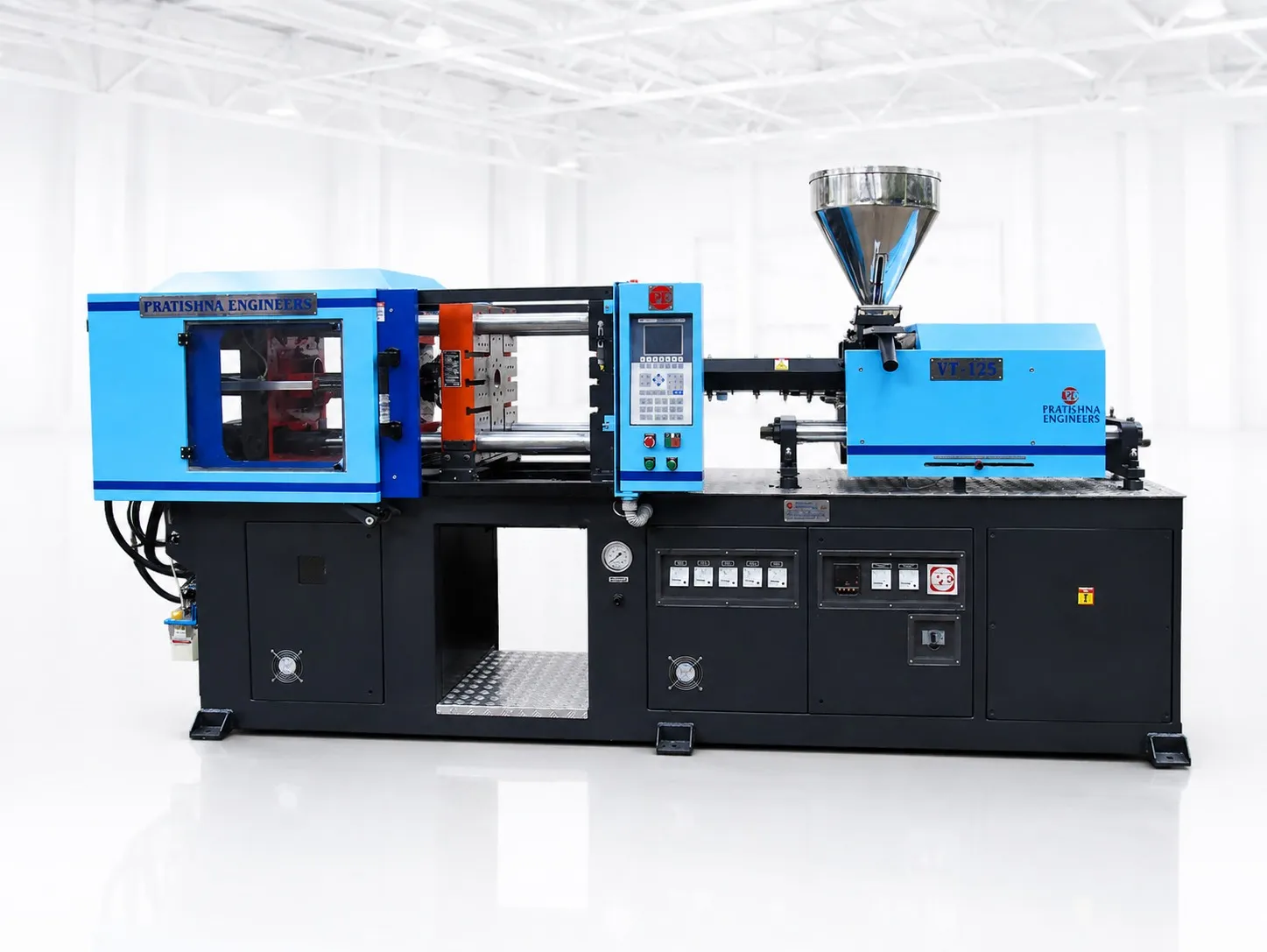
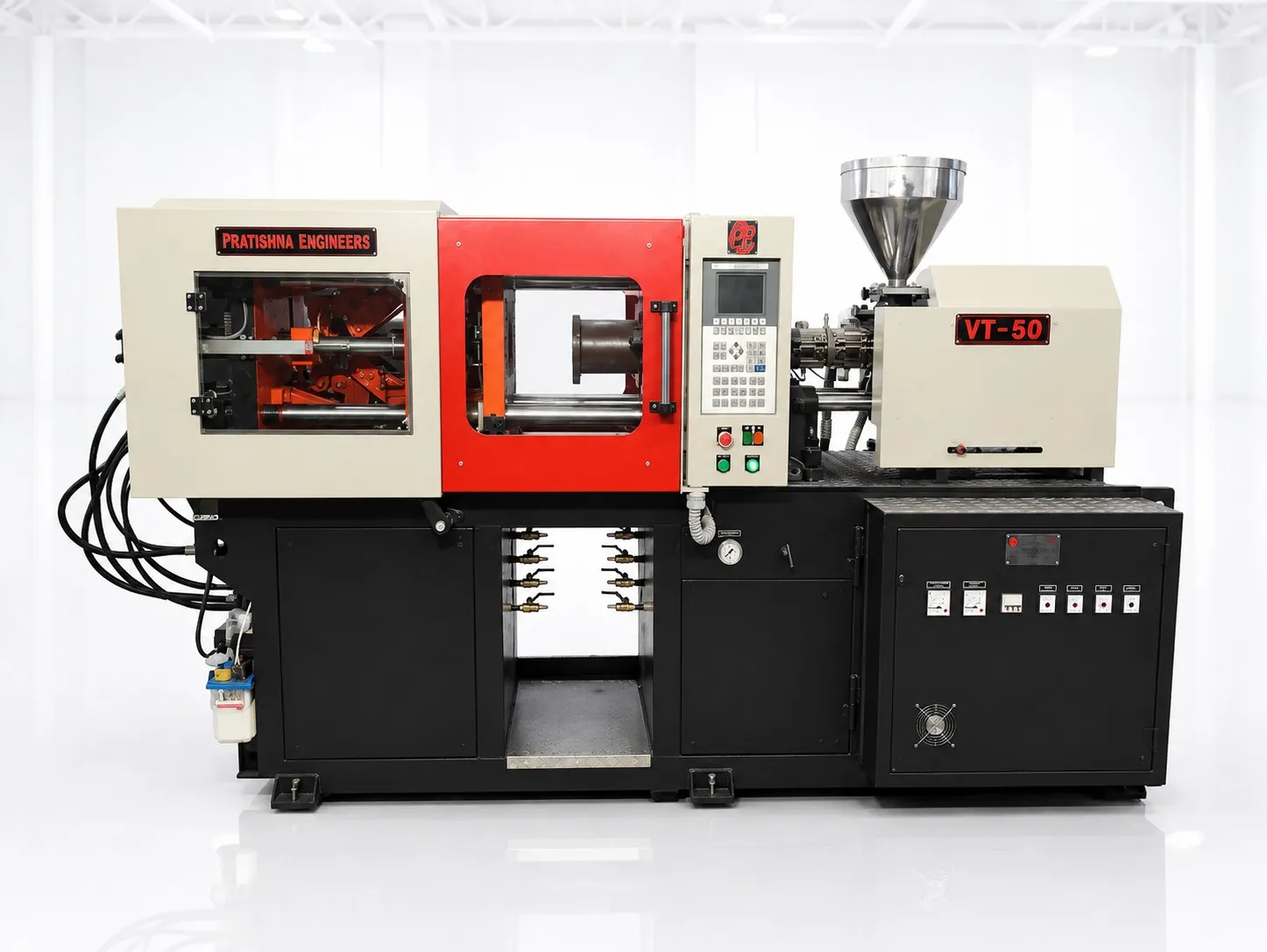
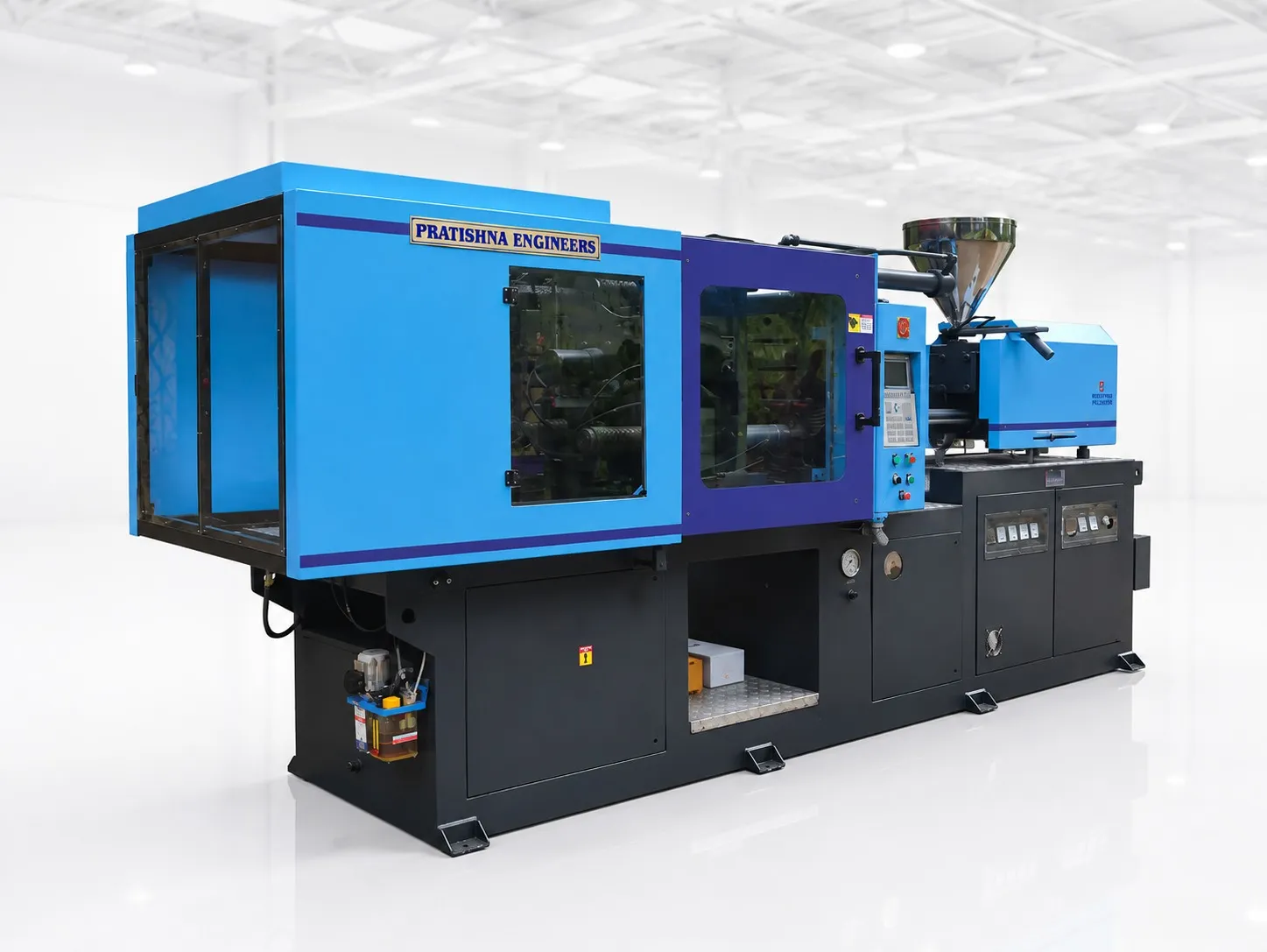
Shin guard shells are made on horizontal injection moulding machines from PP, PE or PC, with two-shot machines used where a soft TPU or TPE edge is moulded on. Shell area and cavity count set clamping force. Warp control matters most, because a curved thin shell that does not sit flat against the leg fails on fit.
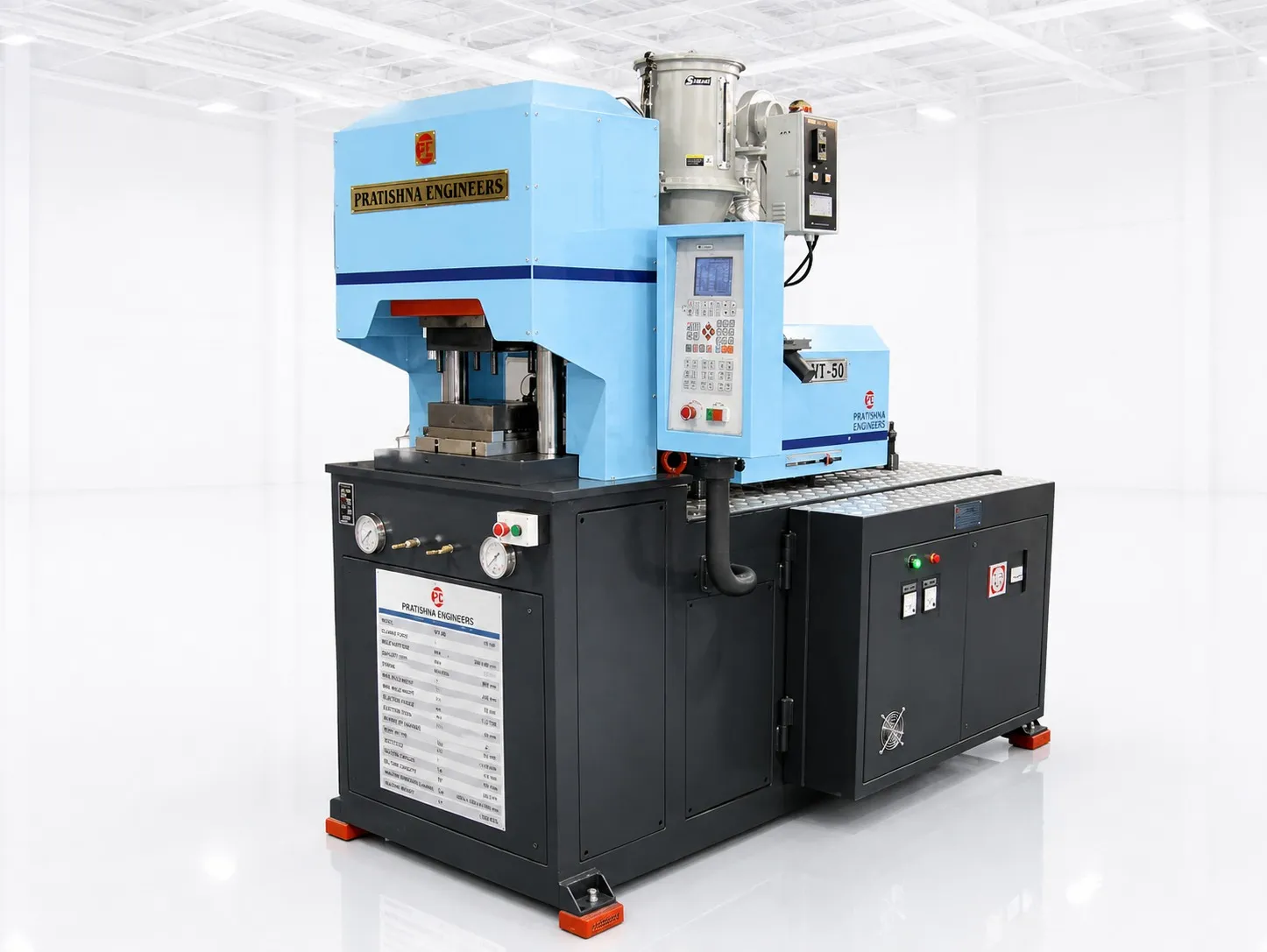
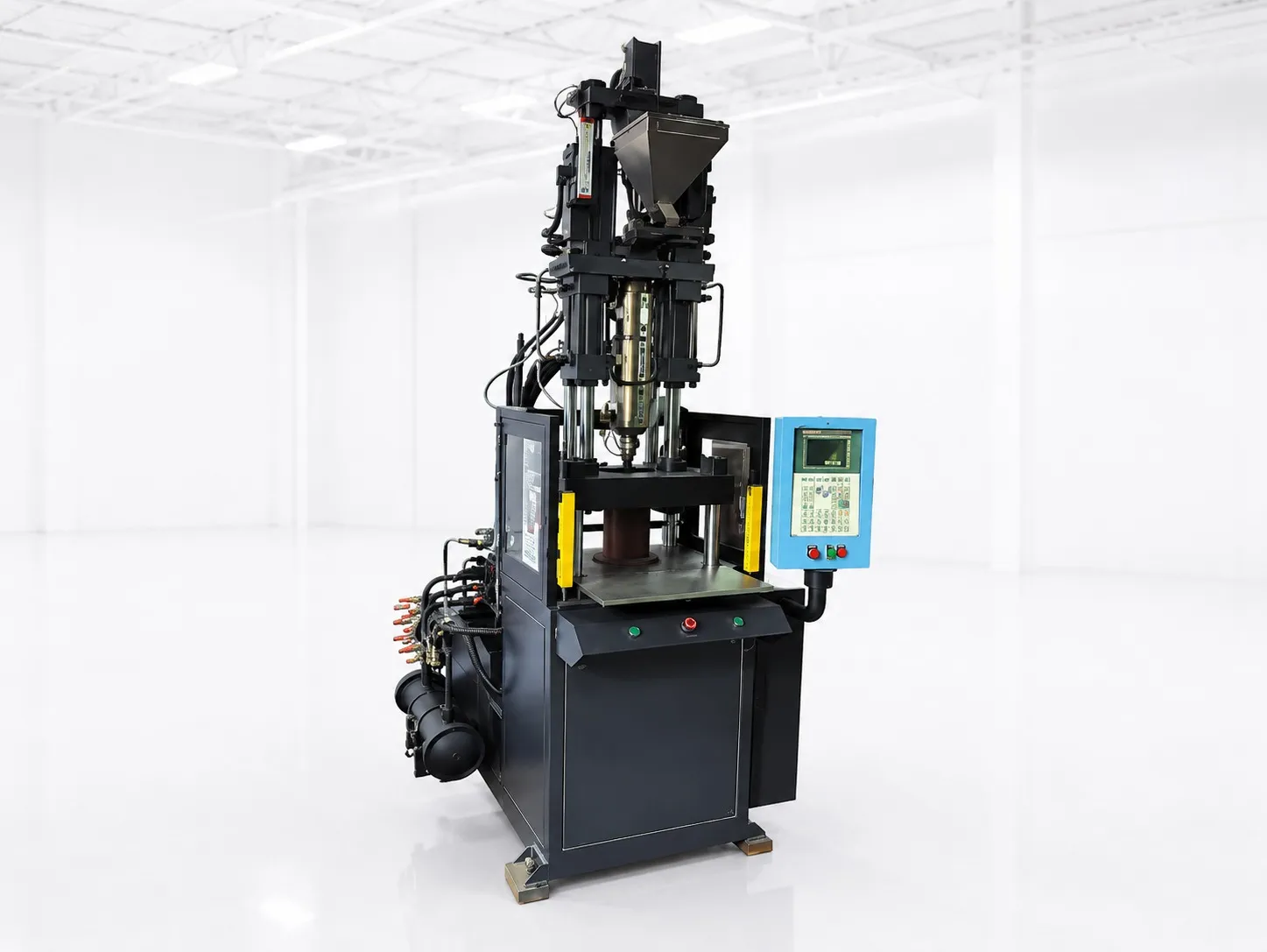
Machine choice for shin guards depends first on whether the edge is a second shot or the shell runs alone, then on shell size and cavities. Pratishna Engineers builds special purpose machines to application for two-shot guards, supplies horizontal machines for single-material shells, and can recommend a configuration.
Manufacturing Shin Guards?
Share your shell design, materials and whether the edge is two-shot, and Pratishna Engineers will recommend a machine.
Machine Requirements for Shin Guard Moulding
Only the hard shell and any soft edge are moulded, since the foam backing is bought in. For the shell, check:
- Balanced cooling across the curve to hold anatomical shape
- Gate position that limits warp on long thin shells
- Material pairing so the TPE or TPU edge bonds
- Second injection unit and rotating tool for two-shot edges
- Vent hole weld lines kept out of the strike zone
- Separate small tools for straps and clips
Recommended Machine for Shin Guards
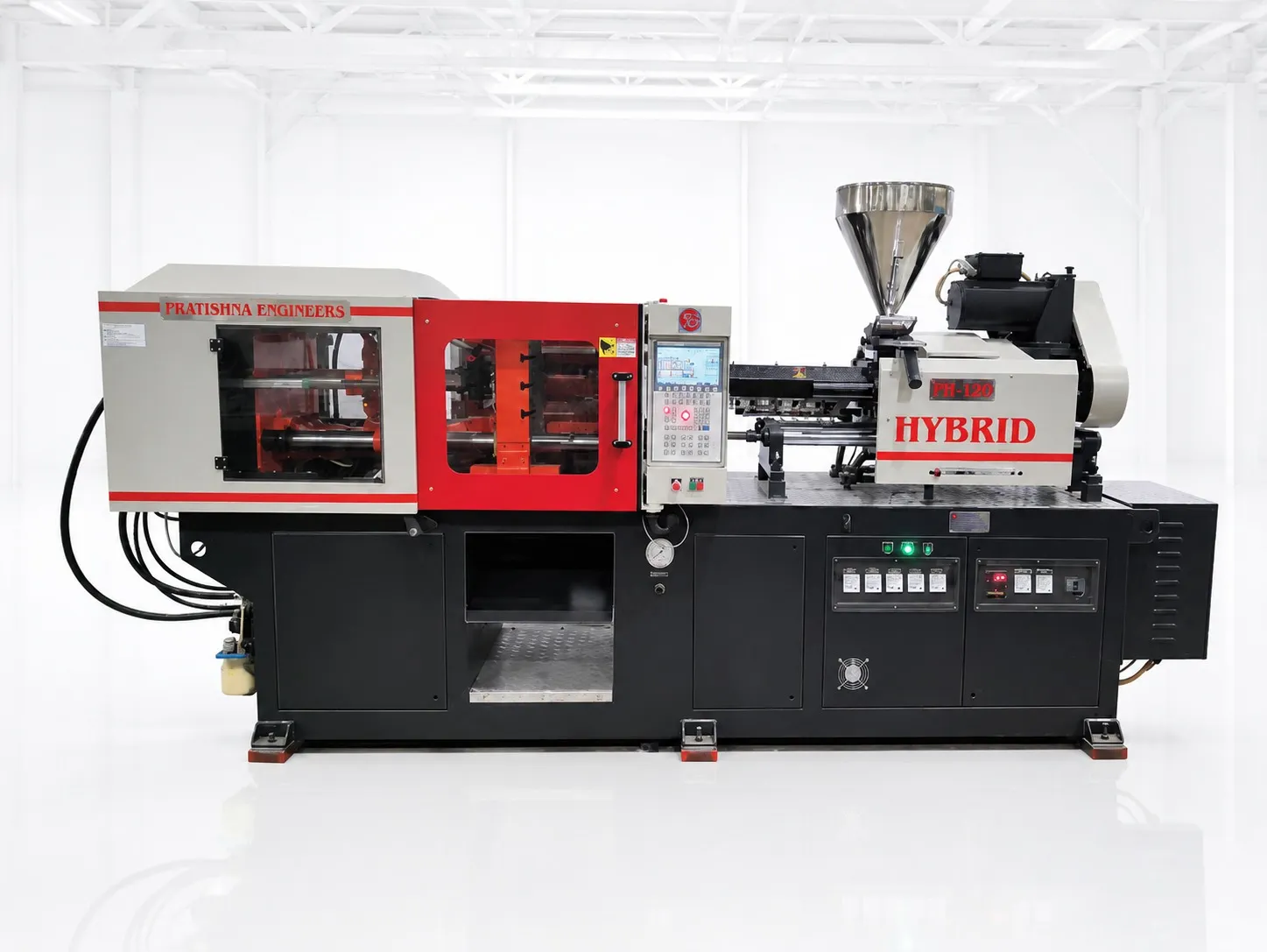
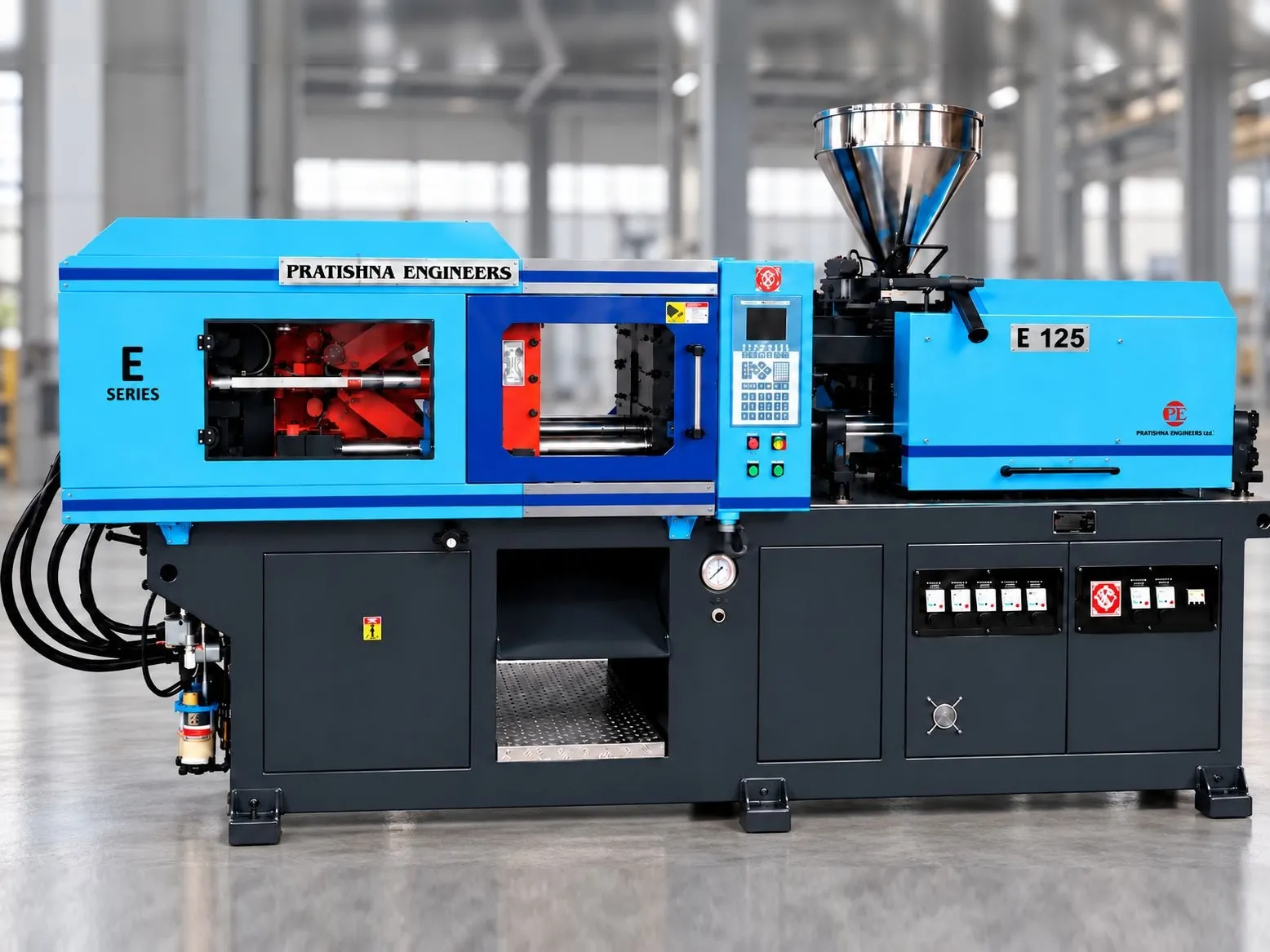
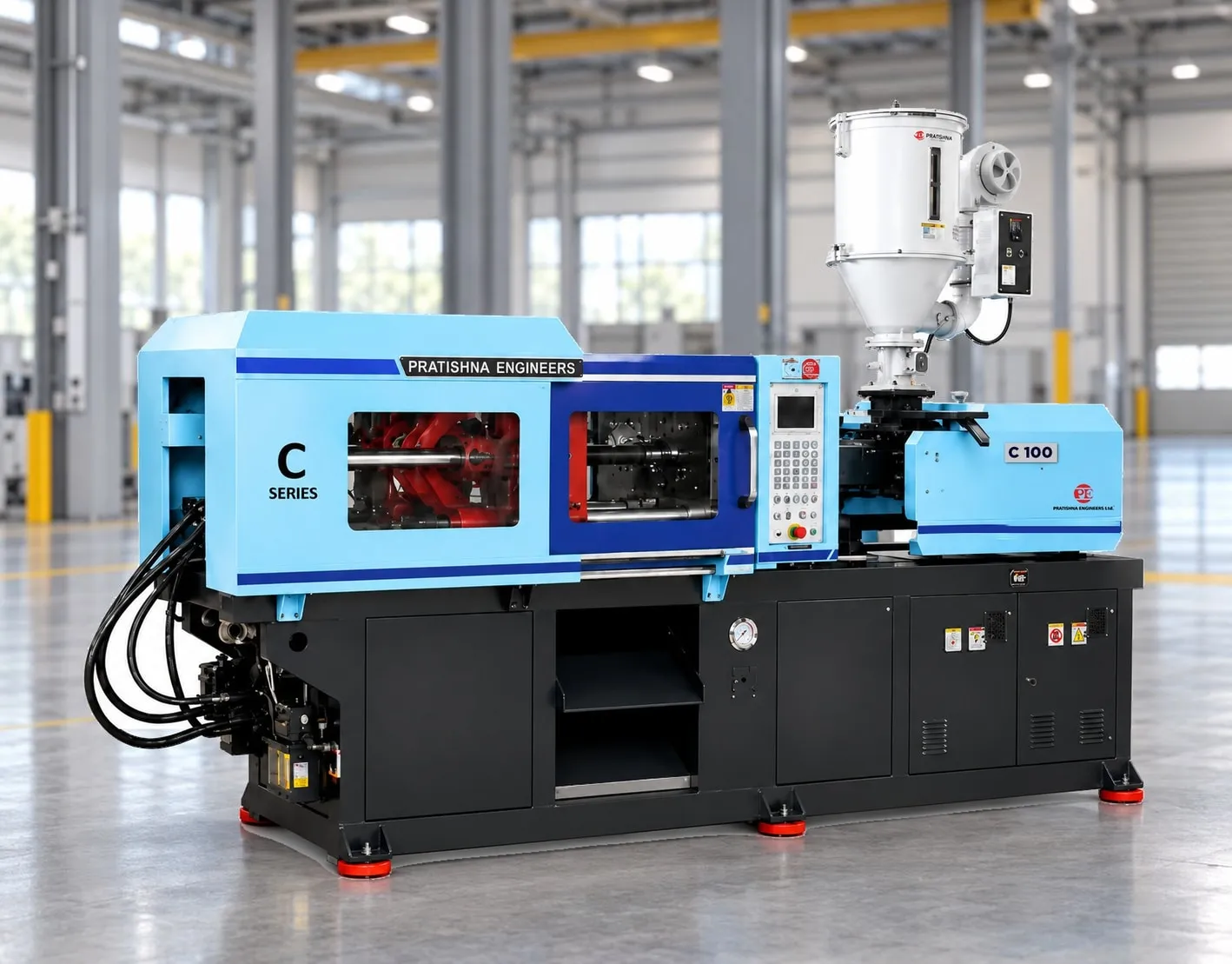
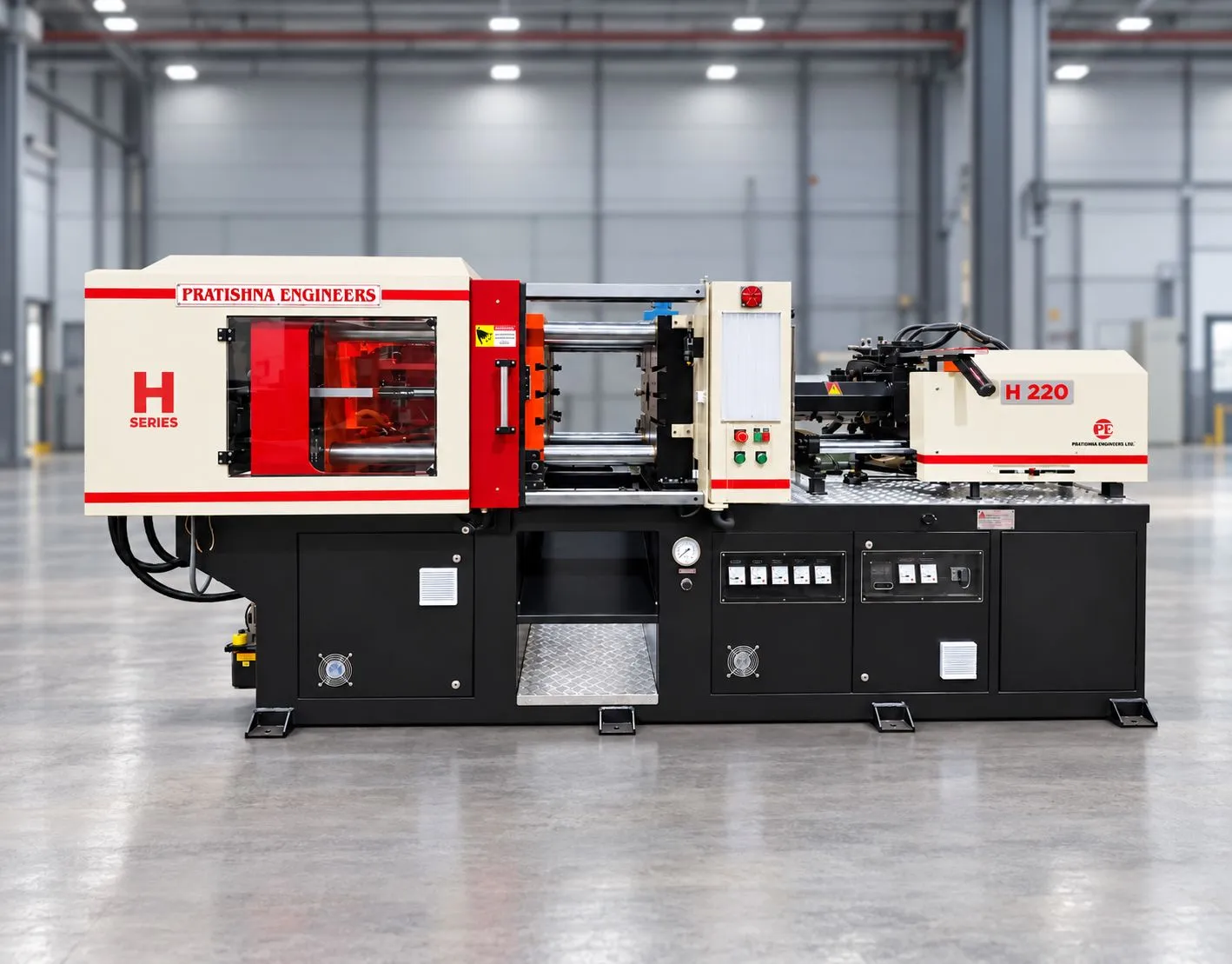
Two-shot guards with a moulded soft edge need a special purpose machine built to application, which Pratishna Engineers can build. Single-material shells run on standard machines: the E Series (75-180 T) for youth sizes and multi-cavity tools, while larger adult shells move up to the H Series (120-350 T) or C Series (140-320 T).
Not Sure Which Machine You Need?
Tell us your shell size and edge material for a machine suggestion.
Why Choose Pratishna Engineers?
- Application-Based Machine Selection
- In-House Engineering & Manufacturing
- Multiple Machine Series
- Production-Focused Solutions
- End-to-End Technical Support
- Industry-Specific Solutions
- Machine Lifecycle Support
Injection Moulding Machine Buyer Resources
Download practical resources to help you select, size and specify the right machine.
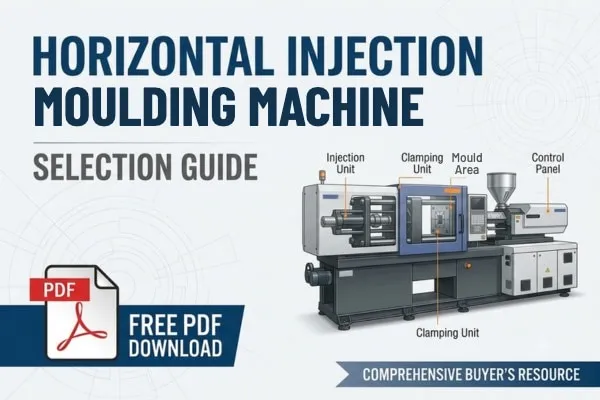
Special Purpose Injection Moulding Machine Selection Guide
A step-by-step guide covering the key inputs needed to specify a machine built to application: component and process, product weight, projected area, number of cavities, plastic material, required clamping force, shot / injection capacity, mould dimensions, production quantity, cycle time and automation requirement.
Download PDFPDF · 265 KB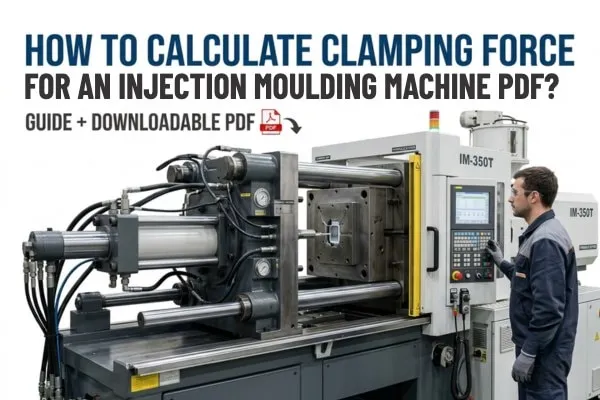
How to Calculate Clamping Force for an Injection Moulding Machine
A clear methodology that explains how clamping force is calculated, covering projected area, injection pressure, safety factor, number of cavities and material considerations.
Download PDFPDF · 363 KBSports & Safety Components & Machine Guide
A guide to Sports & Safety components, covering helmet shells, visors, shin guards, mouthguards, padding, sports goods parts and fitness equipment parts. It explains impact grades, optical PC, two-material parts, and how to match each part to a suitable machine.
Download PDFPDF · 205 KB
FAQs / Buyer Questions
Shin guard makers often ask these before choosing a machine.
Which Injection Moulding Machine Is Used to Make Shin Guards?
It depends on the build. A shell with a moulded soft edge needs a special purpose machine. A plain shell fits the E Series for small sizes, or the C and H Series for larger shells and more cavities.Is the Foam Backing Injection Moulded?
No. EVA or PU foam backing is moulded foam or die-cut sheet, laminated or assembled to the shell afterwards. A shin guard quote is usually one shell moulding plus bought-in foam.Which Materials Bond in a Two-shot Shin Guard?
The soft edge needs a grade compatible with the shell. TPE grades are often chosen for PP shells and TPU for PC shells. Confirm the pairing with the material supplier and peel-test samples before the tool is finalised.
Why Do Shin Guard Shells Warp After Moulding?
Thin curved PP shells shrink unevenly when cooling differs between the convex and concave sides. Balanced mould cooling, correct gate location and enough cooling time before ejection keep the curve matched to the leg.Can Pratishna Recommend a Machine for My Shin Guard?
Yes. Share the shell drawing or sample, shell and edge materials, part weight, mould size, cavity count and monthly volume, and Pratishna Engineers will suggest a machine.Does the Machine Suit Other Sports Protective Parts Too?
Yes, depending on the mould. Similar machines can produce knee and elbow guard shells, protective padding carriers, helmet vent hardware and gym weight plate collars.
Technical Disclaimer
Disclaimer: The information provided in this webpage is for general informational and educational purposes only. It is based on technical references and industry information available at the time of preparation and may be subject to change. It does not constitute engineering, technical, commercial or professional advice, nor does it constitute a quotation, specification, warranty or contractual commitment by Pratishna Engineers.
Actual injection moulding machine and process requirements vary according to the component design, material, mould, production volume, machine configuration and operating conditions. The information, examples, calculations and recommendations provided should be independently evaluated and verified for the specific application before making any equipment, process or production decision. Information obtained from third-party sources remains subject to the accuracy and limitations of those sources.
Limitation of Liability: Pratishna Engineers makes no representation or warranty, express or implied, regarding the completeness, accuracy or suitability of the information for any particular application. To the extent permitted by applicable law, Pratishna Engineers shall not be liable for any loss, damage, cost or consequence arising from reliance on or use of the information contained in this webpage. Final machine selection, configuration and application suitability should be confirmed with Pratishna Engineers based on complete and accurate project requirements.
Talk to Our Engineers
Planning a New Injection Moulding Project?
Share your component, material, mould and production target. Our engineering team will help you identify the right machine configuration.
- Machine Sales
- +91 99690 38542
- Service Support
- +91 97689 28259
- Sales Email
- [email protected]