
Injection Moulding Machine for Sunglass, Safety and Visor Lenses
Sunglass, safety and visor lenses are plano lenses made on horizontal injection moulding machines, mostly from PC, with PMMA for some fashion sunglasses. Lens size, curvature depth and cavity count set the machine. Process control has one main job here: holding base curve and centre thickness through controlled shrinkage, since both are optical specifications.
For impact-rated lenses, selection focuses on PC melt handling, drying and a stable process for low moulded-in stress. Pratishna Engineers can recommend a configuration from its hybrid and horizontal injection moulding machines for sunglass, safety and visor lens production.
Moulding Safety or Visor Lenses?
Share your lens drawing, resin, coating plan and volume, and Pratishna Engineers will recommend a machine and quotation.
Machine Requirements for Sunglass, Safety and Visor Lens Moulding
Plano lenses must look clear and stay optically neutral, and impact-rated ones must also pass impact testing. Points to check:
- PC drying before every run to prevent splay
- Shrinkage control for base curve and centre thickness
- Low moulded-in stress that survives later coating
- Gate placed outside the line of sight
- Polished cavity and scratch-free take-out
- Opening stroke for deep wraparound visors and shields
Recommended Machine for Sunglass, Safety and Visor Lenses
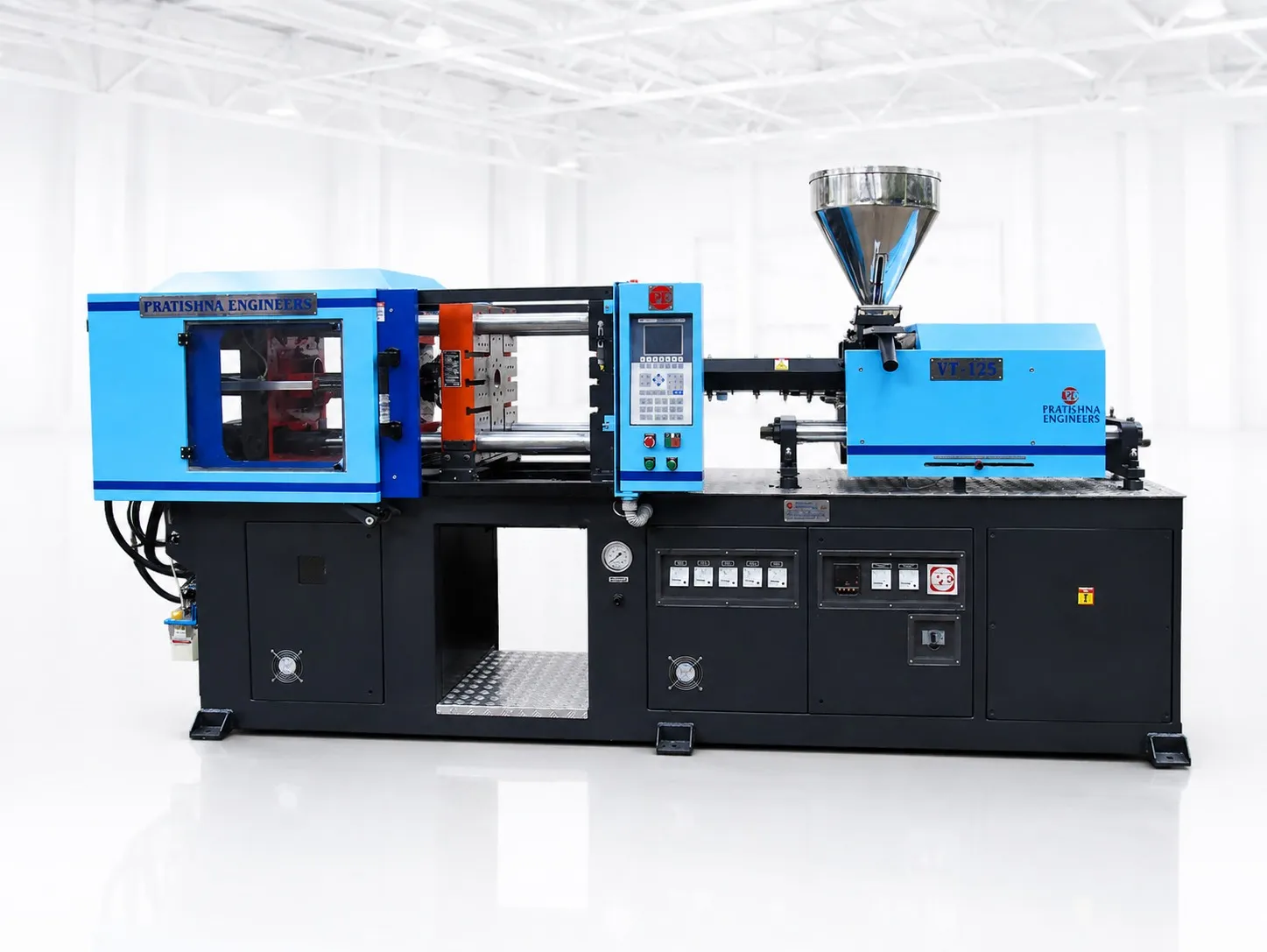
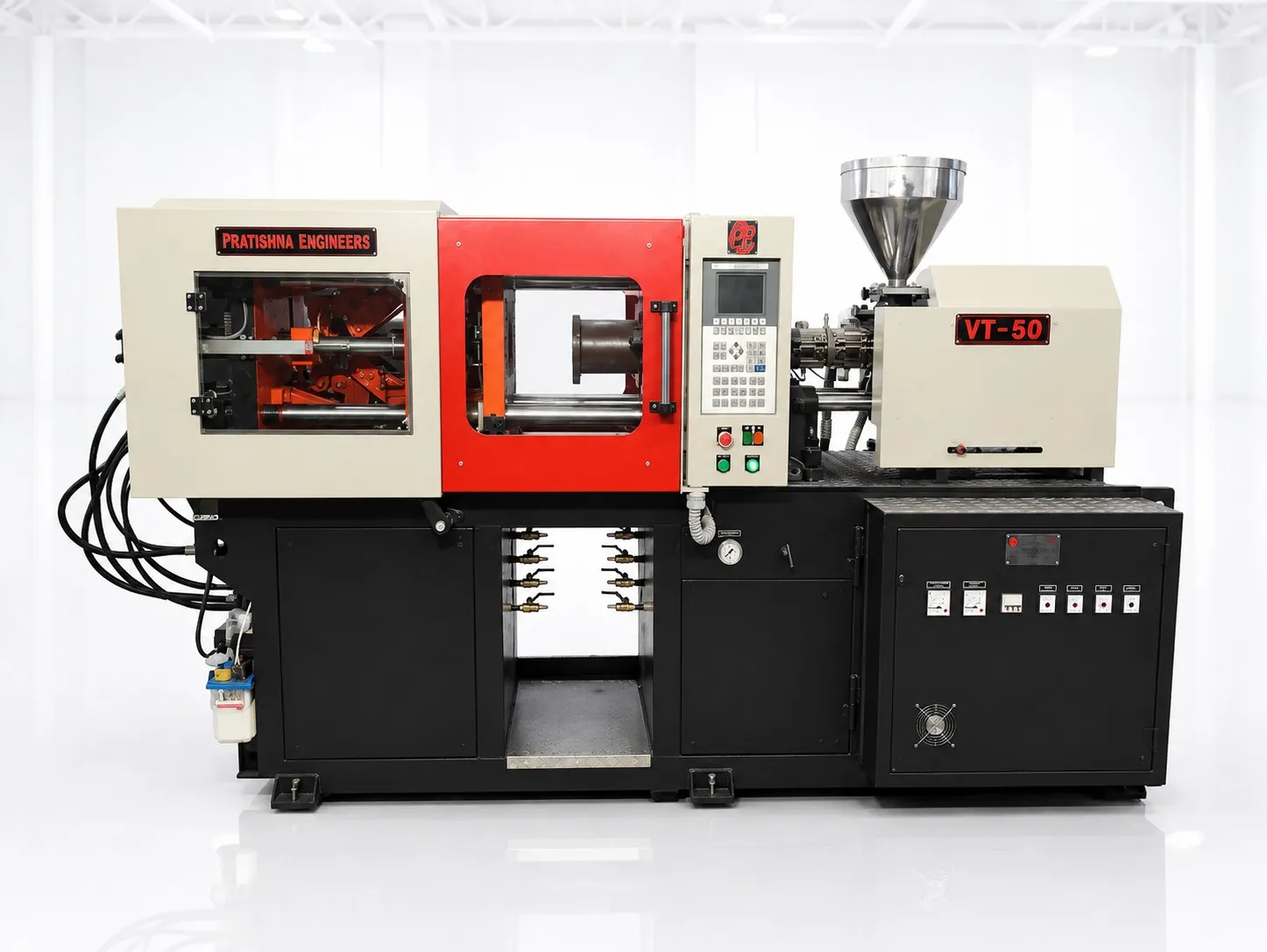
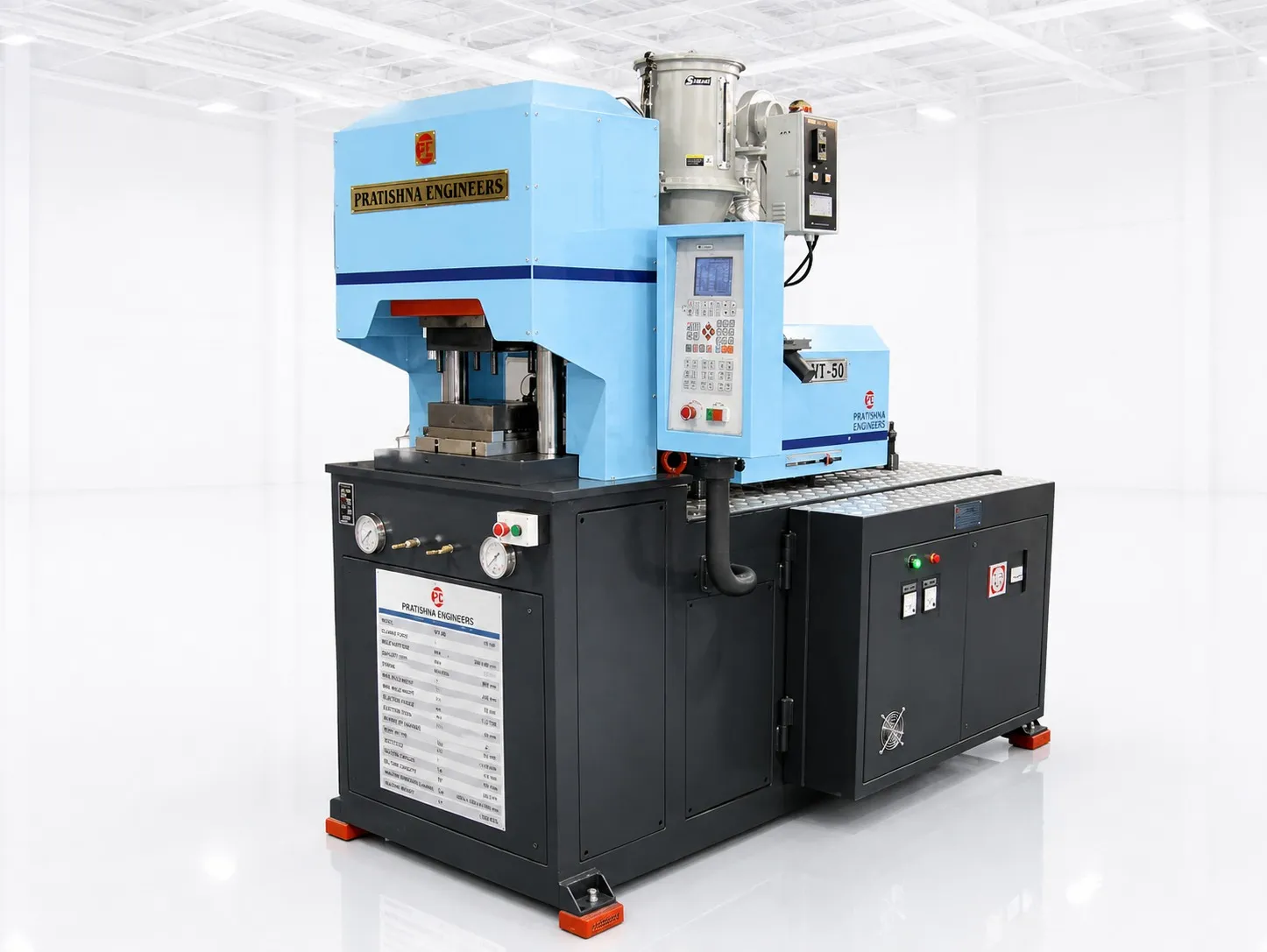
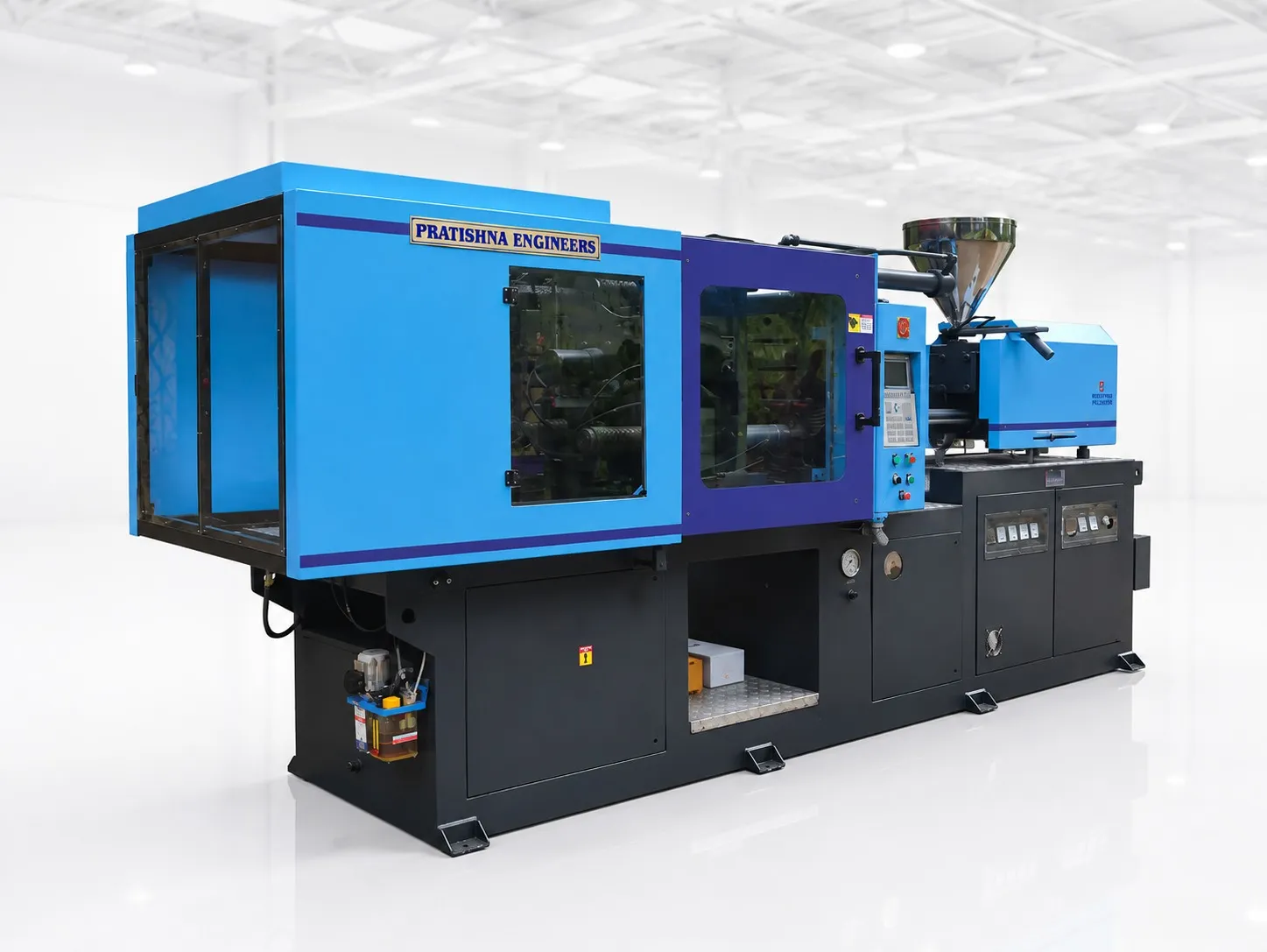
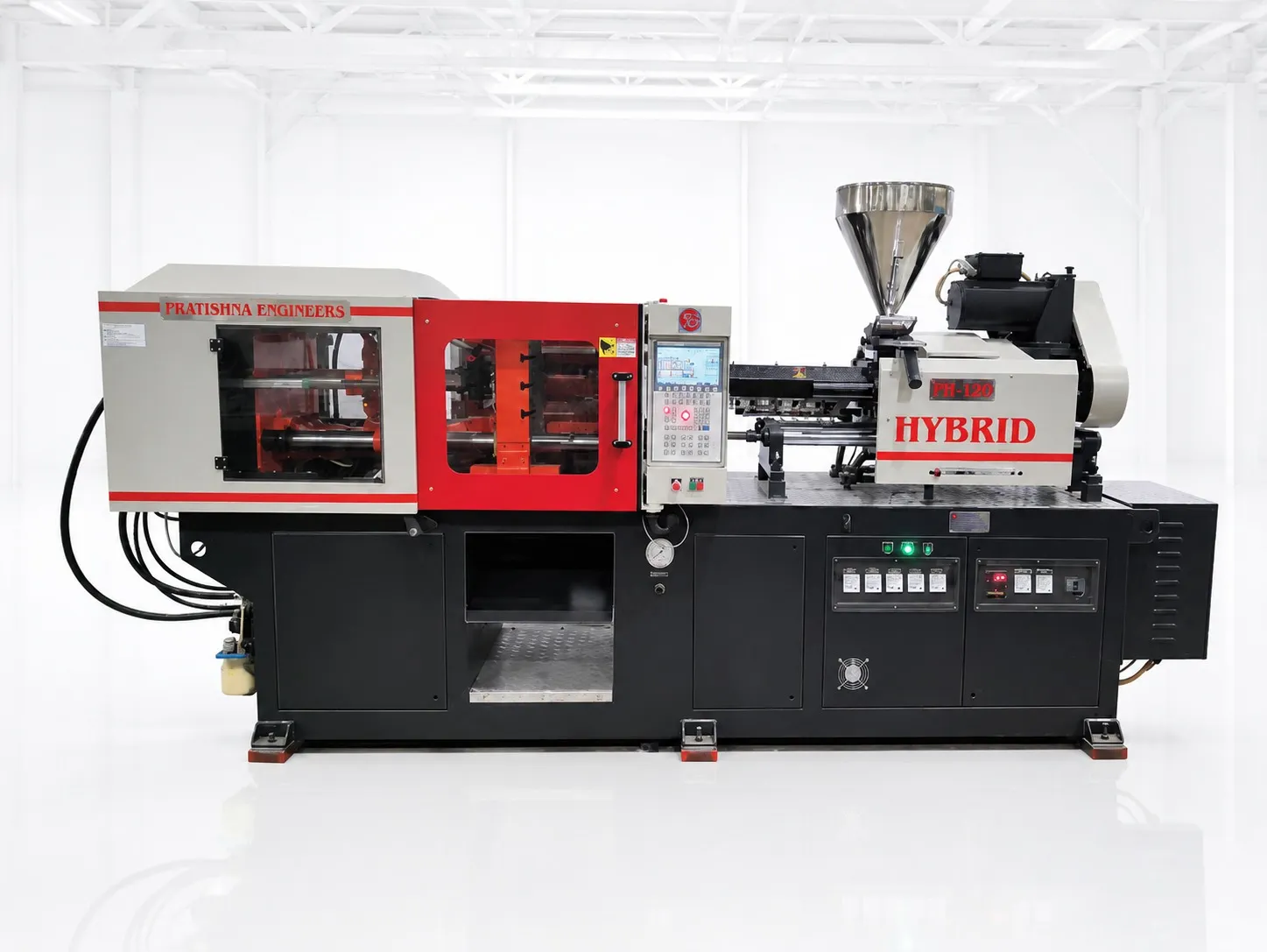
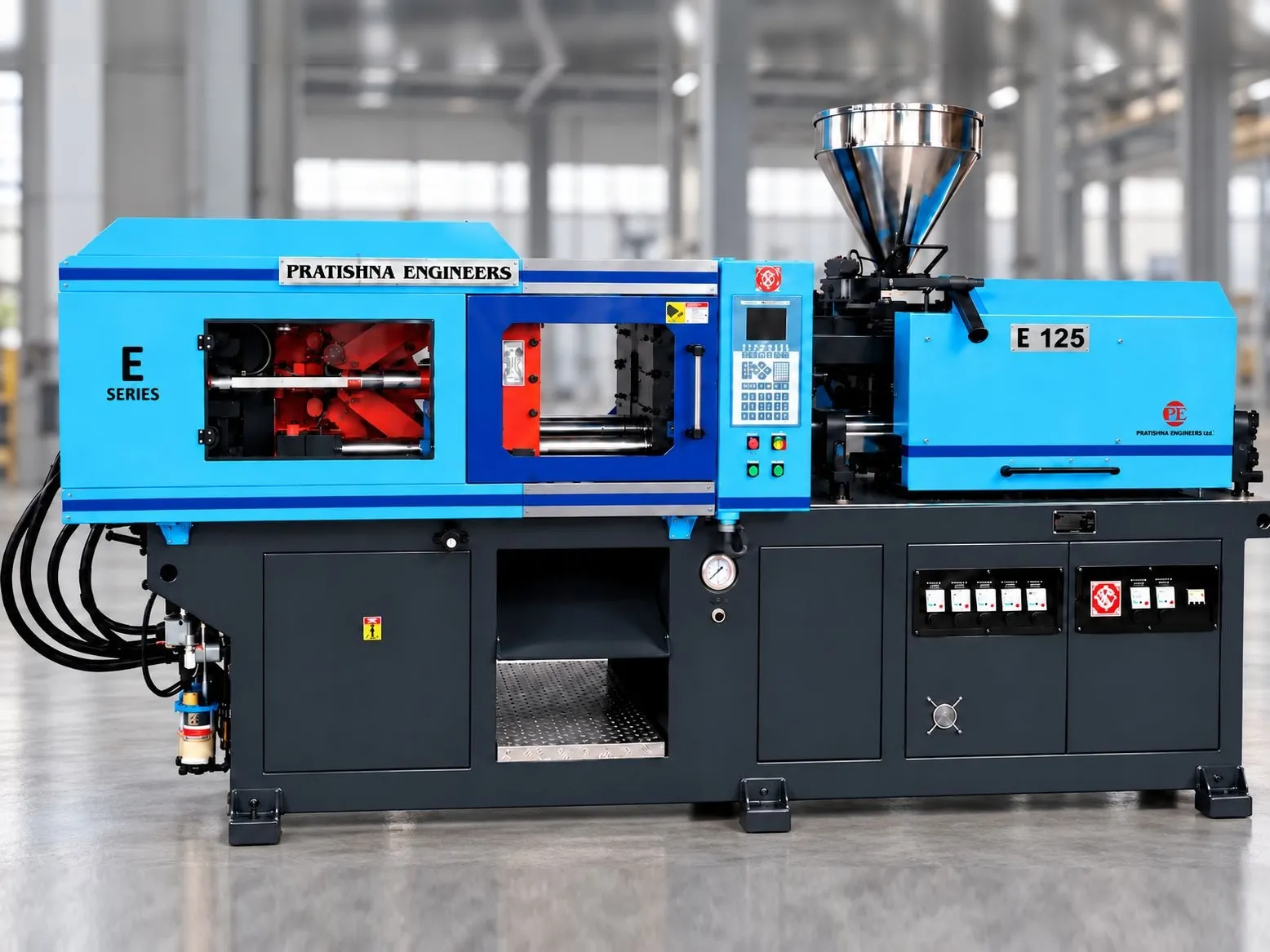
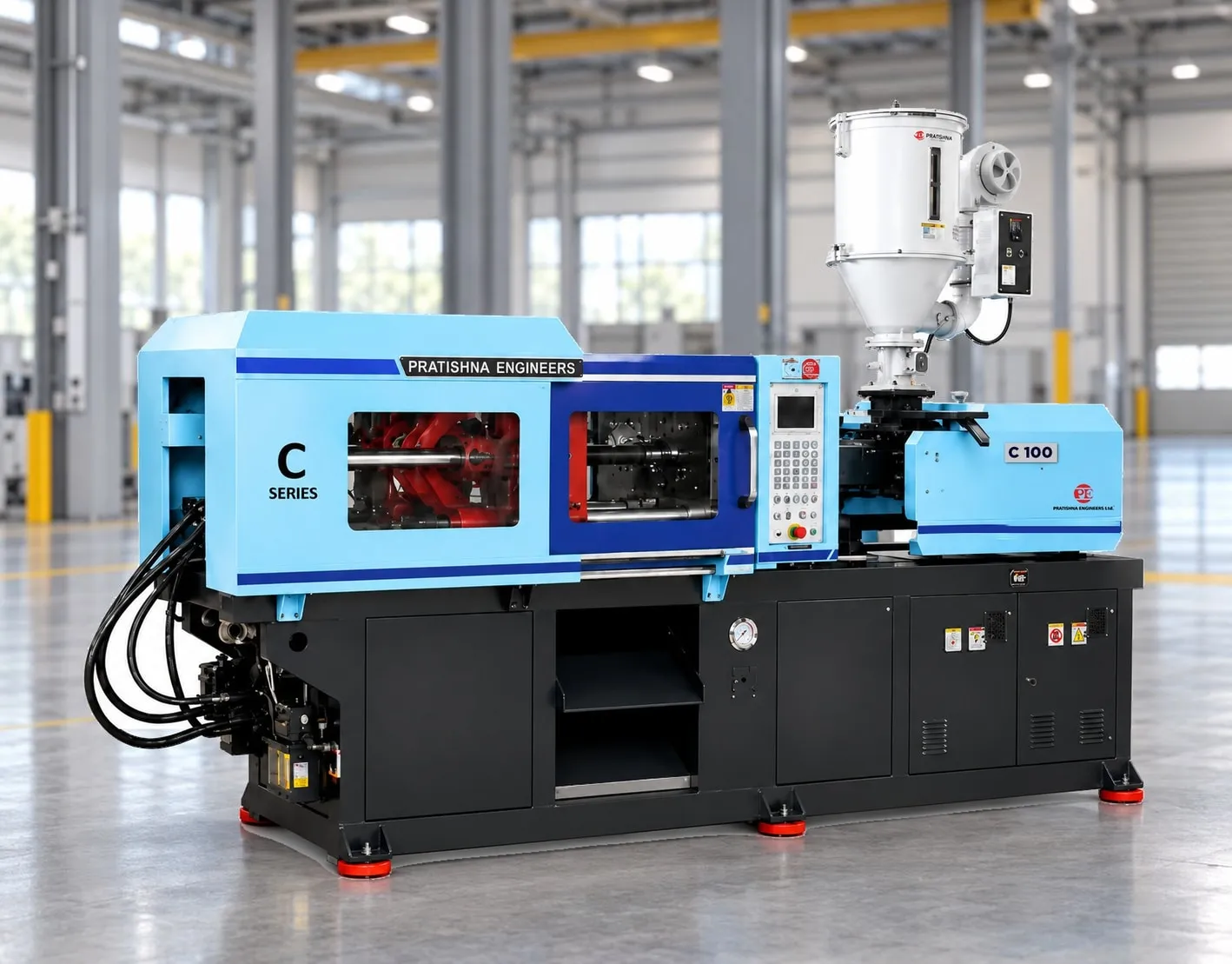
Moulds for spectacle-size sunglass and safety lenses usually fit the Hybrid PH Series (120-140 T), or the E Series (75-180 T) for family and multi-cavity tools. Full face visors and wide wraparound shields bring a larger projected area and deeper curvature, which can call for the H Series (120-350 T) or, on the biggest moulds, the C Series (140-320 T).
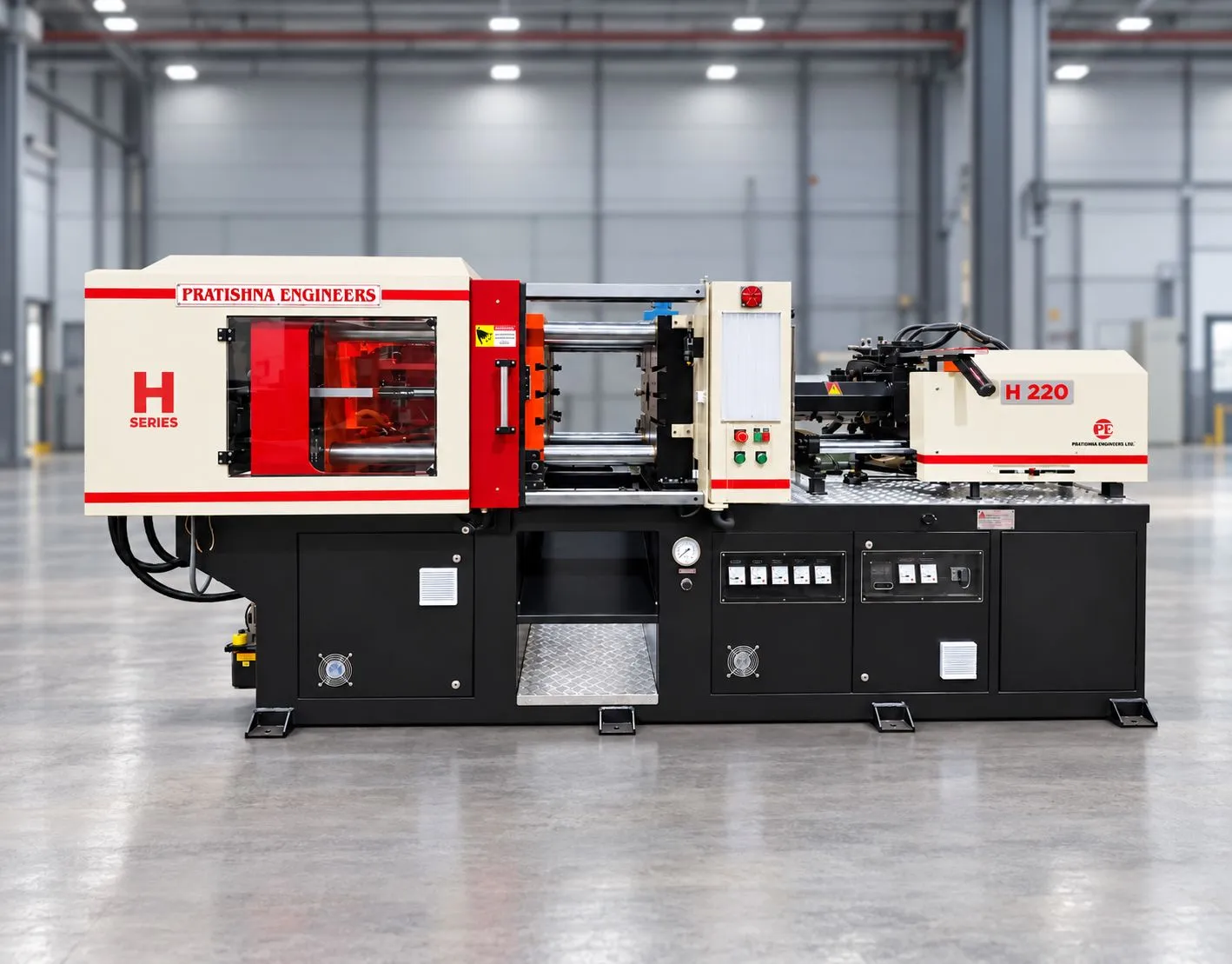
Not Sure Which Machine You Need?
Send your lens or visor drawing for a machine recommendation.
Why Choose Pratishna Engineers?
- Application-Based Machine Selection
- In-House Engineering & Manufacturing
- Multiple Machine Series
- Production-Focused Solutions
- End-to-End Technical Support
- Industry-Specific Solutions
- Machine Lifecycle Support
Injection Moulding Machine Buyer Resources
Download practical resources to help you select, size and specify the right machine.
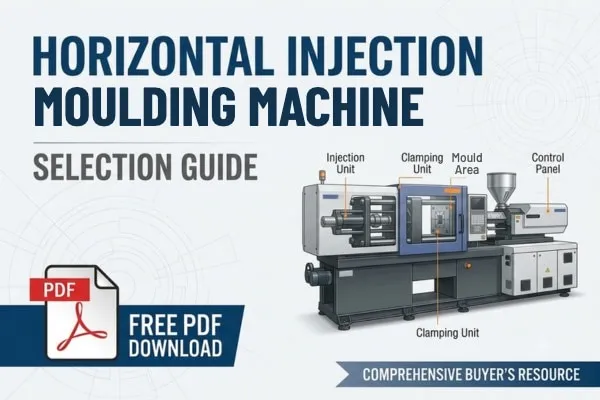
Horizontal Injection Moulding Machine Selection Guide
A step-by-step guide covering the key inputs needed to select the right machine: product weight, projected area, number of cavities, plastic material, required clamping force, shot / injection capacity, mould dimensions, production quantity, cycle time and automation requirement.
Download PDFPDF · 265 KB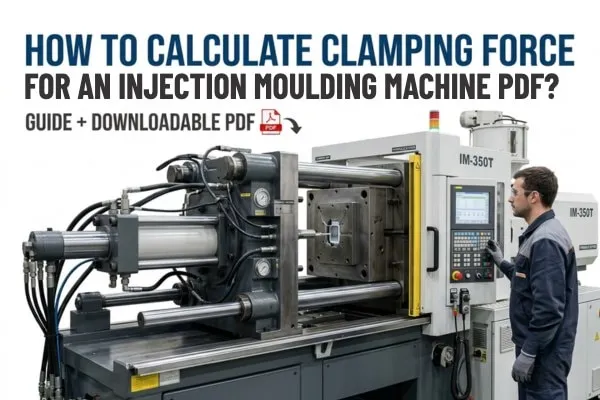
How to Calculate Clamping Force for an Injection Moulding Machine
A clear methodology that explains how clamping force is calculated, covering projected area, injection pressure, safety factor, number of cavities and material considerations.
Download PDFPDF · 363 KBOptical Components & Machine Guide
A guide to Optical components, covering precision lenses, spectacle frames, light guides, thick-wall lenses, visor lenses, lens barrels and fibre connector housings. It explains optical PC and PMMA, drying, flow line control, and how to match each part to a suitable machine.
Download PDFPDF · 208 KB
FAQs / Buyer Questions
What eyewear and safety equipment makers ask about moulding plano lenses.
Which Injection Moulding Machine Is Used to Make Sunglass and Visor Lenses?
Pratishna Engineers sizes it by lens area and cavities. Spectacle-size lenses usually fit the Hybrid PH or E Series, while full face visors and wide shields move up to the H or C Series.Why Is PC Used for Safety Lenses Instead of PMMA?
PC passes the impact tests that safety eyewear and visors are rated to, where PMMA can crack. PMMA is still used for some fashion sunglasses because of its clarity and scratch resistance.Are Hard Coat and Anti-Fog Applied During Moulding?
No. Hard coat, anti-fog and mirror coatings go on after moulding, on a separate line with its own yield. The lens must arrive clean and low in moulded-in stress, which can otherwise show as cracking after coating.
What Causes Optical Distortion in a Moulded Visor?
Uneven wall thickness, flow lines near the gate and moulded-in stress all bend light. Gating at the edge outside the line of sight, steady packing and a polished, evenly cooled mould keep the view clear.Can Pratishna Recommend a Machine for My Sunglass or Visor Lens?
Yes. Share the lens or visor drawing, resin, base curve, centre thickness, coating plan, cavity count and monthly volume, and Pratishna Engineers will recommend a suitable machine.Does the Machine Suit Other Eyewear and Optical Parts Too?
Within the mould limits, yes. Spectacle frames, instrument windows and cover lenses, and spectacle cases can run on the same class of machine.
Technical Disclaimer
Disclaimer: The information provided in this webpage is for general informational and educational purposes only. It is based on technical references and industry information available at the time of preparation and may be subject to change. It does not constitute engineering, technical, commercial or professional advice, nor does it constitute a quotation, specification, warranty or contractual commitment by Pratishna Engineers.
Actual injection moulding machine and process requirements vary according to the component design, material, mould, production volume, machine configuration and operating conditions. The information, examples, calculations and recommendations provided should be independently evaluated and verified for the specific application before making any equipment, process or production decision. Information obtained from third-party sources remains subject to the accuracy and limitations of those sources.
Limitation of Liability: Pratishna Engineers makes no representation or warranty, express or implied, regarding the completeness, accuracy or suitability of the information for any particular application. To the extent permitted by applicable law, Pratishna Engineers shall not be liable for any loss, damage, cost or consequence arising from reliance on or use of the information contained in this webpage. Final machine selection, configuration and application suitability should be confirmed with Pratishna Engineers based on complete and accurate project requirements.
Talk to Our Engineers
Planning a New Injection Moulding Project?
Share your component, material, mould and production target. Our engineering team will help you identify the right machine configuration.
- Machine Sales
- +91 99690 38542
- Service Support
- +91 97689 28259
- Sales Email
- [email protected]