
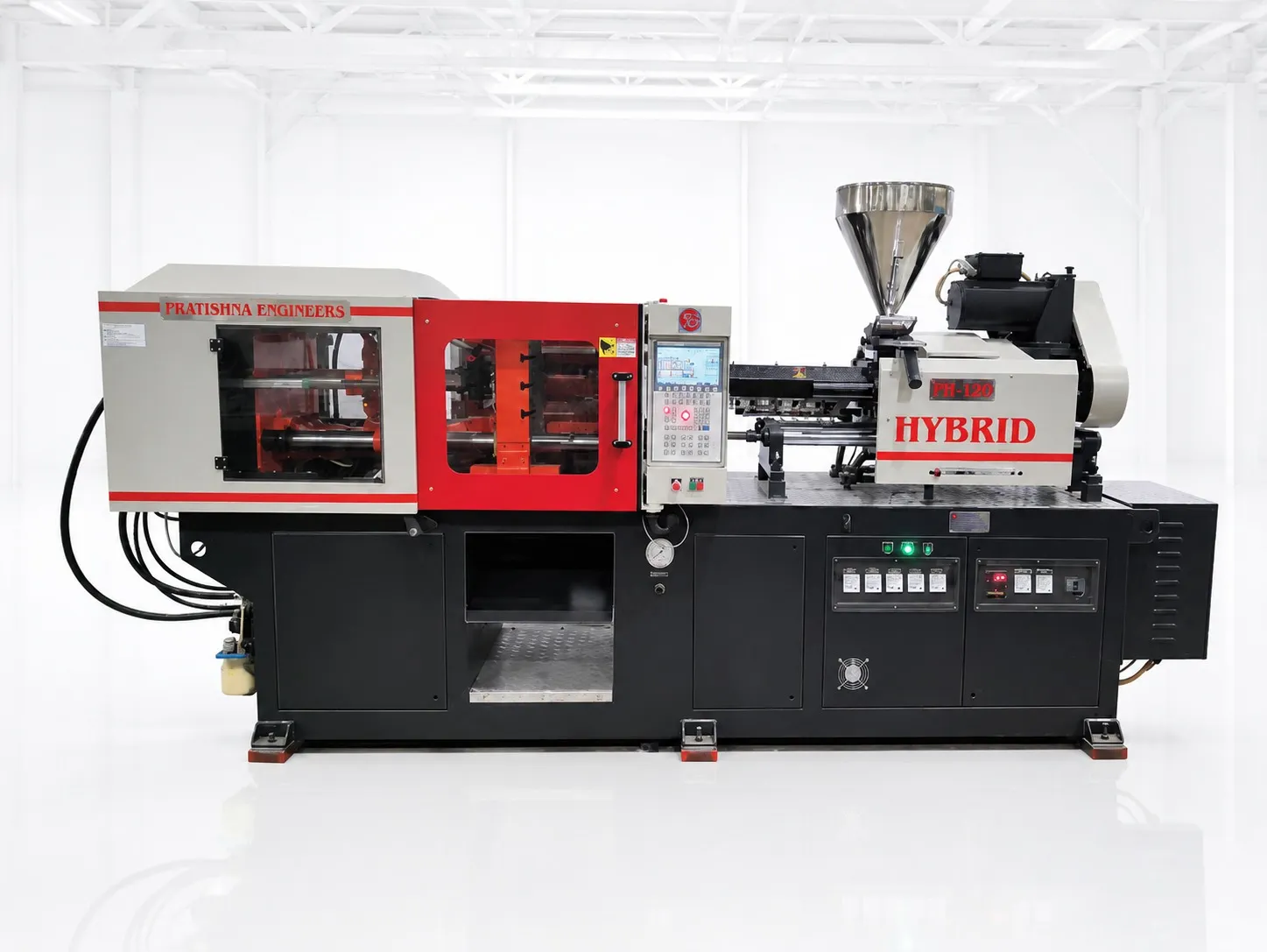
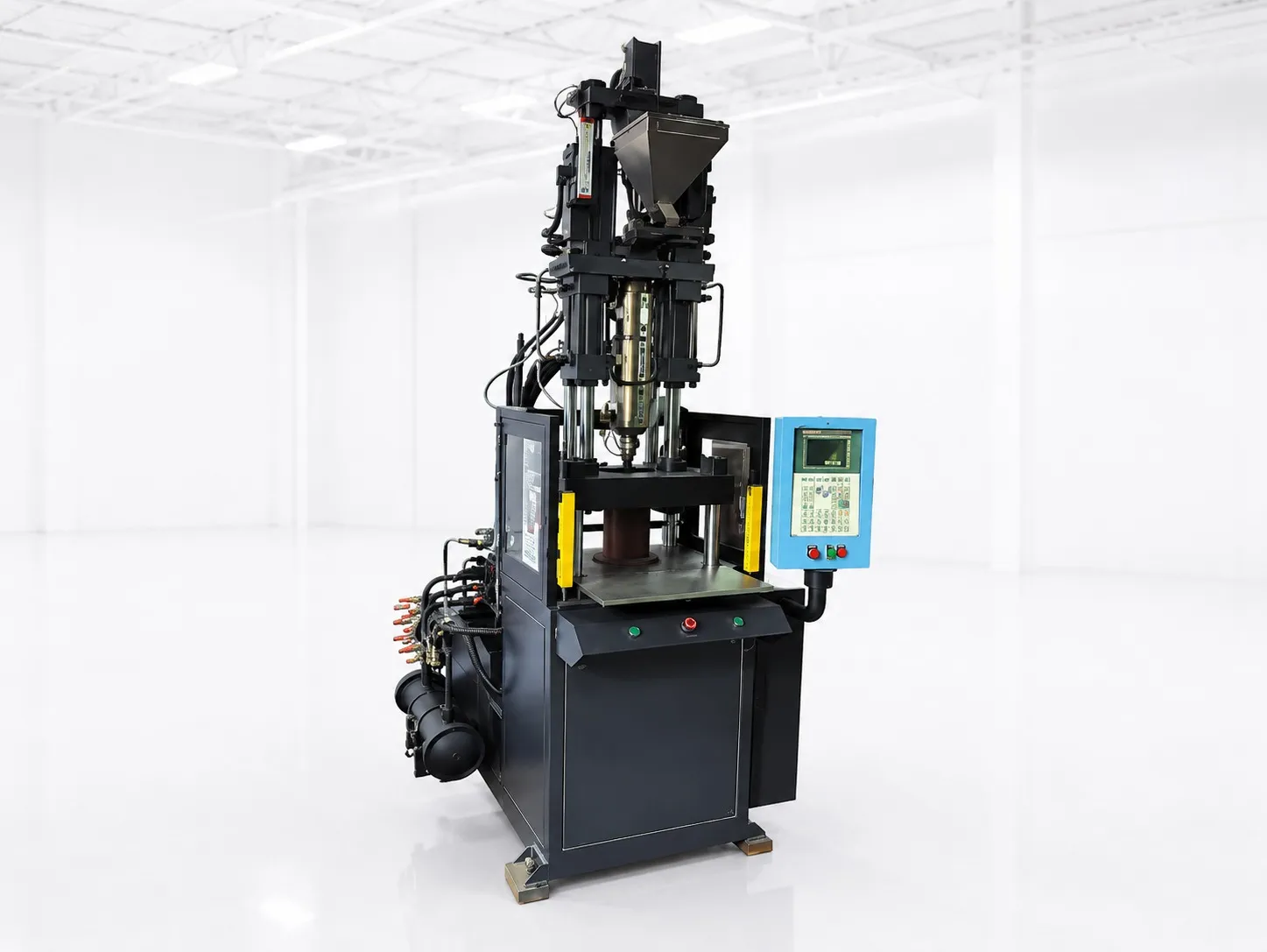
Injection Moulding Machine for Valve Bodies and Manifold Components
Valve bodies and manifold components are made on horizontal injection moulding machines, usually with several side cores for the ports, from PA66 or PBT with glass fill, PPS or POM. Machine size follows body size, number of core pulls and shot weight. Even wall thickness matters most, because thin or void-prone sections fail first under pressure.
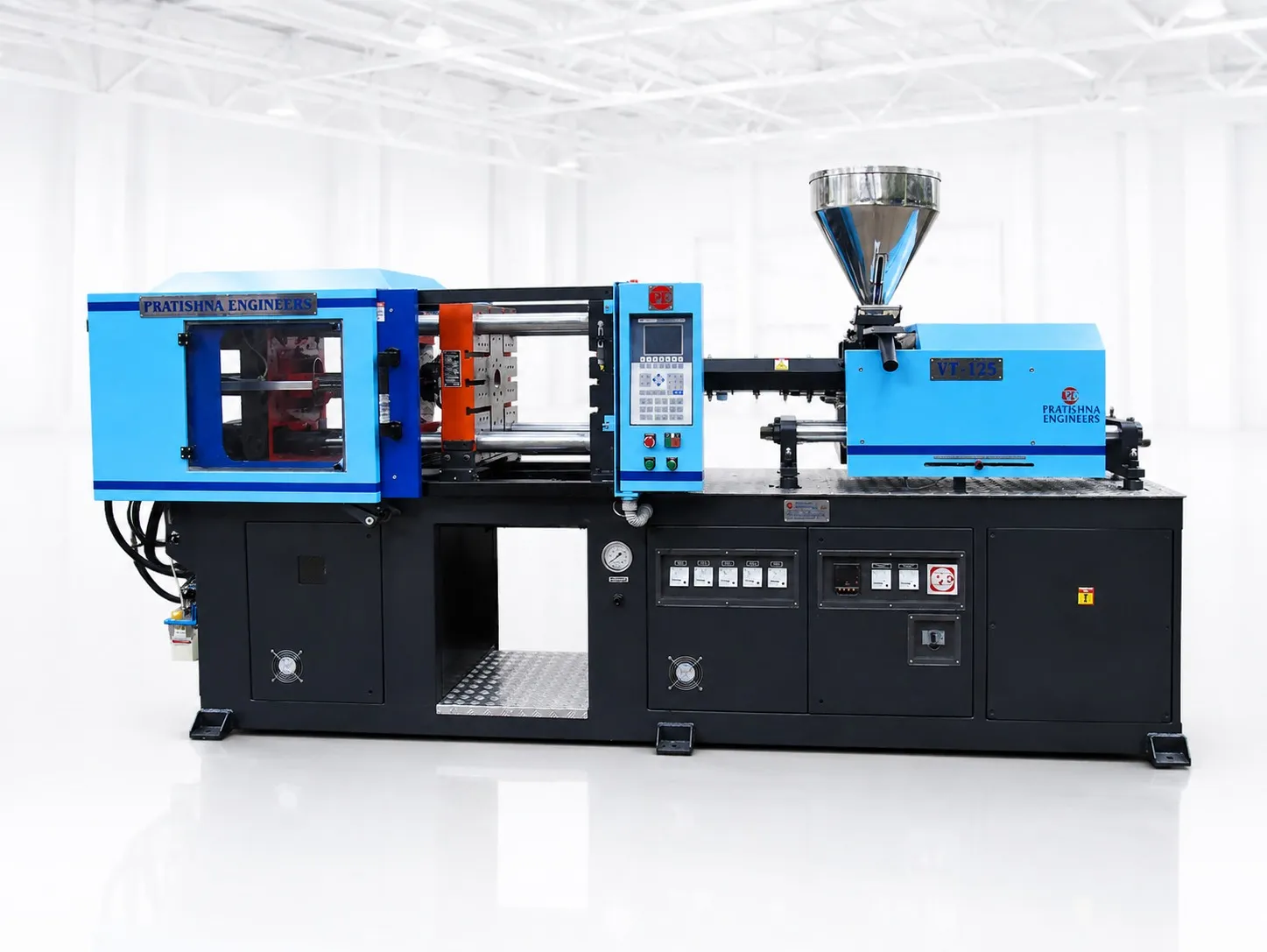
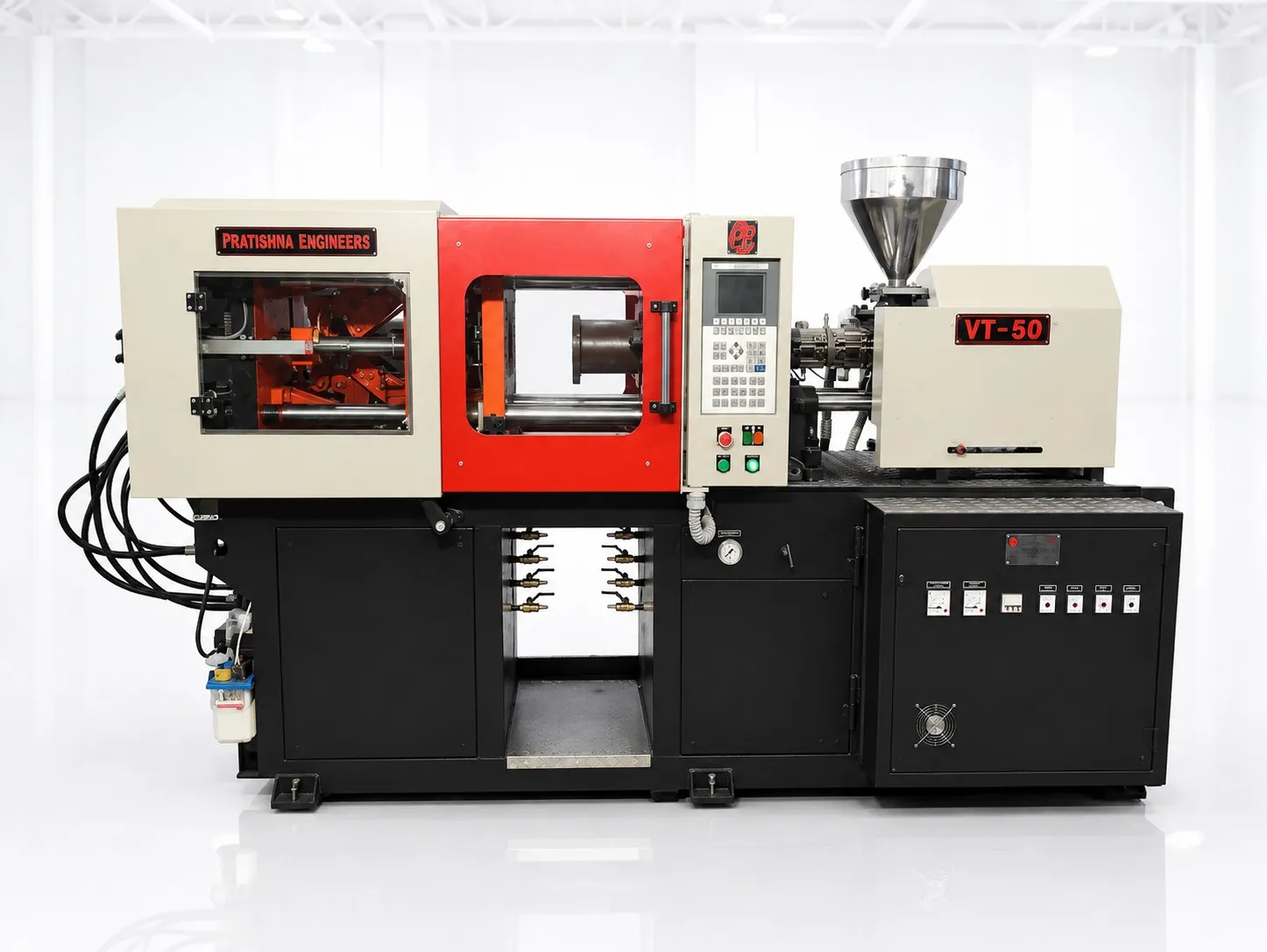
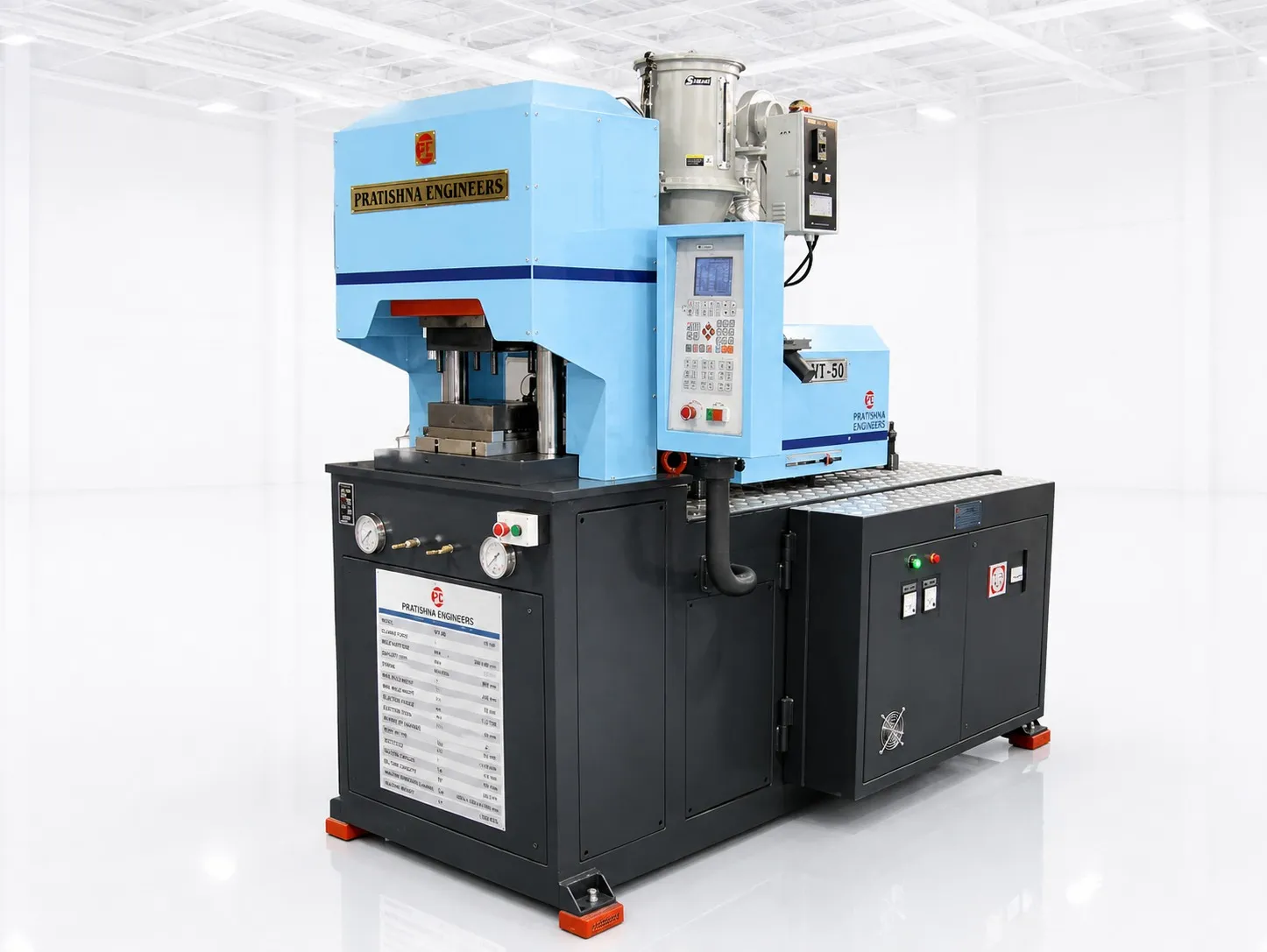
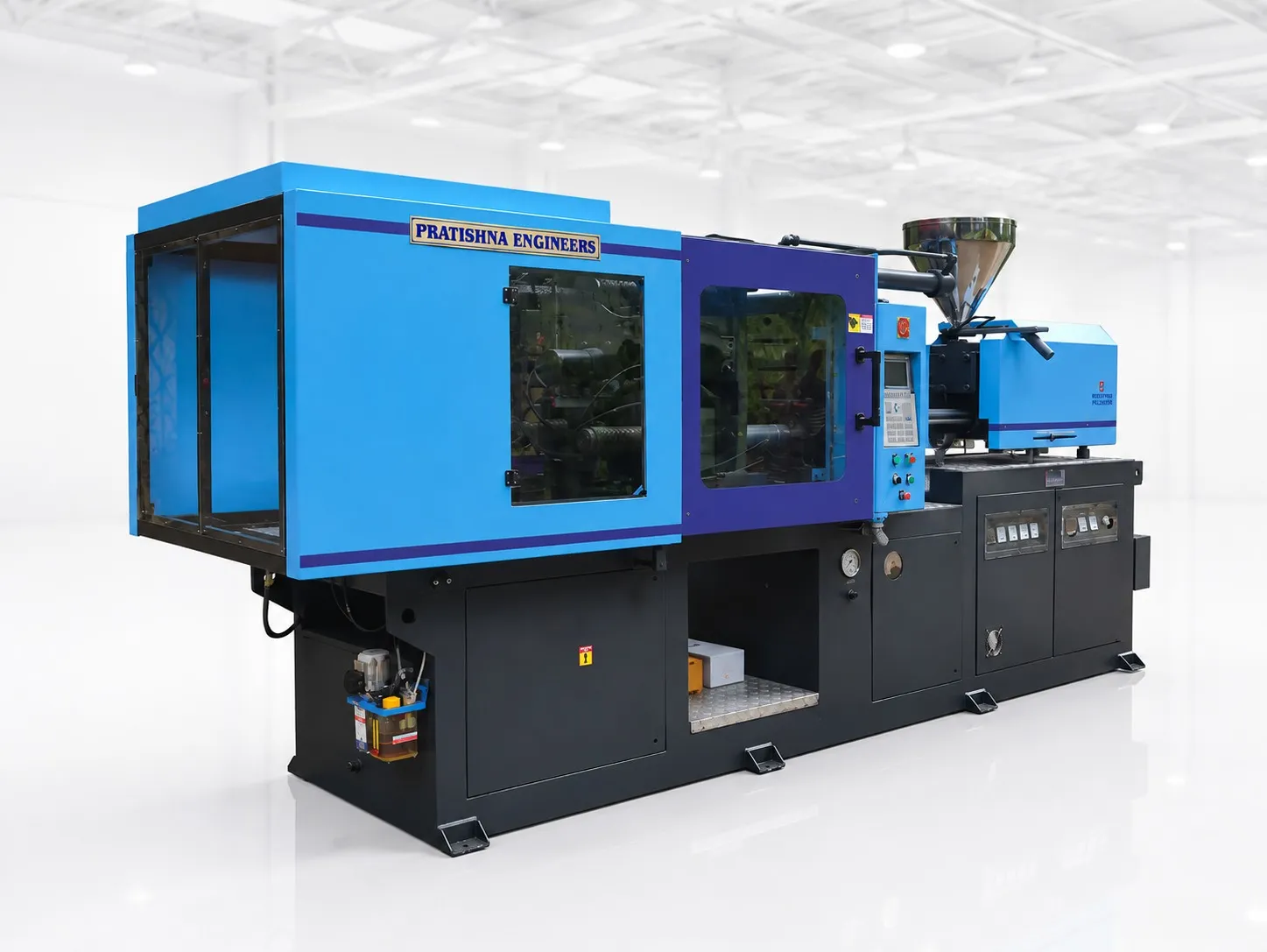
Selection for pressure-carrying parts centres on stable packing, core-pull sequencing and clean parting lines at the sealing faces. Pratishna Engineers supplies horizontal injection moulding machines for valve body and manifold moulding and can suggest a configuration once the mould and port layout are known.
Moulding Valve Bodies or Manifolds?
Share your body drawing, material, working pressure and media, and Pratishna Engineers will recommend a suitable injection moulding machine.
Machine Requirements for Valve Body and Manifold Moulding
Valve bodies and manifolds hold pressure and seal against O-rings, so internal surfaces and sealing faces decide whether a part passes. Selection should cover:
- Core-pull circuits for multiple port cores
- Uniform wall thickness to avoid voids and sink in thick sections
- No flash on the parting line at O-ring grooves
- Weld lines kept away from ports and pressure zones
- Glass-filled grades need a wear-resistant screw and barrel
- Media compatibility confirmed at operating temperature, not ambient
Recommended Machine for Valve Bodies and Manifold Components
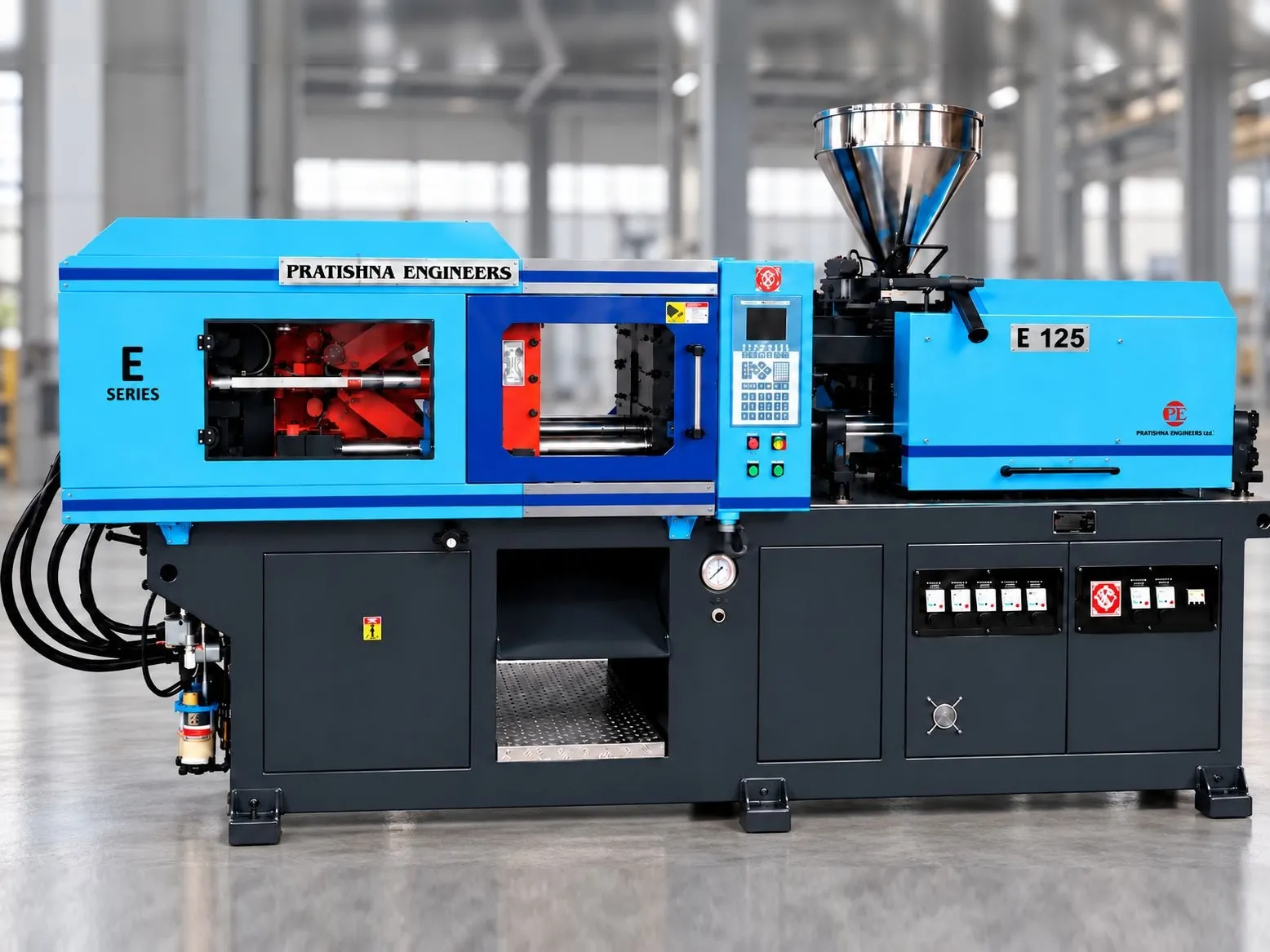
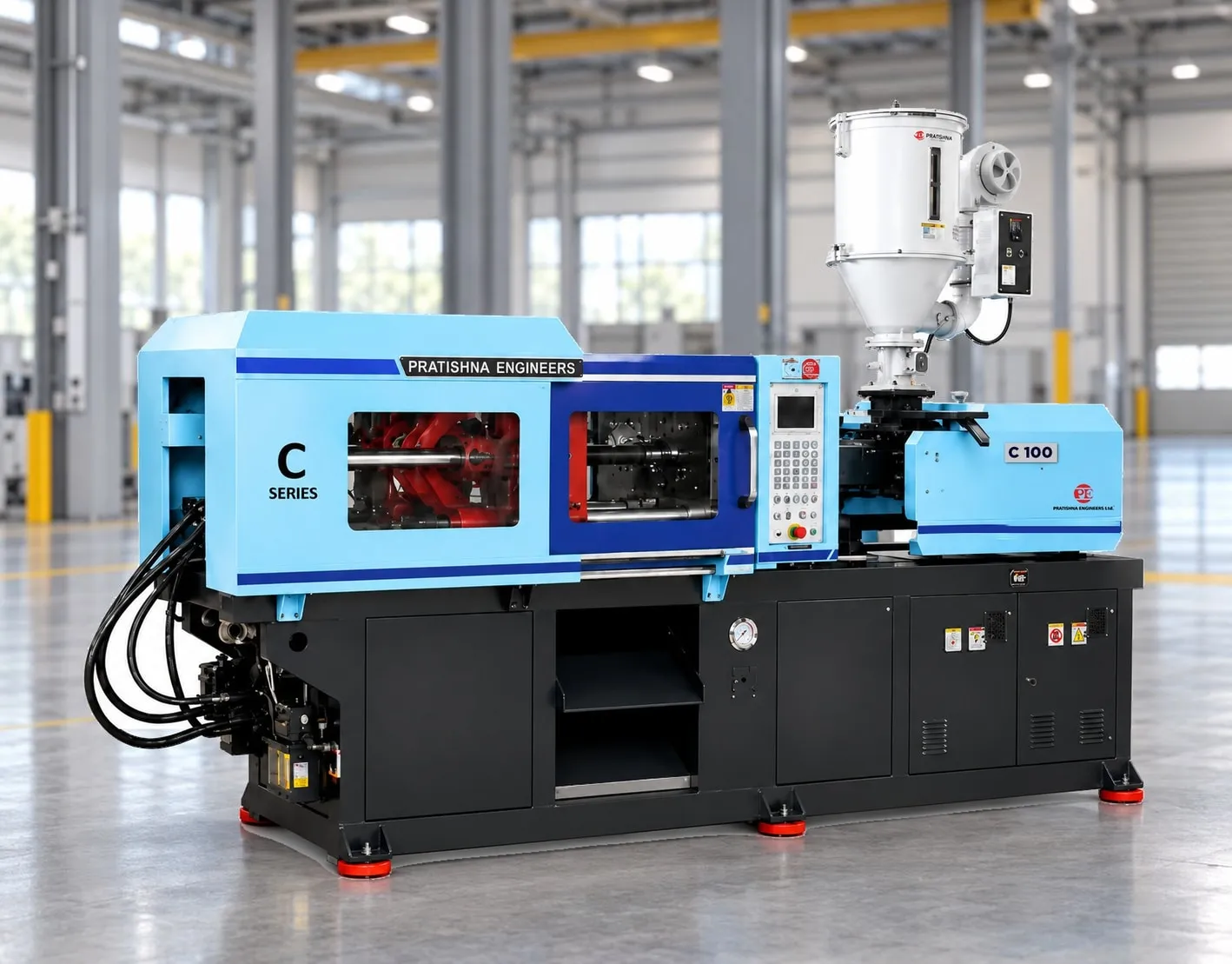
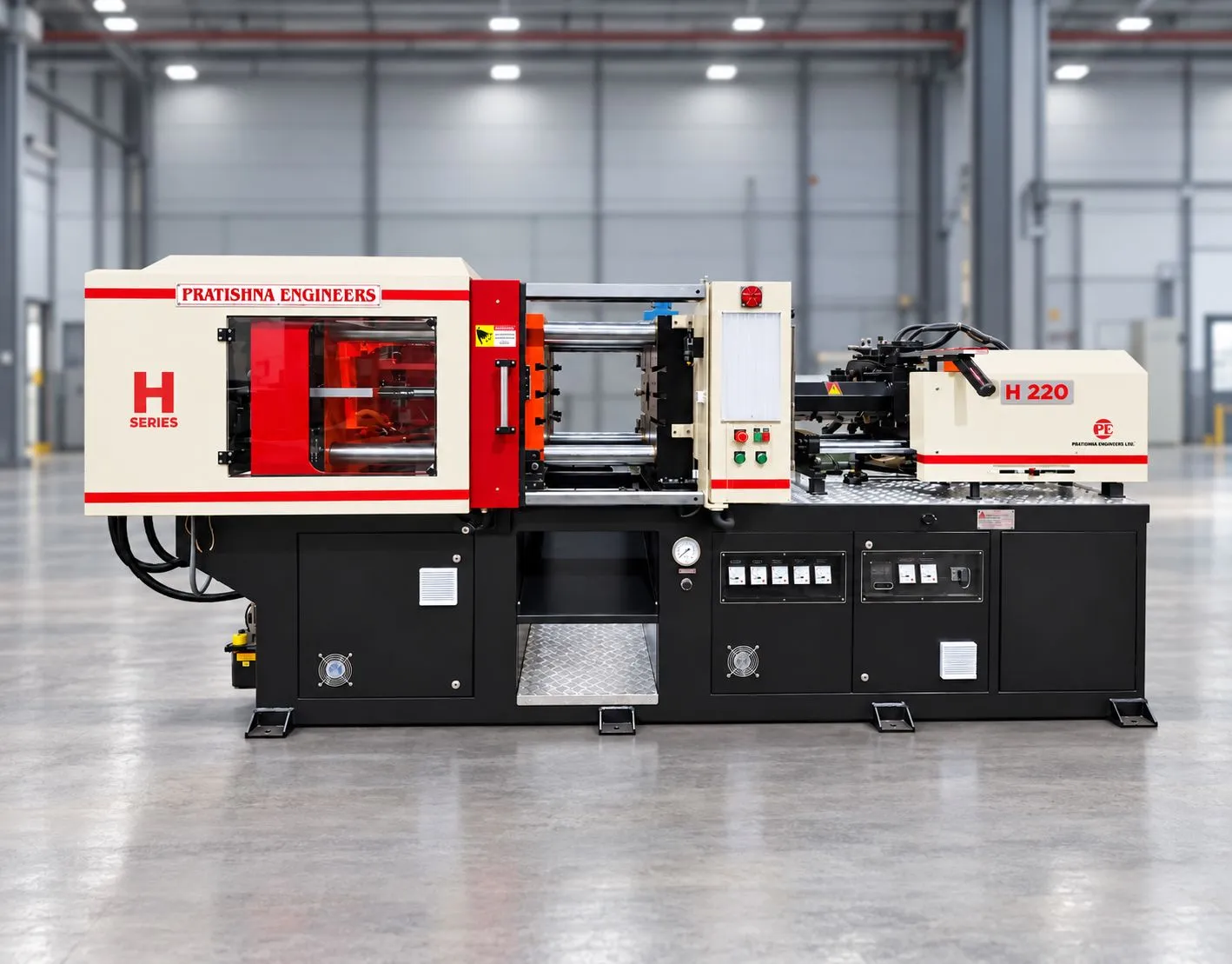
Compact pneumatic valve bodies with a few side cores fit the E Series (75-180 T). Larger manifold blocks, fluid valve bodies and moulds carrying several core pulls need more mould space, opening stroke and clamping force, which points to C Series (140-320 T) or H Series (120-350 T) machines.
Not Sure Which Machine You Need?
Send your valve body drawing and working pressure for a recommendation.
Why Choose Pratishna Engineers?
- Application-Based Machine Selection
- In-House Engineering & Manufacturing
- Multiple Machine Series
- Production-Focused Solutions
- End-to-End Technical Support
- Industry-Specific Solutions
- Machine Lifecycle Support
Injection Moulding Machine Buyer Resources
Download practical resources to help you select, size and specify the right machine.
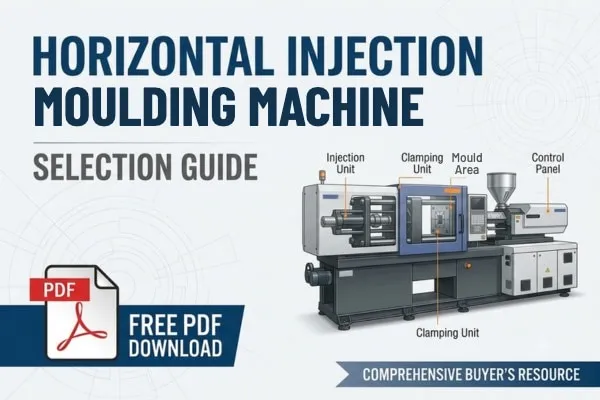
Horizontal Injection Moulding Machine Selection Guide
A step-by-step guide covering the key inputs needed to select the right machine: product weight, projected area, number of cavities, plastic material, required clamping force, shot / injection capacity, mould dimensions, production quantity, cycle time and automation requirement.
Download PDFPDF · 265 KB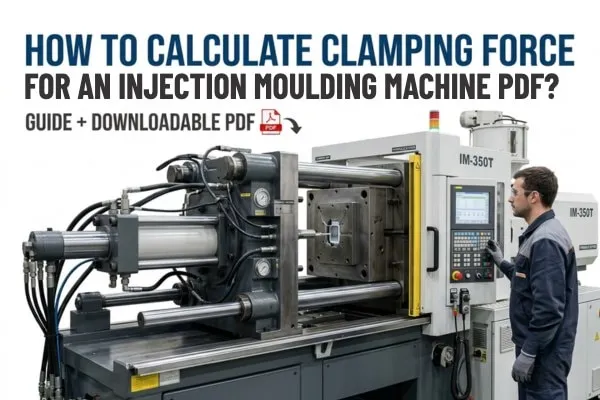
How to Calculate Clamping Force for an Injection Moulding Machine
A clear methodology that explains how clamping force is calculated, covering projected area, injection pressure, safety factor, number of cavities and material considerations.
Download PDFPDF · 363 KBEngineering Components & Machine Guide
A guide to Engineering components, covering gears, bushings, rollers, bearings, brackets, pneumatic fittings, sprockets and precision mechanical parts. It explains POM, nylon and filled grades, shrinkage, tolerance control, and how to match each part to a suitable machine.
Download PDFPDF · 206 KB
FAQs / Buyer Questions
Questions valve and manifold makers ask most when choosing a moulding machine.
Which Injection Moulding Machine Is Used to Make Valve Bodies and Manifolds?
A horizontal machine with core-pull circuits for the port cores. Compact pneumatic bodies usually run in the E Series, while large manifolds and multi-core moulds need the C or H Series for mould space and opening stroke.What Affects Burst Pressure in a Moulded Valve Body?
Wall uniformity and internal surface quality matter most. Voids in thick sections, weld lines across ports and rough bores all lower burst performance. Even walls, gating that keeps weld lines away from pressure zones and full packing help.How Is Flash Kept Off Sealing Faces and O-ring Grooves?
Good parting line fit, enough clamping force for the projected area and controlled injection pressure keep flash off. Placing the parting line away from sealing faces and O-ring grooves in the mould design avoids the problem at source.
Which Material Suits Valve Bodies for Chemicals or Hot Media?
Glass-filled PA66 or PBT suits many air and water duties, with POM for small pneumatic bodies. PPS is used where chemicals or higher temperatures rule out nylon. Compatibility with the media must be checked at operating temperature.Can Pratishna Recommend a Machine for My Valve Body?
Yes. Share the valve body drawing or sample, material, part weight, mould dimensions, number of core pulls and production quantity, and Pratishna Engineers will recommend a suitable machine.Does the Machine Suit Other Fluid Handling Parts Too?
Yes. Similar machines can mould industrial fittings and quick couplers, impellers and pump rotors, plastic bearings and precision mechanical parts, where the mould and material allow.
Technical Disclaimer
Disclaimer: The information provided in this webpage is for general informational and educational purposes only. It is based on technical references and industry information available at the time of preparation and may be subject to change. It does not constitute engineering, technical, commercial or professional advice, nor does it constitute a quotation, specification, warranty or contractual commitment by Pratishna Engineers.
Actual injection moulding machine and process requirements vary according to the component design, material, mould, production volume, machine configuration and operating conditions. The information, examples, calculations and recommendations provided should be independently evaluated and verified for the specific application before making any equipment, process or production decision. Information obtained from third-party sources remains subject to the accuracy and limitations of those sources.
Limitation of Liability: Pratishna Engineers makes no representation or warranty, express or implied, regarding the completeness, accuracy or suitability of the information for any particular application. To the extent permitted by applicable law, Pratishna Engineers shall not be liable for any loss, damage, cost or consequence arising from reliance on or use of the information contained in this webpage. Final machine selection, configuration and application suitability should be confirmed with Pratishna Engineers based on complete and accurate project requirements.
Talk to Our Engineers
Planning a New Injection Moulding Project?
Share your component, material, mould and production target. Our engineering team will help you identify the right machine configuration.
- Machine Sales
- +91 99690 38542
- Service Support
- +91 97689 28259
- Sales Email
- [email protected]