
Injection Moulding Machine for Circuit Protection Components
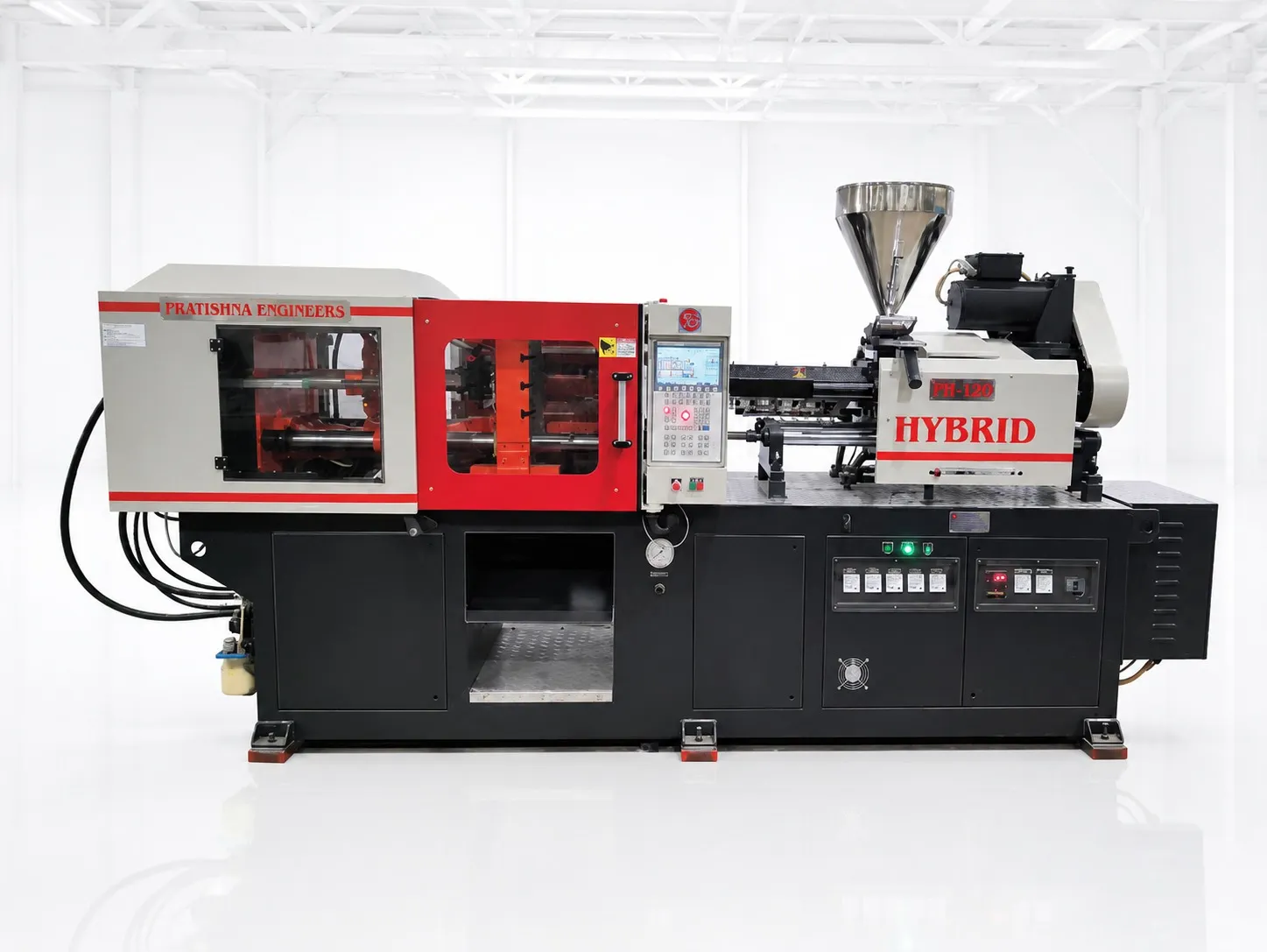
Circuit protection components such as trip levers, contact carriers, arc chute plates and terminal covers are made on small horizontal injection moulding machines, while thermoset arc parts need a DMC machine. Part size is small, so tolerance and cavity count matter more than tonnage. Flash into a mechanism pocket makes the part scrap.
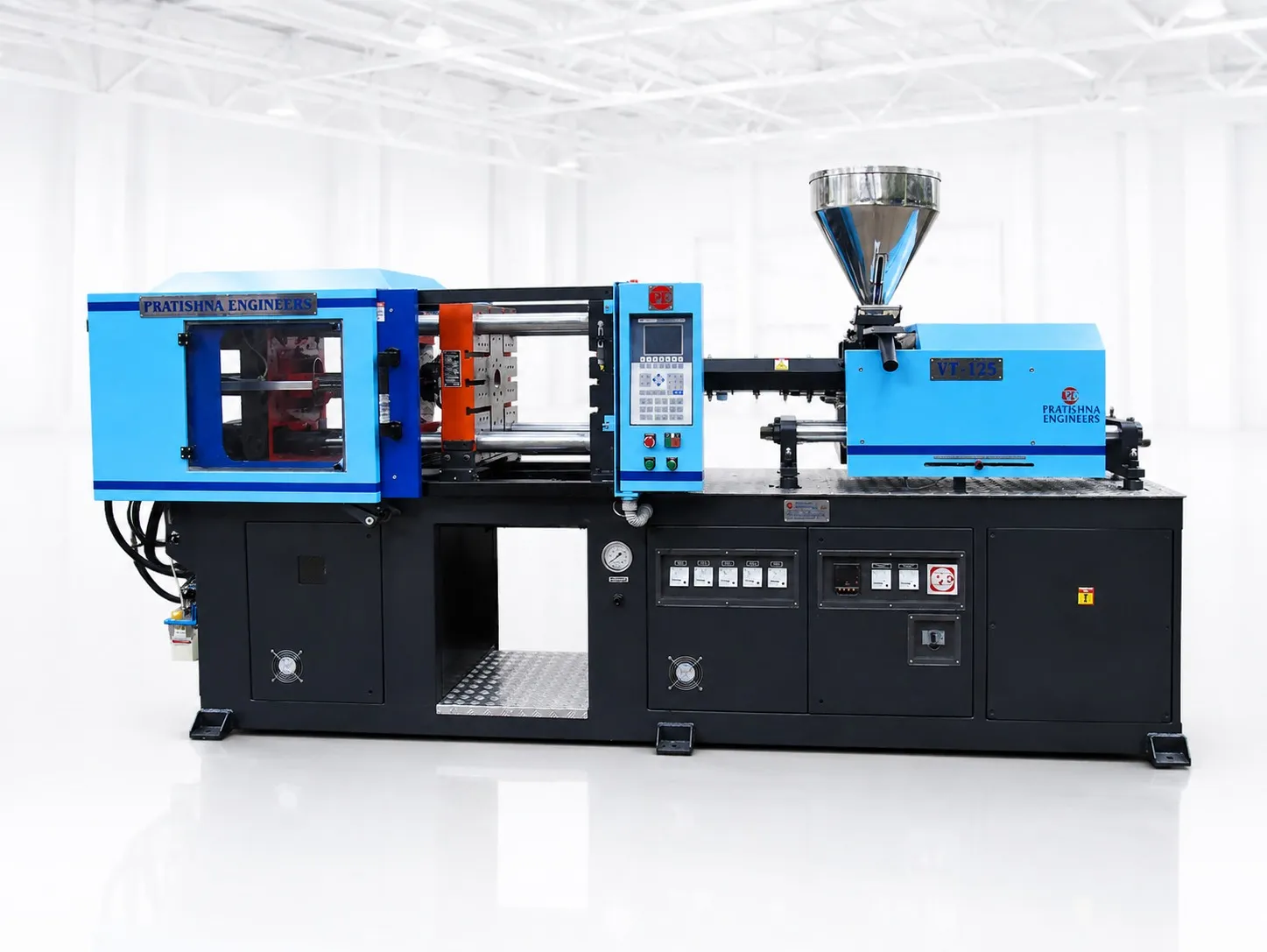
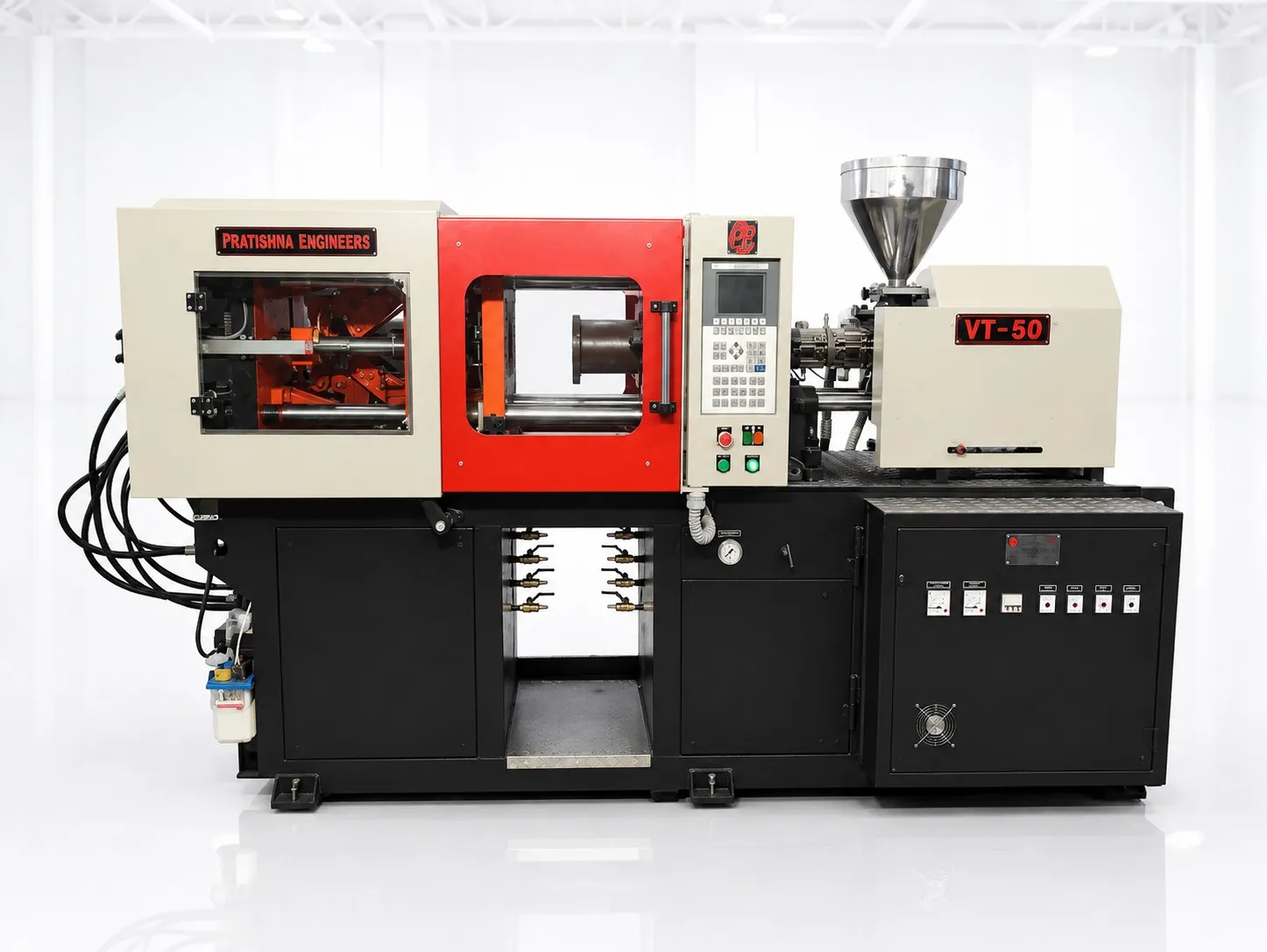
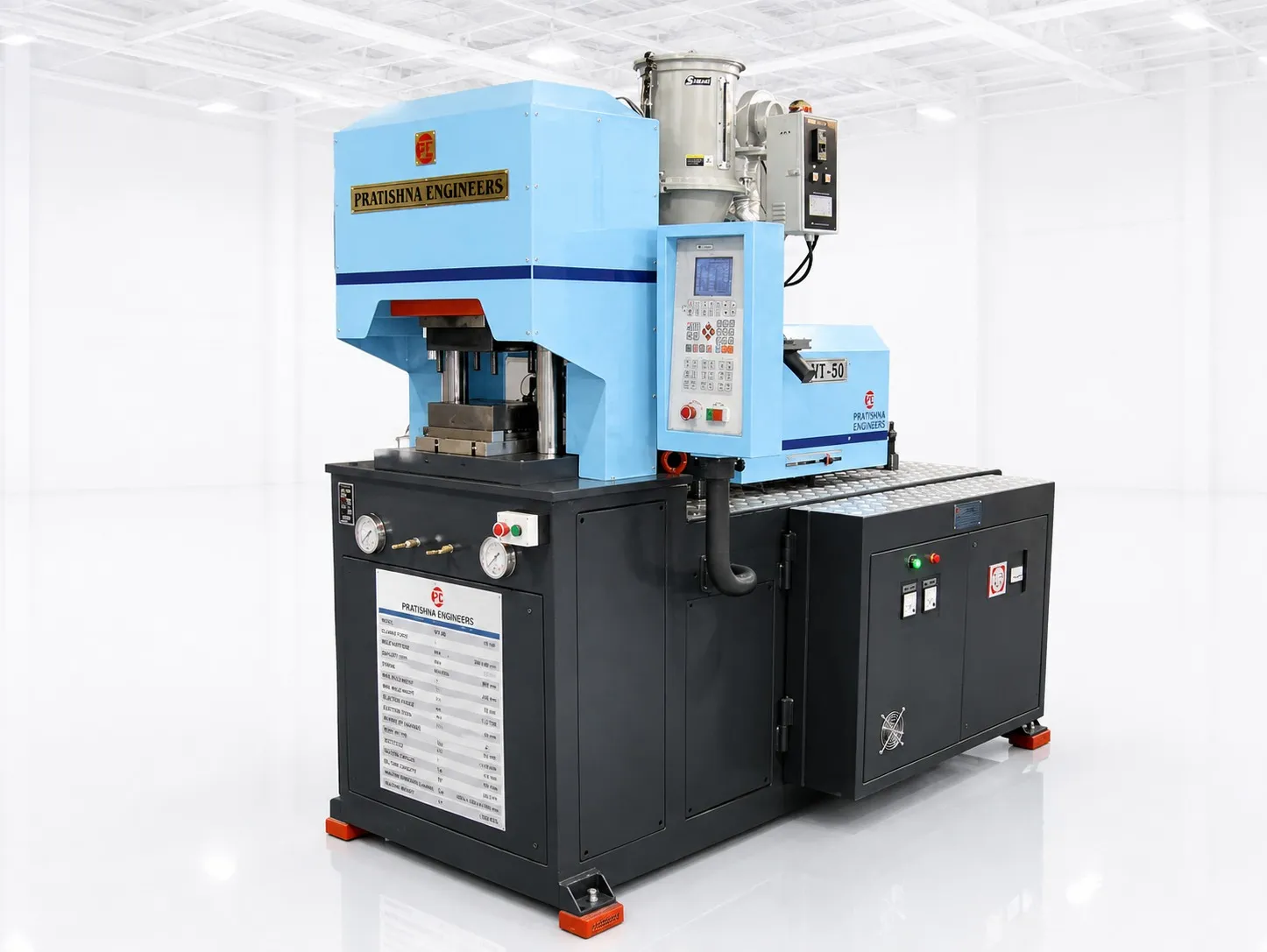
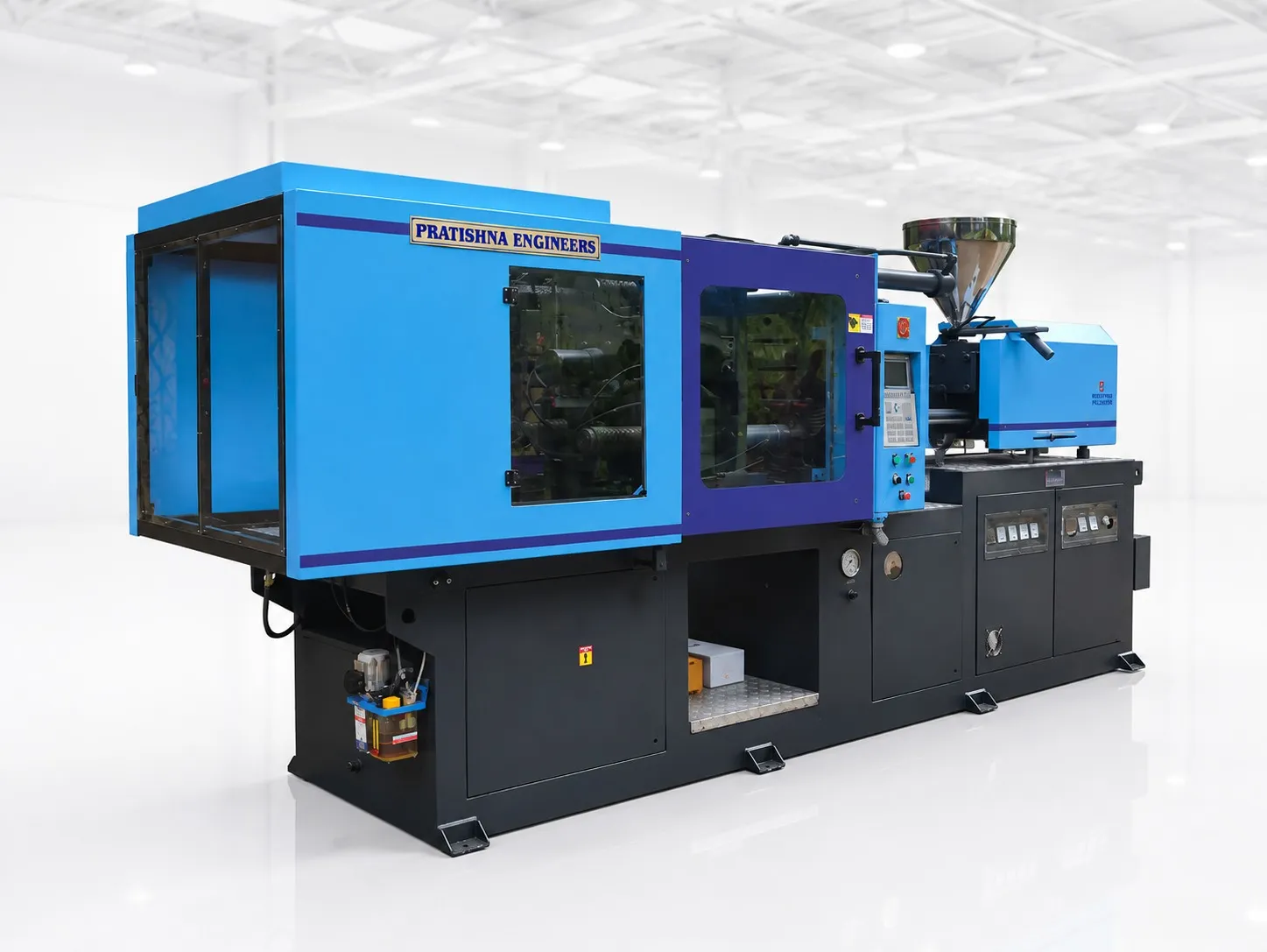
Selection for breaker internals focuses on shot accuracy, mould temperature control for high-heat polyamides and clean parting lines. Pratishna Engineers supplies horizontal injection moulding machines for circuit protection parts and can recommend a configuration for each component.
Moulding Circuit Protection Parts?
Send the part drawings, tolerances and material grades, and Pratishna Engineers will suggest a machine for each part.
Machine Requirements for Circuit Protection Component Moulding
These are small parts inside a safety device, and the machine must hold them to size shot after shot:
- Small shot weight with repeatable metering and holding pressure
- High mould temperature control for PPA and PA46
- Wear-resistant screw and barrel for glass-filled grades
- Flash-free parting lines around pivot holes and pockets
- Thorough drying of PA66, PBT and PPA
- Grade documentation per lot for safety-critical parts
Recommended Machine for Circuit Protection Components
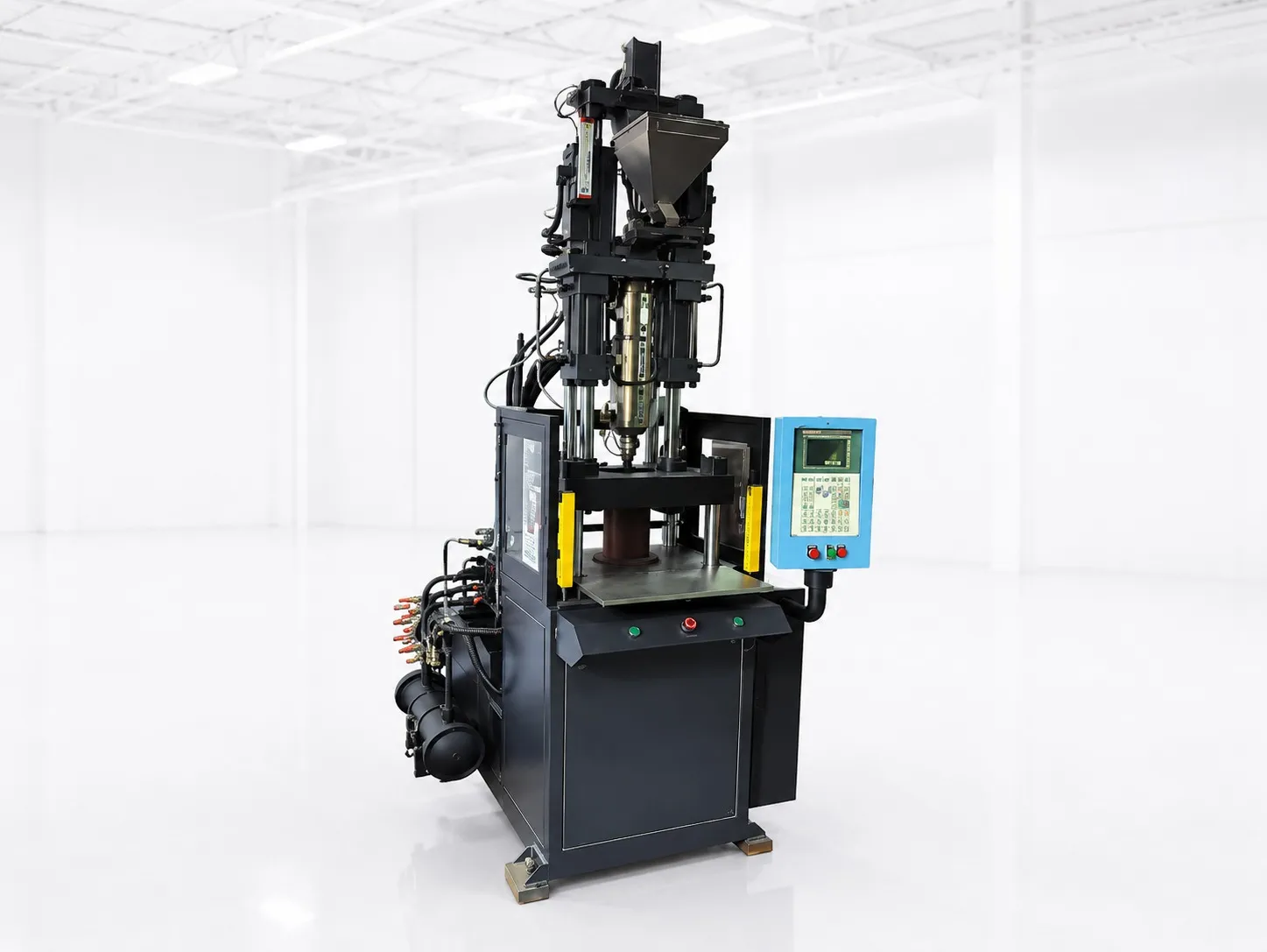
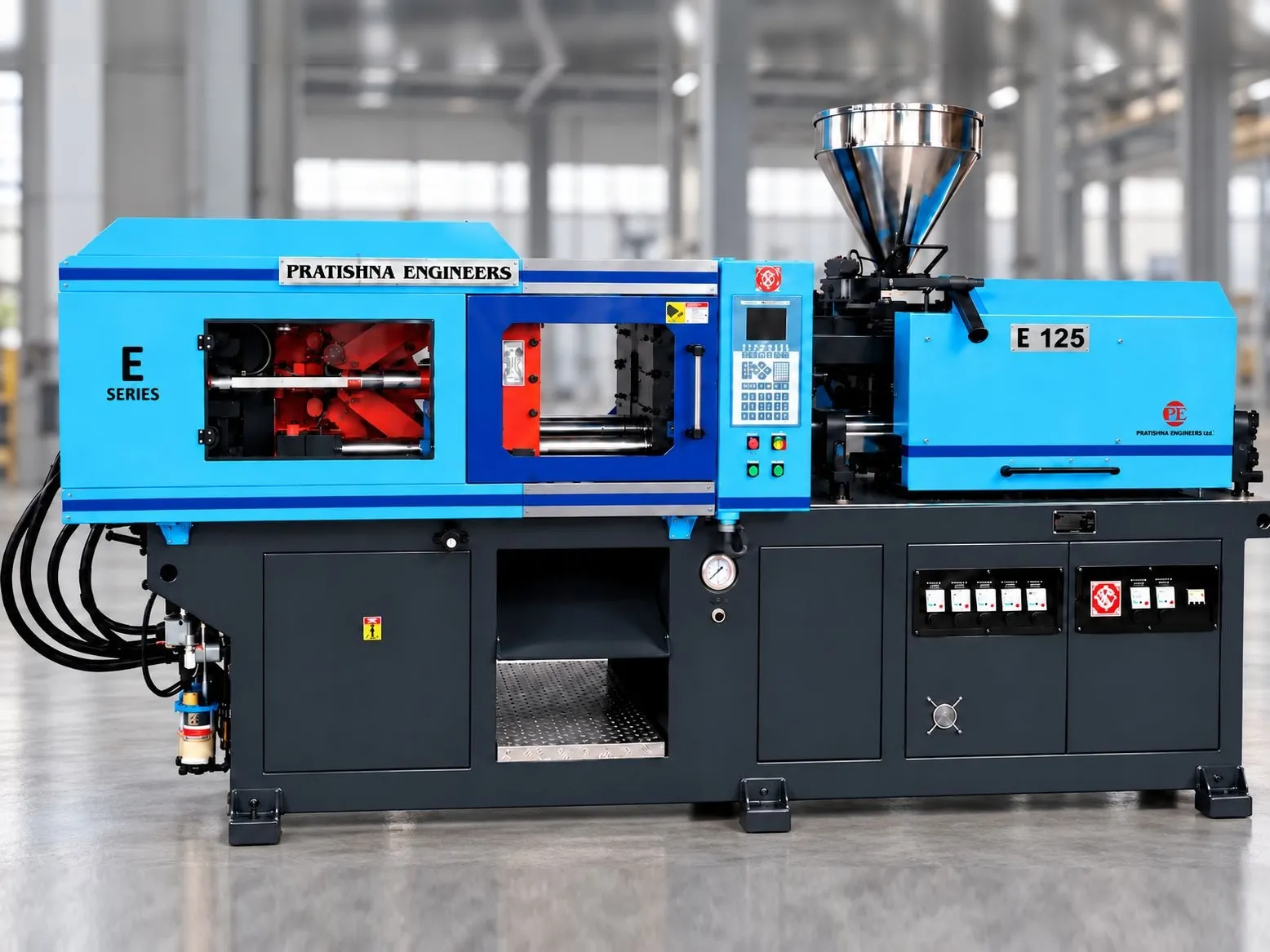
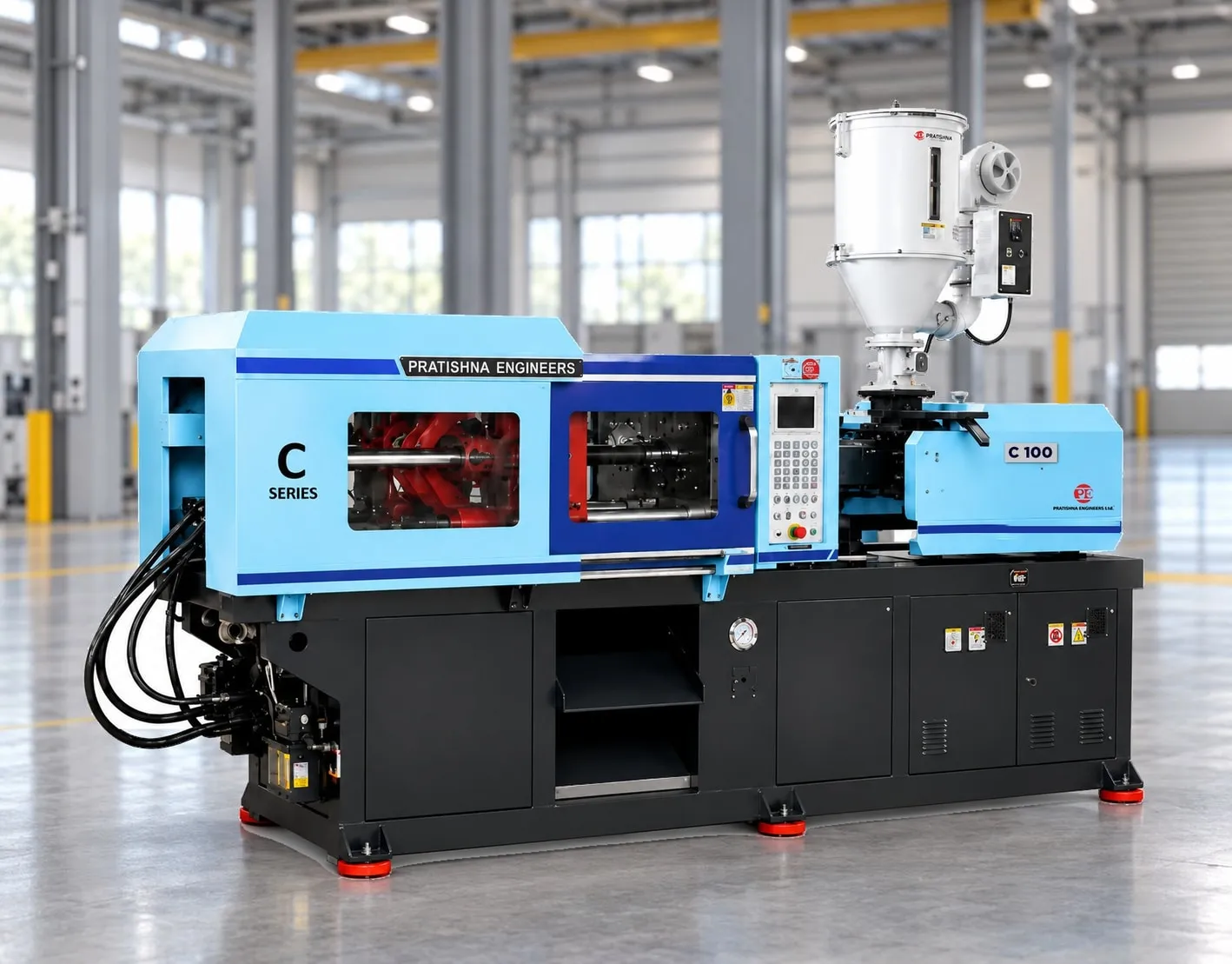
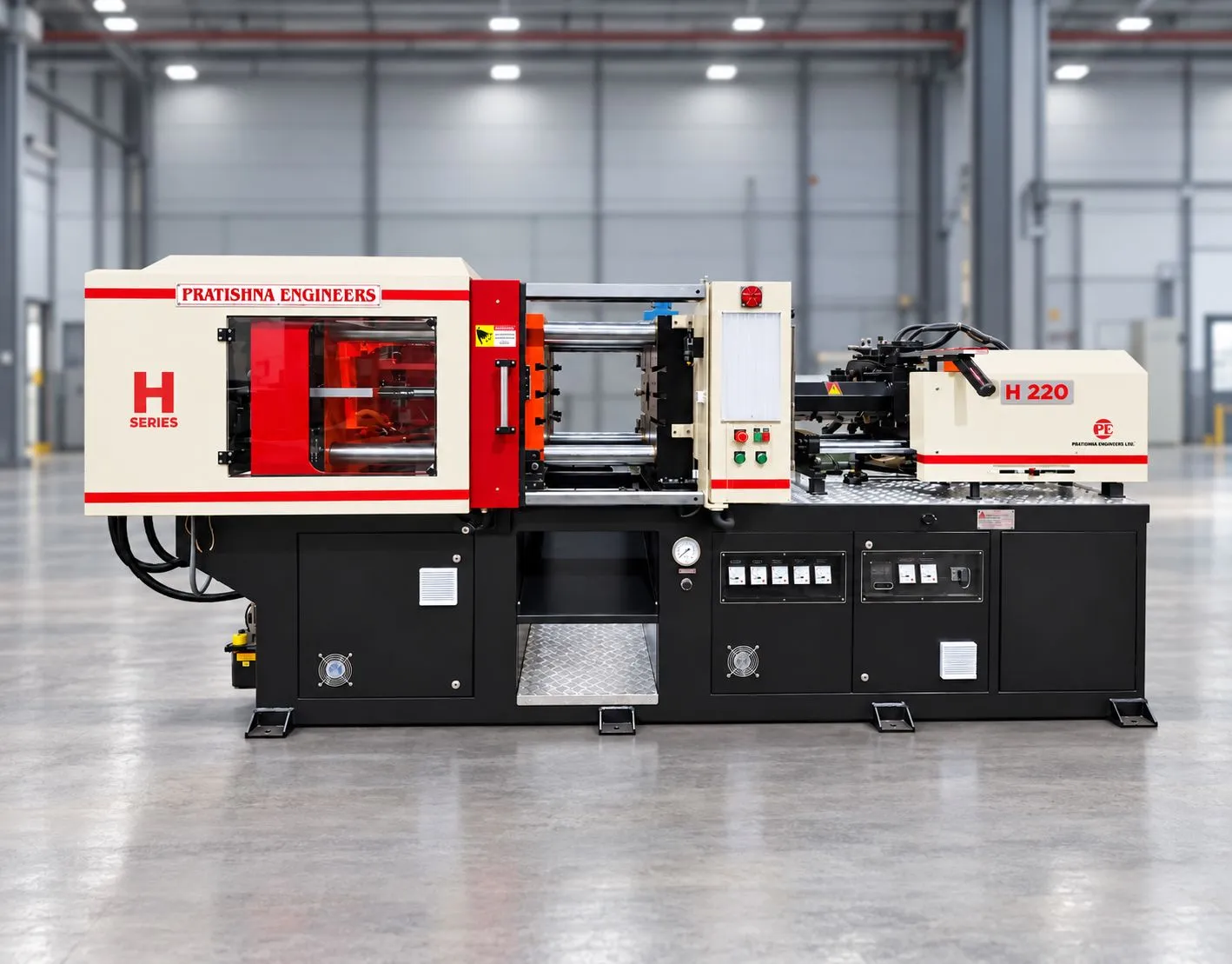
Trip levers, carriers and terminal covers are light parts, so the E Series (75-180 T) suits most multi-cavity moulds. Larger terminal covers or family tools can move to the H Series (120-350 T) or C Series (140-320 T). DMC and BMC arc parts need a Special Purpose Injection Moulding Machine, which Pratishna Engineers builds to application.
Not Sure Which Machine You Need?
Share the component list and grades for a machine suggestion per part.
Why Choose Pratishna Engineers?
- Application-Based Machine Selection
- In-House Engineering & Manufacturing
- Multiple Machine Series
- Production-Focused Solutions
- End-to-End Technical Support
- Industry-Specific Solutions
- Machine Lifecycle Support
Injection Moulding Machine Buyer Resources
Download practical resources to help you select, size and specify the right machine.
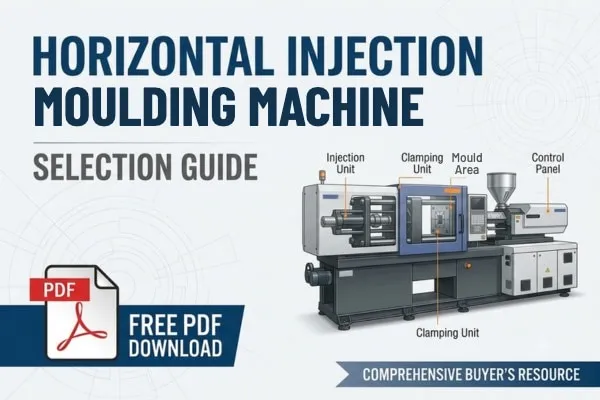
Horizontal Injection Moulding Machine Selection Guide
A step-by-step guide covering the key inputs needed to select the right machine: product weight, projected area, number of cavities, plastic material, required clamping force, shot / injection capacity, mould dimensions, production quantity, cycle time and automation requirement.
Download PDFPDF · 265 KB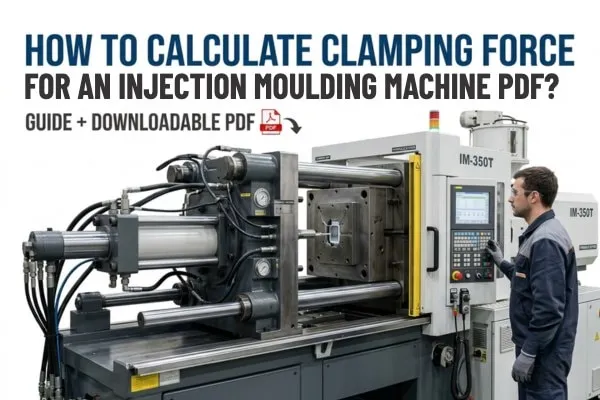
How to Calculate Clamping Force for an Injection Moulding Machine
A clear methodology that explains how clamping force is calculated, covering projected area, injection pressure, safety factor, number of cavities and material considerations.
Download PDFPDF · 363 KBElectrical & Electronics Components & Machine Guide
A guide to Electrical & Electronics components, covering switches, sockets, MCB and RCCB housings, plug tops, meter boxes, solar connectors and electronic housings. It explains flame-retardant and glass-filled grades, thermoset parts, dimensional control, and how to match each part to a suitable machine.
Download PDFPDF · 202 KB
FAQs / Buyer Questions
Questions breaker and switchgear part makers ask most.
Which Injection Moulding Machine Is Used to Make Circuit Protection Components?
Thermoplastic internals mostly suit the E Series, since each part weighs little and runs in several cavities. Bigger covers can use the C or H Series, and thermoset arc parts need a machine built to application.Which Parts Need Thermoset or High-Temperature Polyamide?
Parts close to the arc must not soften or track. DMC and BMC, or high-heat polyamides such as PA46 and PPA, are used there. Trip levers and terminal covers away from the arc can use glass-filled PA66 or PBT.Why Is Flash Such a Problem on Breaker Internals?
A thin fin on a pivot hole or inside a mechanism pocket can jam the trip action. It cannot be trimmed reliably, so these parts are scrapped. Good venting and a well-fitted parting line prevent it.
Do PPA and PA46 Need a Special Mould Setup?
Both need high mould temperatures, often from oil or pressurised water heaters, and careful drying. Too cold a mould gives poor surface and lower crystallinity, which affects heat resistance.Can Pratishna Recommend a Machine for My Circuit Protection Component?
Yes. Share the part drawing, tolerances, material grade, part weight, mould dimensions, cavity count and monthly quantity, and Pratishna Engineers will recommend a suitable machine.Does the Machine Suit Other Electrical and Electronics Parts Too?
Yes. The same machines can mould MCB housings, RCCB housings, contactor and relay housings and modular switch parts, subject to the specific mould.
Technical Disclaimer
Disclaimer: The information provided in this webpage is for general informational and educational purposes only. It is based on technical references and industry information available at the time of preparation and may be subject to change. It does not constitute engineering, technical, commercial or professional advice, nor does it constitute a quotation, specification, warranty or contractual commitment by Pratishna Engineers.
Actual injection moulding machine and process requirements vary according to the component design, material, mould, production volume, machine configuration and operating conditions. The information, examples, calculations and recommendations provided should be independently evaluated and verified for the specific application before making any equipment, process or production decision. Information obtained from third-party sources remains subject to the accuracy and limitations of those sources.
Limitation of Liability: Pratishna Engineers makes no representation or warranty, express or implied, regarding the completeness, accuracy or suitability of the information for any particular application. To the extent permitted by applicable law, Pratishna Engineers shall not be liable for any loss, damage, cost or consequence arising from reliance on or use of the information contained in this webpage. Final machine selection, configuration and application suitability should be confirmed with Pratishna Engineers based on complete and accurate project requirements.
Talk to Our Engineers
Planning a New Injection Moulding Project?
Share your component, material, mould and production target. Our engineering team will help you identify the right machine configuration.
- Machine Sales
- +91 99690 38542
- Service Support
- +91 97689 28259
- Sales Email
- [email protected]