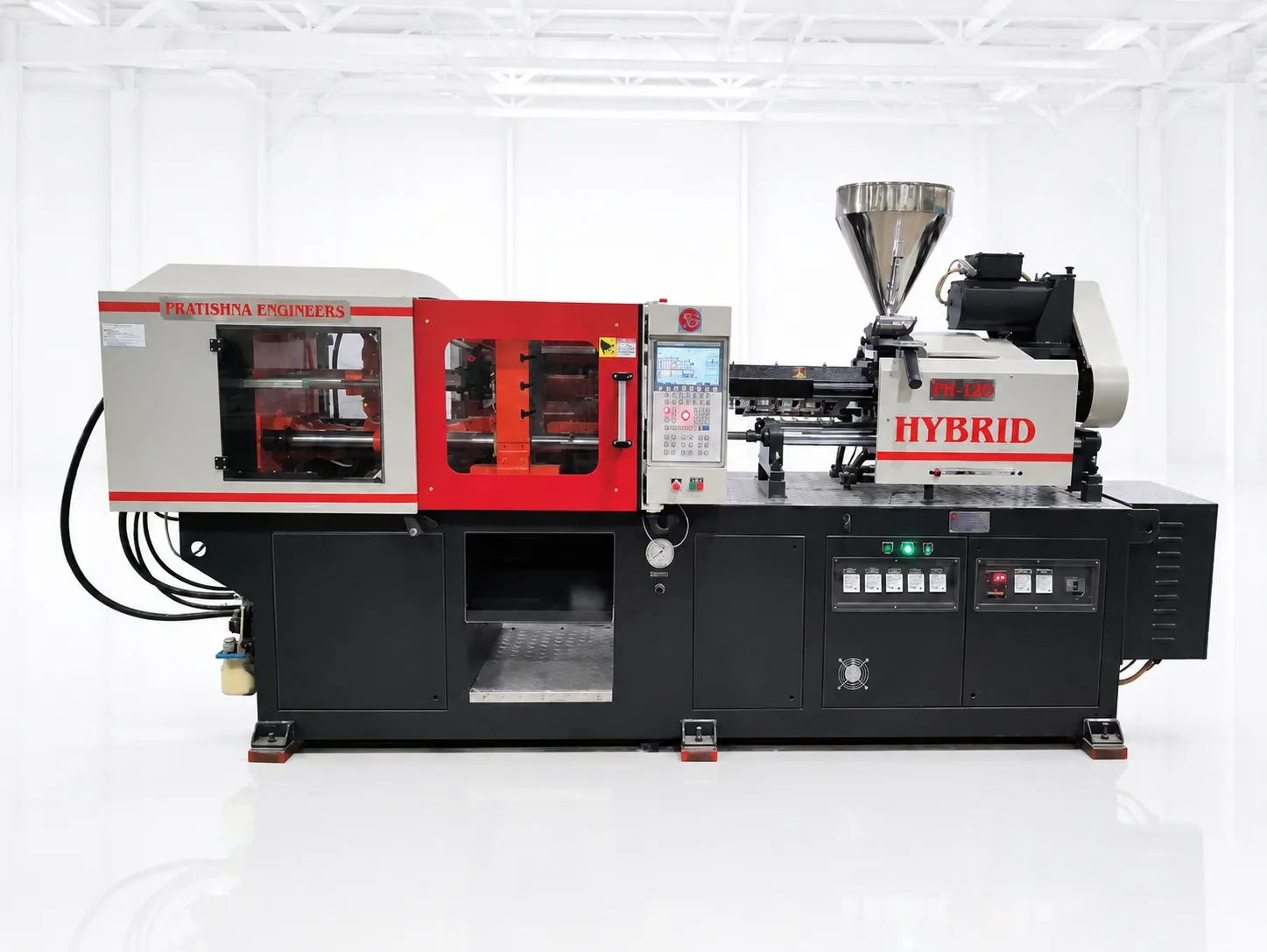
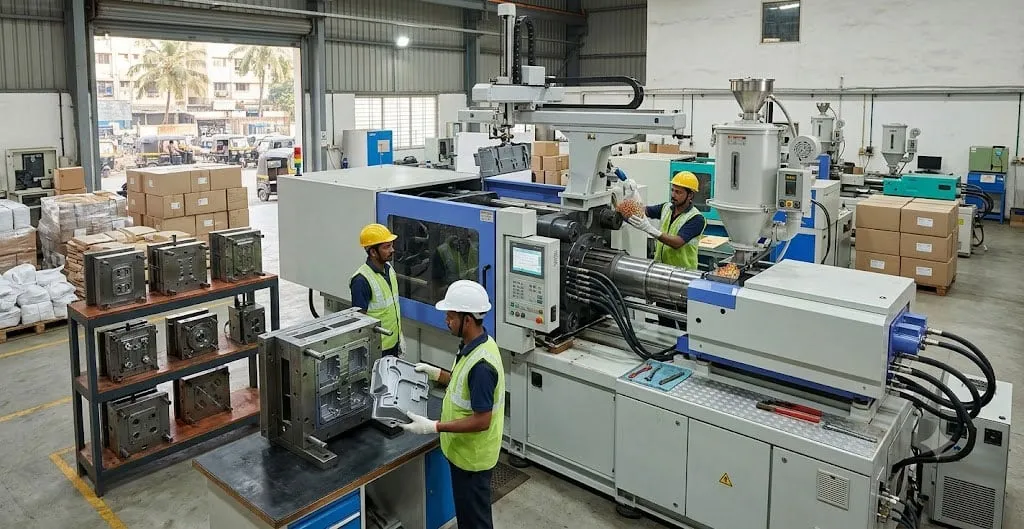

When a buyer searches for plastic injection moulding machines in Mumbai, it usually means the requirement is already active. This is not a casual search. In most cases, the company is either planning a new production setup, expanding output, or replacing old machinery that is affecting efficiency and rejection rates.
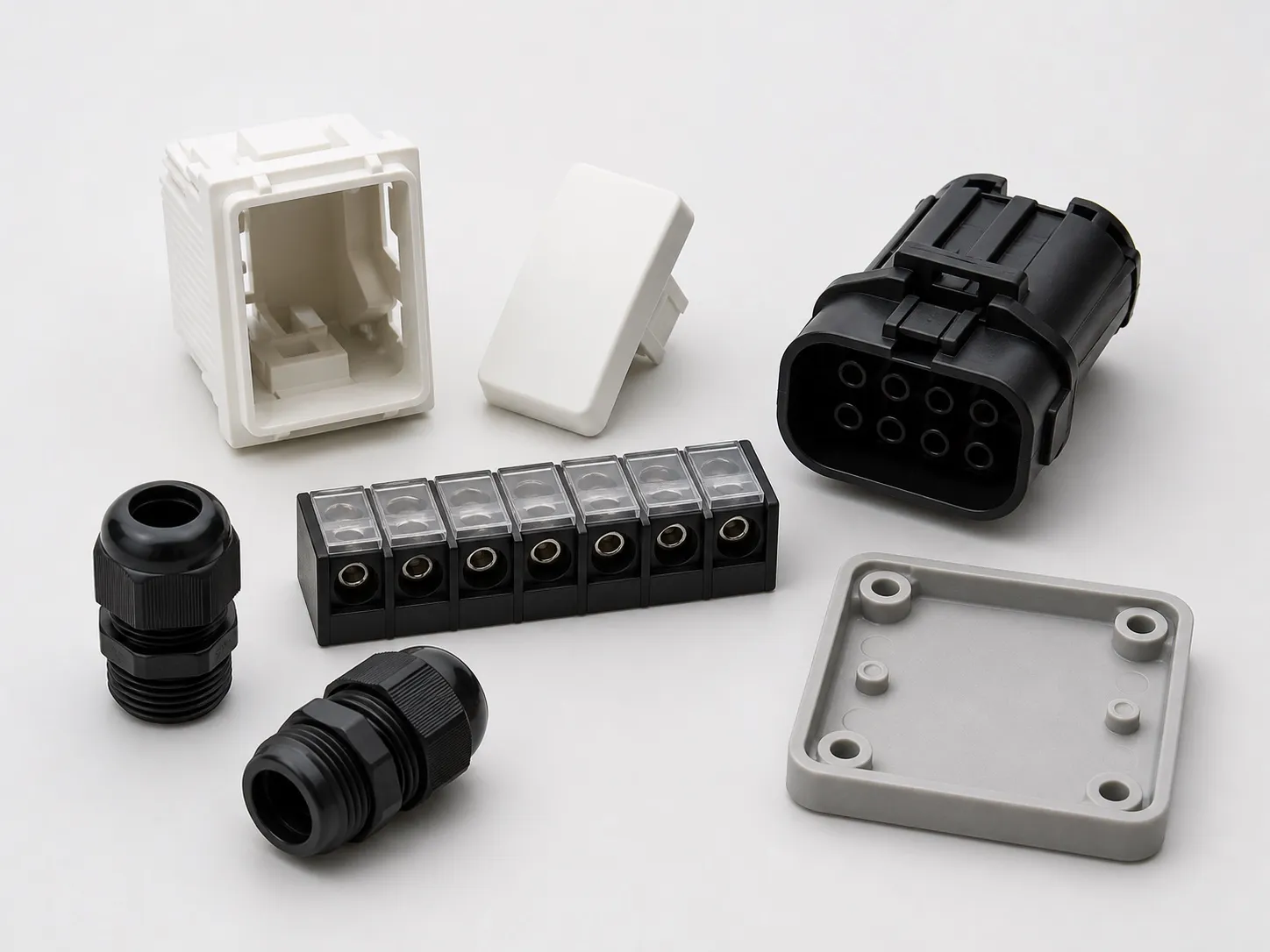
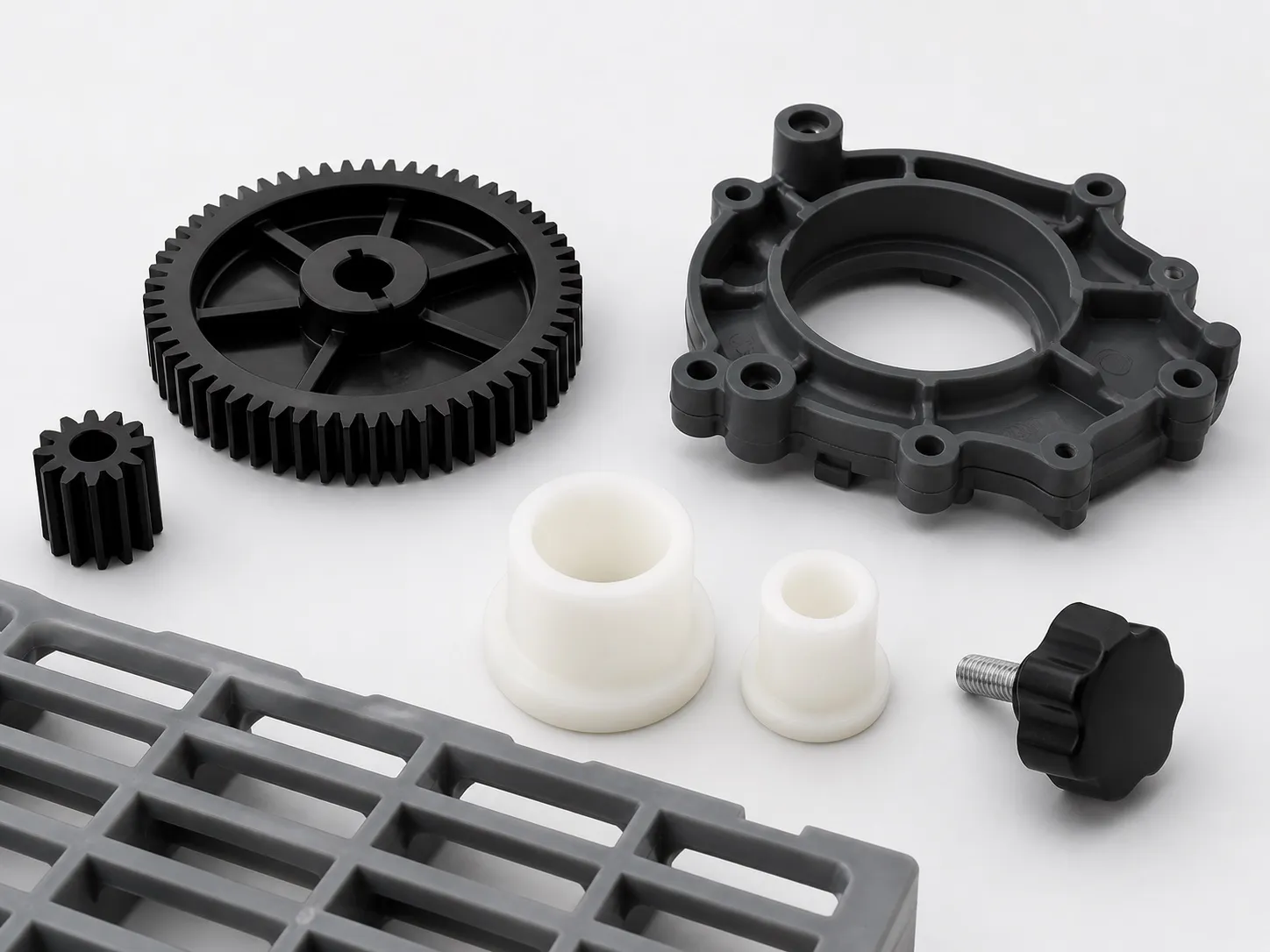
Plastic injection moulding machines are used across automotive, electrical, packaging, household products, and engineering plastic component manufacturing. The process sounds simple at surface level, but in actual factory conditions, machine stability, output repeatability, and operating cost decide whether the investment is successful or not.
From a real buyer’s perspective, the machine itself is not the end goal. The real concern is whether the system can produce parts consistently with low rejection, controlled cycle time, and manageable energy cost. That is why many industrial buyers first review the broader range of injection moulding machines before narrowing down to a specific configuration.
In Mumbai’s industrial market, buyers are usually comparing suppliers on five practical points:
- machine performance under continuous production
- power consumption over long shifts
- material compatibility
- ease of maintenance
- support after installation
A machine may look strong in specifications, but actual shop-floor performance depends on engineering quality, machine control, and application matching. This is where experienced buyers become careful. They do not ask only for tonnage or price. They ask whether the machine is suitable for their product, mould, and production target.
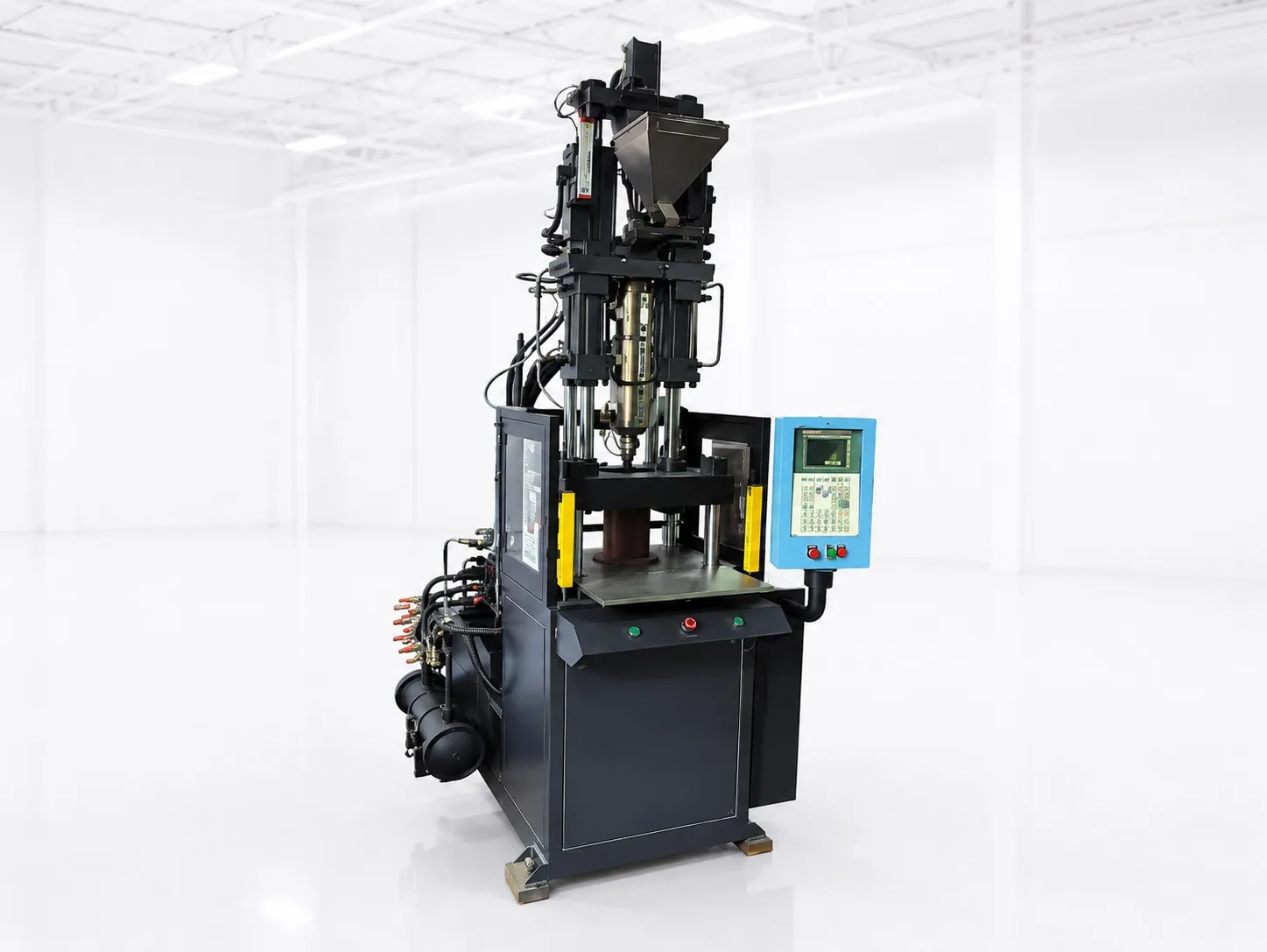
Another practical point is that different applications need different machine orientations and structures. For example, some buyers with large-volume moulding needs lean toward horizontal injection moulding machines, while others dealing with insert moulding or compact precision jobs evaluate vertical injection moulding machines.
The important thing here is simple: a good buying decision does not start with price. It starts with understanding the production requirement clearly.
Why Mumbai is a Strategic Hub for Plastic Injection Moulding Machine Buyers
Mumbai has a strong advantage in machinery sourcing because it combines manufacturing support, service accessibility, and export logistics in one region. That matters more than many buyers initially realize.
A machine purchase is not a one-time event. After installation, the buyer still depends on spare parts, service response, operator guidance, and future upgrades. A city like Mumbai offers a stronger ecosystem for all of this because of its industrial network and supply chain support.
From a sourcing point of view, Mumbai gives access to:
- hydraulic and electrical component vendors
- fabrication and machining support
- industrial automation integration
- skilled technicians and commissioning teams
This ecosystem helps manufacturers maintain better delivery timelines and stronger technical support. For buyers, that reduces long-term risk.
Mumbai also offers a major logistics advantage because of proximity to Nhava Sheva and established export channels. This is especially useful for buyers in GCC countries, African markets, and Southeast Asia, where lead time and shipment coordination matter. Companies looking at export-oriented projects often compare not only machinery, but also the supplier’s ability to support shipping, documentation, and future service. In such cases, reviewing the company’s overall application expertise becomes important because it shows whether the manufacturer understands industry-specific requirements or only supplies standard equipment.
There is another practical reason buyers prefer Mumbai-based manufacturers: downtime is expensive. If a machine stops and service takes too long, production loss quickly becomes more costly than the original purchase discount. Many buyers who previously depended on imported systems eventually shift to Indian suppliers because they want faster local support and easier spare availability.
So when someone searches for plastic injection moulding machines in Mumbai, they are not just searching by location. In many cases, they are actually searching for faster support, lower logistics risk, and a more dependable supply relationship.
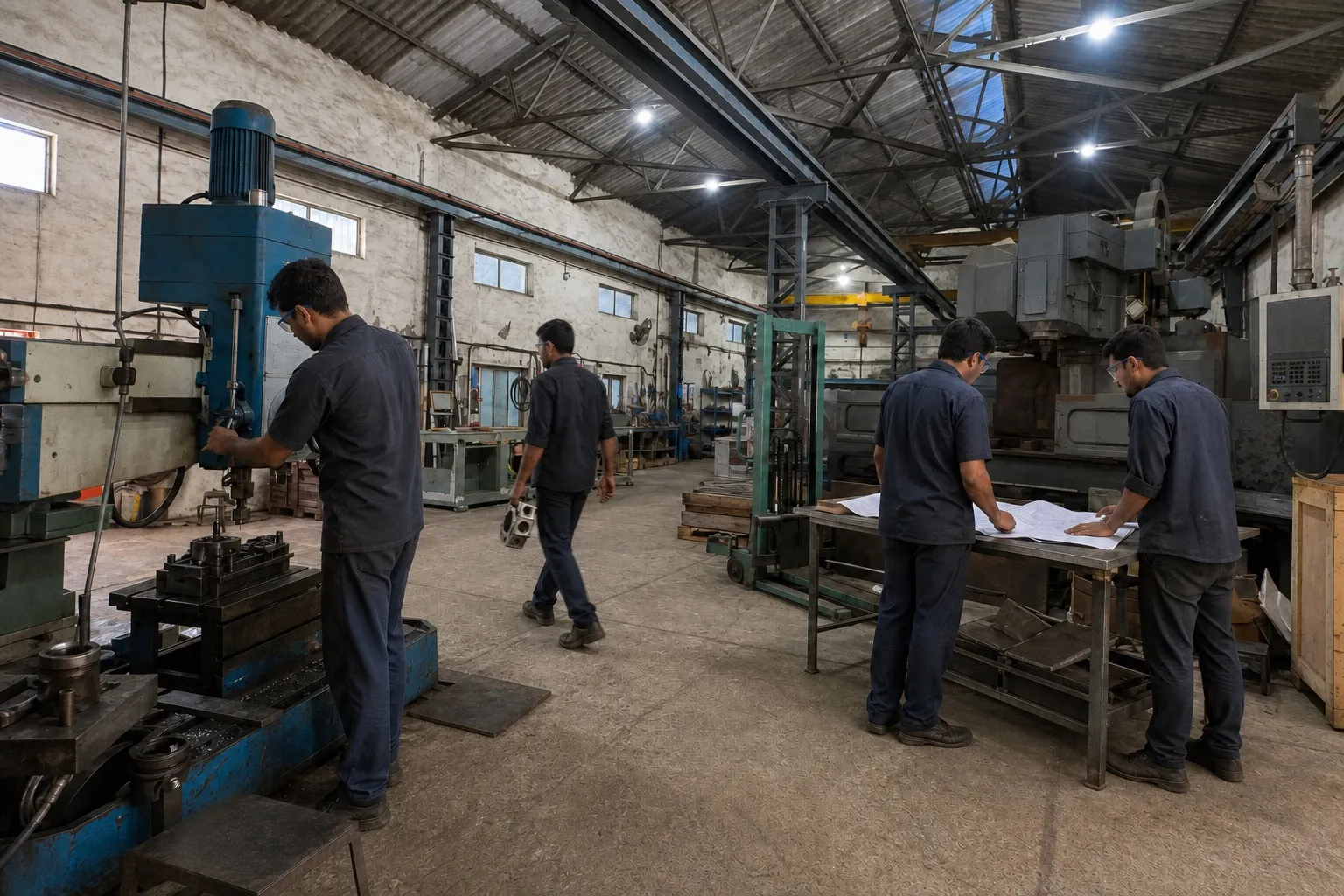
Types of Plastic Injection Moulding Machines Available in Mumbai
Before selecting a manufacturer, buyers need to understand the machine categories available. This is important because even a good machine can become the wrong investment if the type does not match the application.
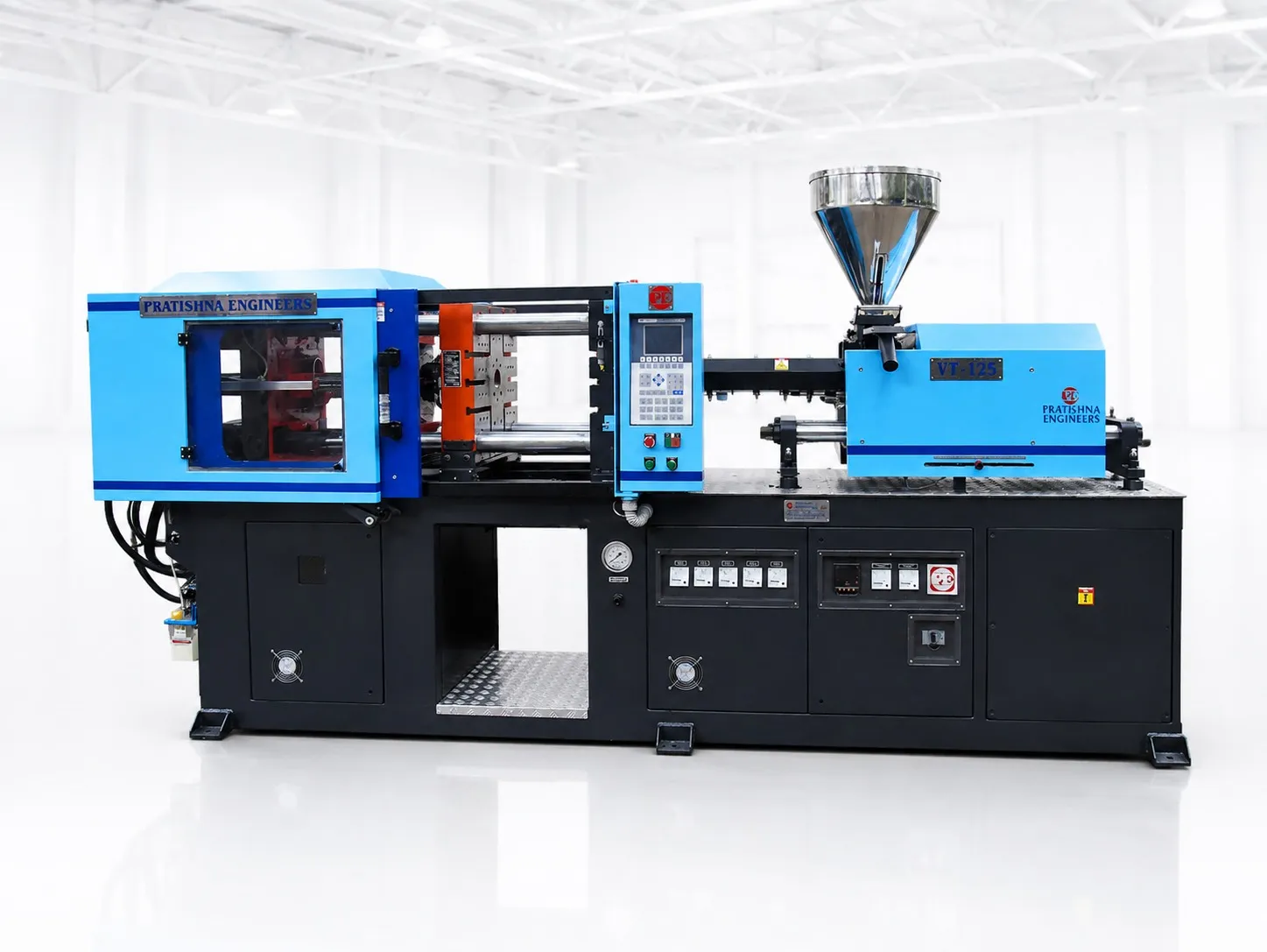
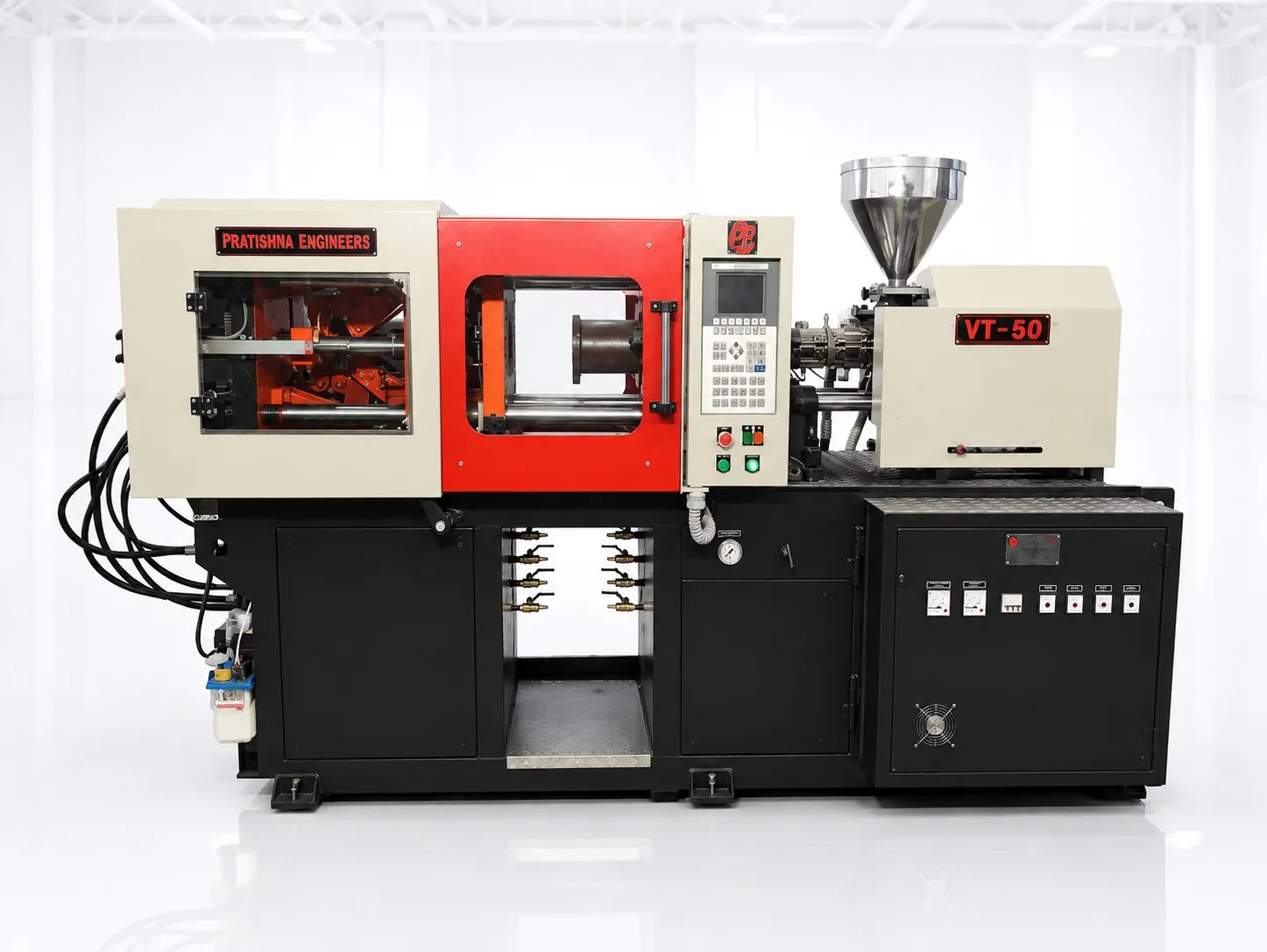
The most common category is the horizontal machine. These are preferred for larger production runs, easier automation integration, and general industrial moulding work. Buyers producing containers, consumer parts, automotive components, and standard plastic products often begin with horizontal injection moulding machines because they support higher-volume operation and efficient material flow.
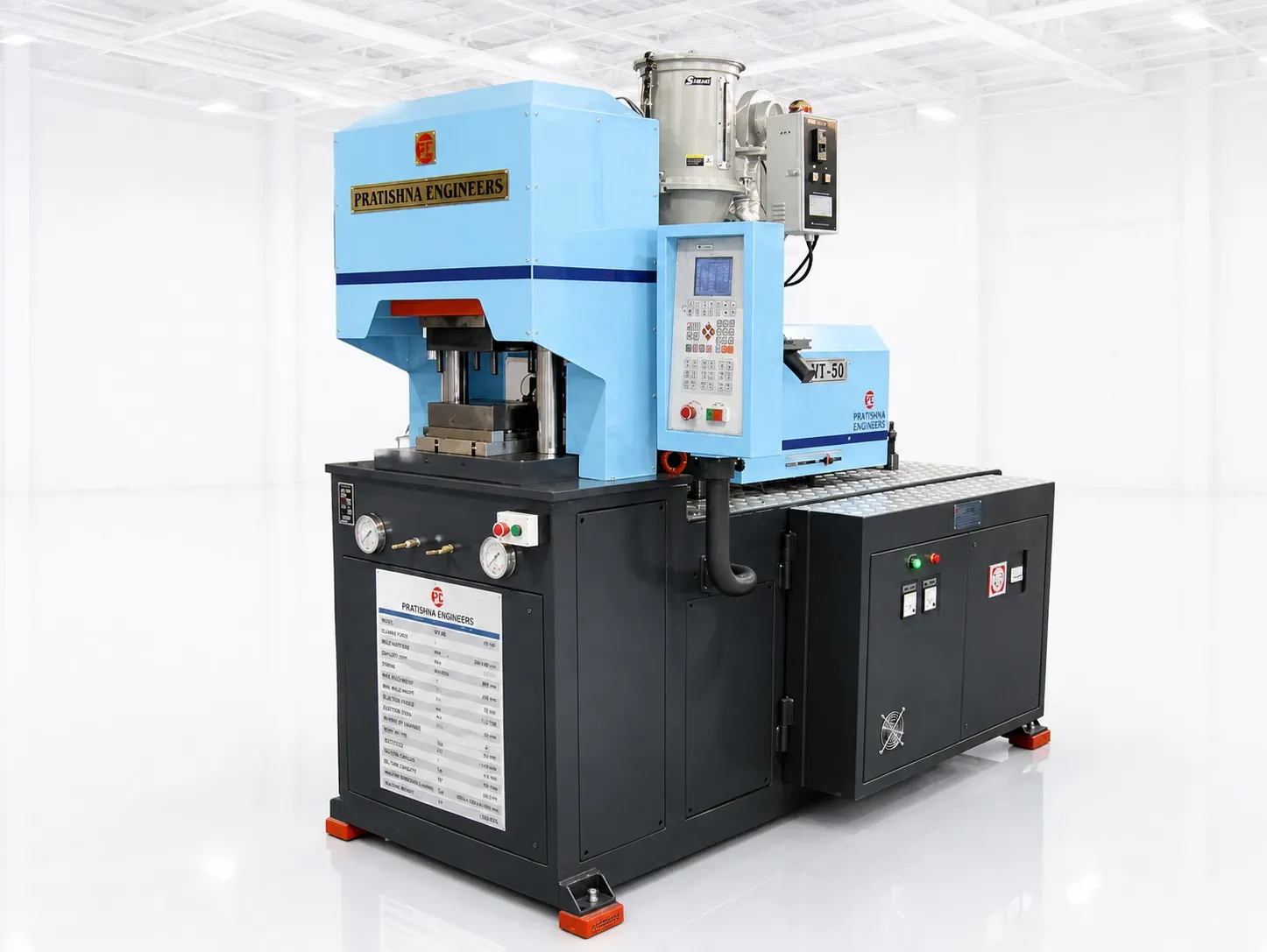
The second category is the vertical machine. These are often selected for insert moulding, electrical parts, and components where gravity-assisted loading or compact layout becomes useful. Manufacturers working with inserts or specialized moulding tasks often explore vertical injection moulding machines to improve handling and process control.
Then there are PET-specific systems. These are commonly used in bottle preform manufacturing and packaging-related applications, where speed, consistency, and material handling are critical. Buyers operating in beverage, water, or packaging sectors usually look at PET injection moulding machines because these machines are designed for the demands of PET processing.
Another important category is hybrid technology. Hybrid systems are increasingly preferred by manufacturers who want a balance between hydraulic strength and improved energy control. In operations where electricity consumption is a major cost center, many buyers now consider hybrid injection moulding machines as a more balanced long-term option.
The right machine type depends on:
- the product being moulded
- mould design
- production volume
- material characteristics
- available floor space
- energy cost sensitivity
This is why machine selection should never be based only on what is popular in the market. It should be based on what actually works for the production line.
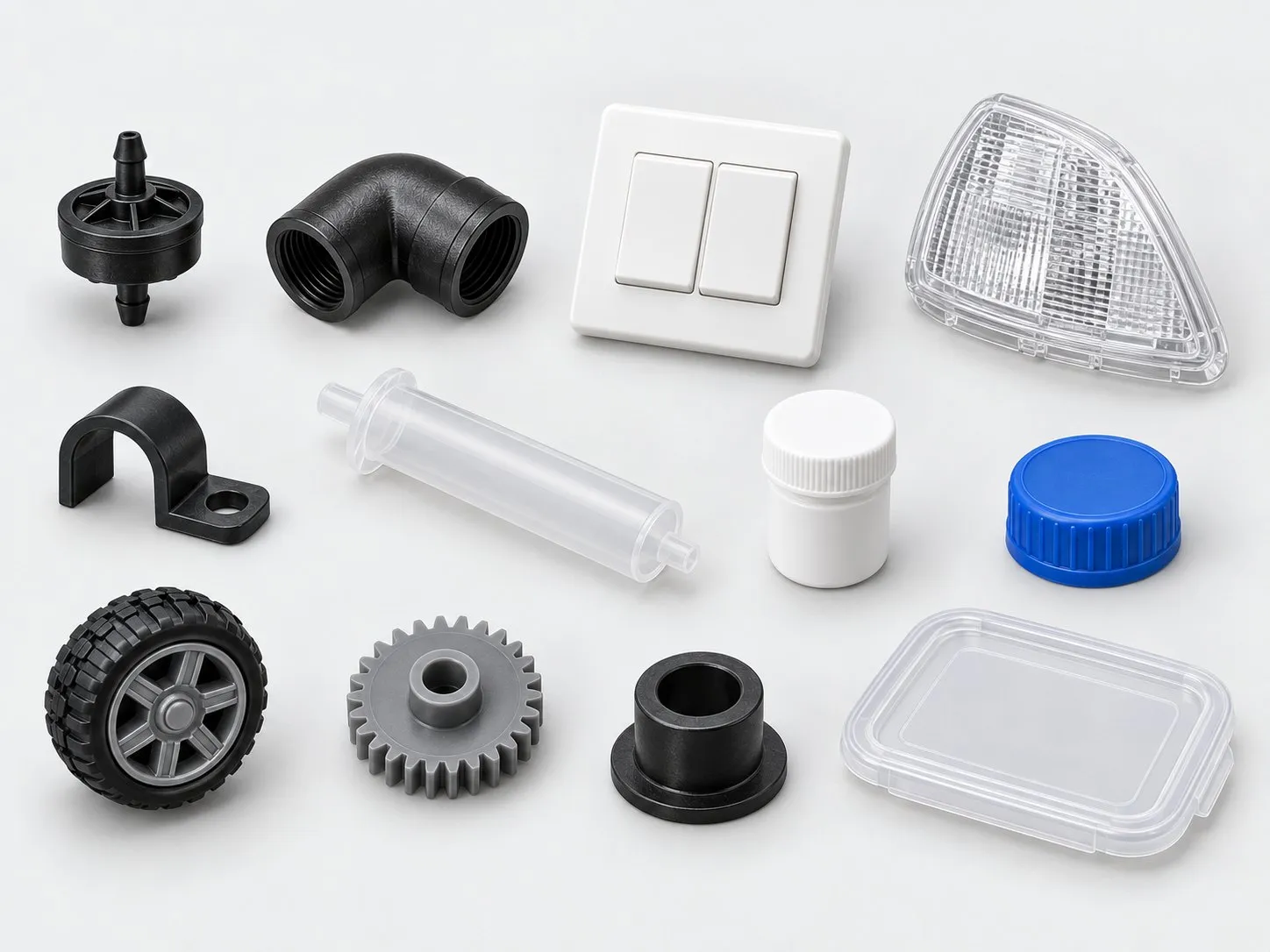
Materials Used in Plastic Injection Moulding and Their Impact on Machine Selection
Material type plays a much bigger role in machine selection than many first-time buyers expect. Different plastics behave differently under heat, pressure, and cooling conditions, and that directly affects the machine’s efficiency and output quality.
Common materials processed in injection moulding include polypropylene, HDPE, ABS, nylon, and PET. Each of these materials has its own melt flow, shrinkage behavior, cooling response, and processing sensitivity. A machine configured for one material may not deliver the same results with another unless screw design, pressure control, and temperature management are matched properly.
For example, polypropylene is relatively easier to process and widely used in mass production. ABS and nylon require tighter control because they are often used in more demanding applications. PET requires dedicated process understanding due to its role in packaging and preform production.
This is why experienced buyers do not just say, “I need a 200-ton machine.” They explain:
- which material they are processing
- what product they are making
- what output they expect
- whether quality consistency is critical
A proper supplier will study the application and recommend accordingly. Buyers who want to understand whether a supplier handles only standard equipment or supports broader industry needs often review the company’s main manufacturing platform and related product structure before moving to enquiry stage.
The key point is simple: machine selection without material understanding often leads to poor cycle control, increased rejection, and unnecessary process instability.
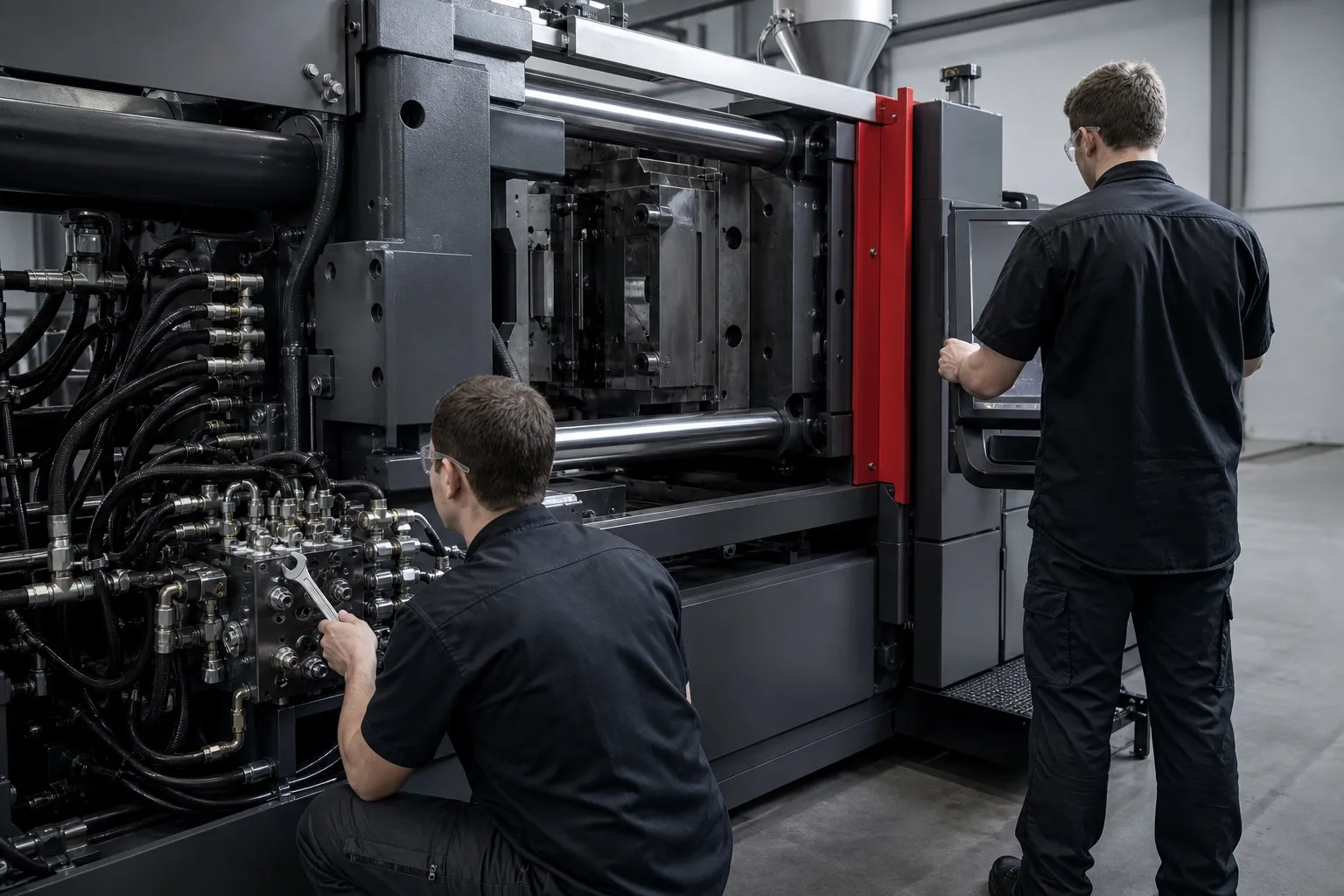
Key Technical Parameters Buyers Must Evaluate Before Finalizing a Machine
Many buyers make the mistake of reducing the decision to tonnage and price. In actual industrial buying, that is not enough.
Clamping force is important because it determines mould compatibility, but it is only one part of the evaluation. Injection pressure matters for filling accuracy, especially in thin-wall or detailed parts. Shot capacity determines whether the machine can handle the part size efficiently. Cycle time directly affects output, and energy consumption affects long-term operating cost.
Control systems also matter more today than before. A machine with better control architecture gives improved repeatability, easier setting adjustment, and more stable performance across long shifts.
A serious buyer should evaluate:
- clamping force
- injection pressure
- shot capacity
- cycle time
- control system
- cooling efficiency
- power consumption
- maintenance accessibility
In many cases, the machine with the lowest purchase cost becomes the most expensive over time because it consumes more power, creates more rejection, or requires more maintenance interruptions.
That is why the buying process should not end at technical discussion. It should move toward real consultation and requirement matching. Once a buyer reaches that stage, the logical next step is to contact the technical team for machine recommendation based on product, mould, and production target.
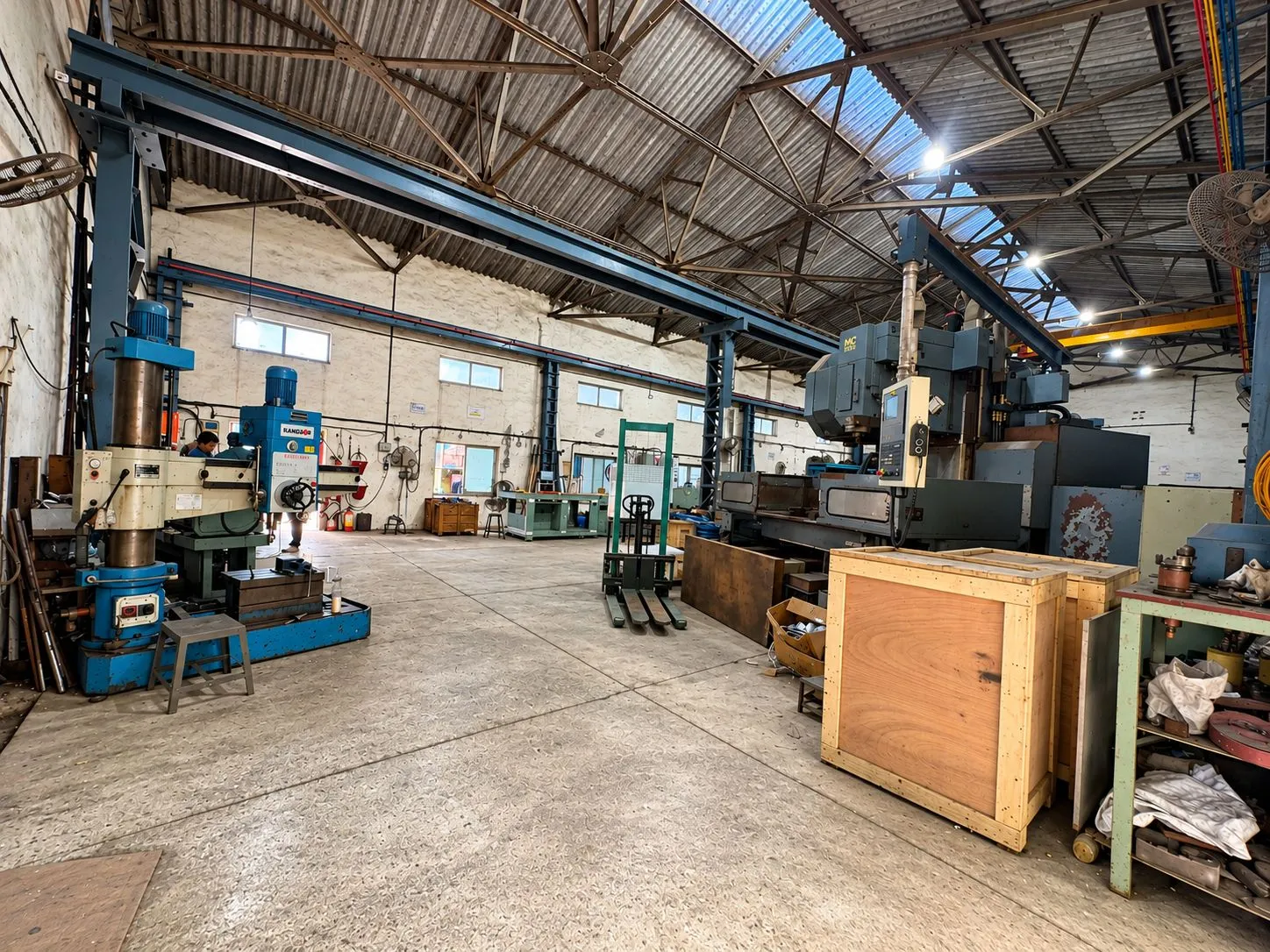
How to Choose the Right Plastic Injection Moulding Machine in Mumbai
Once the basic understanding is clear, the next stage is selection — and this is where most industrial buyers either make a smart investment or create long-term operational problems.
The correct approach is not to ask “which machine is best?” but rather:
“Which machine is best for my specific production requirement?”
A proper selection starts with defining:
- product type and dimensions
- material being processed
- expected production volume
- cycle time requirements
Without this clarity, even a high-quality machine may not deliver expected results.
One common mistake is selecting a machine based only on tonnage. In reality, mould compatibility, injection pressure, and material flow characteristics are equally important. For example, a packaging manufacturer may prioritize speed and repeatability, while an automotive component manufacturer may focus on precision and strength.
This is why buyers evaluating different machine categories often compare horizontal injection moulding machines for large-volume production versus vertical injection moulding machines for insert-based applications before finalizing their configuration.
👉 Practical insight:
The right machine is not the most advanced — it is the one that fits your production cycle without instability.
Local Mumbai Manufacturers vs Imported Machines: What Works in Practice
This comparison comes up in almost every serious purchase discussion.
Imported machines, especially from China, Taiwan, or Europe, often offer advanced features and strong brand perception. However, the real issue starts after installation.
Imported Machines – Practical Challenges:
- dependency on overseas spare parts
- longer service response time
- higher maintenance cost
- difficulty in customization
Mumbai-Based Manufacturers – Practical Advantages:
- faster service and troubleshooting
- easier spare parts availability
- customization based on actual application
- better understanding of Indian and export production conditions
In real industrial environments, many buyers who initially invest in imported machines eventually move toward Indian manufacturers because downtime costs more than initial savings or brand value.
Buyers who evaluate machines based on actual application scenarios often refer to different industrial applications handled by the manufacturer to understand whether the supplier has real experience or is only supplying standard equipment.
👉 Real-world conclusion:
A machine with strong local support will outperform a technically superior machine without service backup.
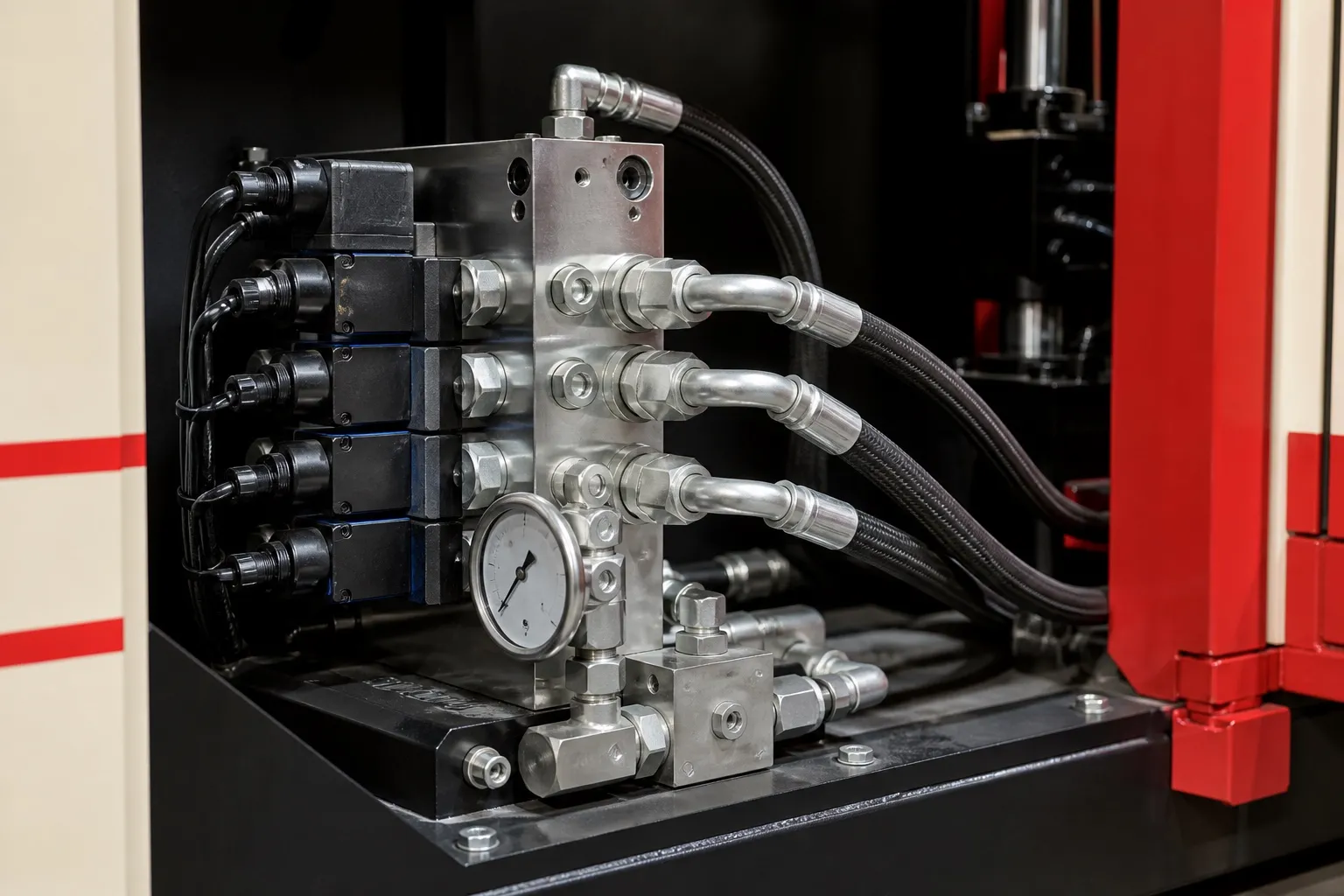
What Makes a Plastic Injection Moulding Machine Manufacturer Reliable
Machines can look similar in specifications, but reliability comes from how they perform over time.
A reliable manufacturer is not just one who delivers the machine — it is one who supports the production process.
Key Factors to Evaluate:
Engineering Understanding
A good manufacturer studies:
- your product
- your mould
- your material
before recommending a machine.
Build Quality
Frame rigidity, component quality, and assembly precision directly affect:
- machine life
- vibration control
- output stability
After-Sales Support
This is often the most important factor:
- how quickly can they respond?
- are spare parts available locally?
- do they provide technical guidance?
Practical Guidance
Buyers should not have to figure everything themselves. A reliable supplier will guide you from selection to production optimization.
👉 Insider observation:
In most failed projects, the problem is not the machine — it is lack of proper guidance and support.
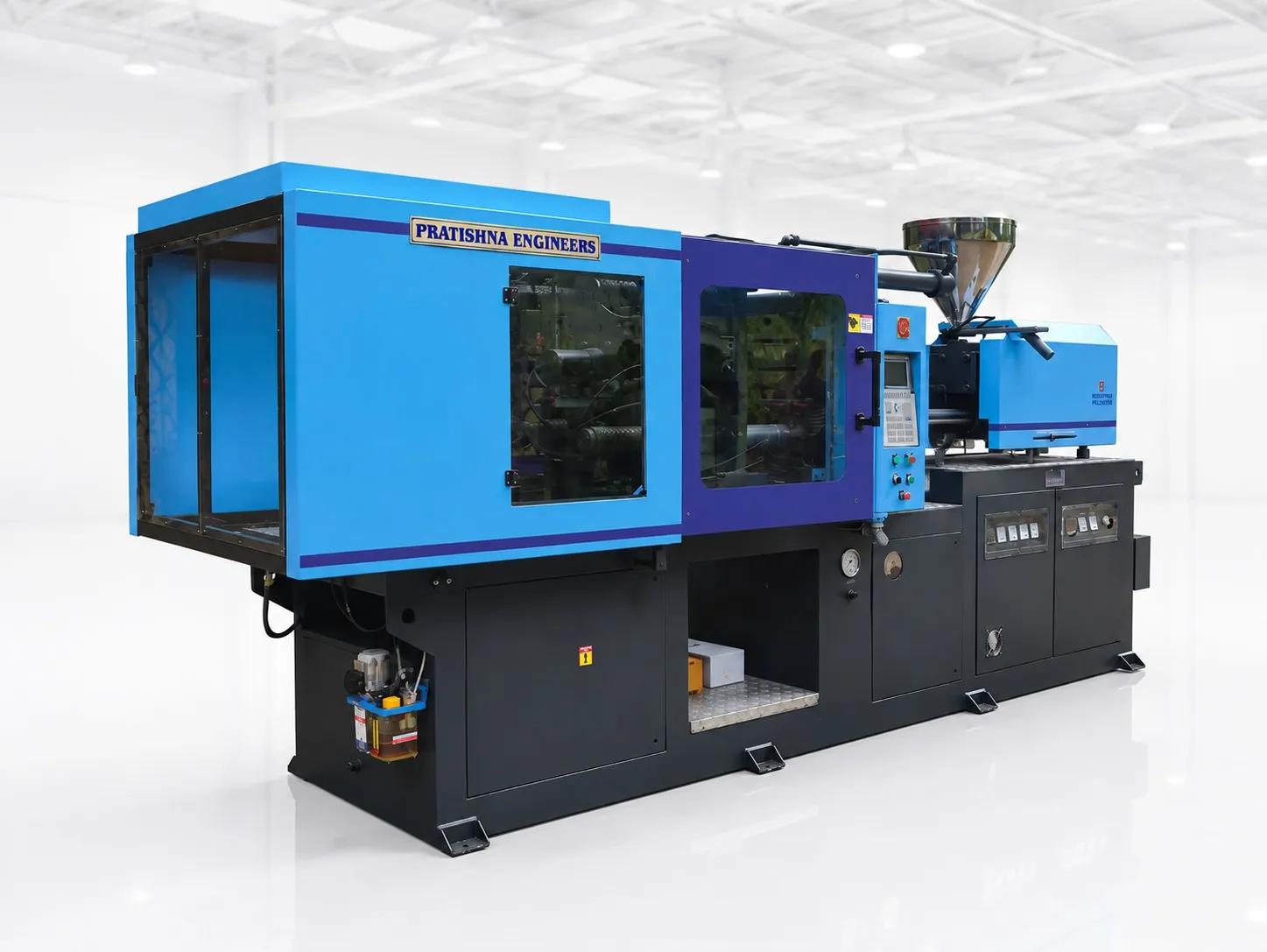
Customization and Automation: What Modern Manufacturing Requires
Standard machines are no longer sufficient for many industrial operations. Buyers today are looking for machines that integrate into their entire production setup.
Customization Requirements:
- compatibility with multi-cavity moulds
- screw and barrel design for specific materials
- high-speed injection for thin-wall products
Automation Integration:
- robotic part removal systems
- conveyor-based material handling
- automated quality inspection
Data Monitoring:
- real-time production tracking
- energy consumption monitoring
- fault diagnostics
Modern buyers are not just investing in machines — they are investing in production systems.
This is why many companies evaluate complete machine ranges, including advanced configurations like hybrid injection moulding machines, to balance performance and energy efficiency.
👉 Practical insight:
Automation is no longer optional for high-volume or export-focused production.
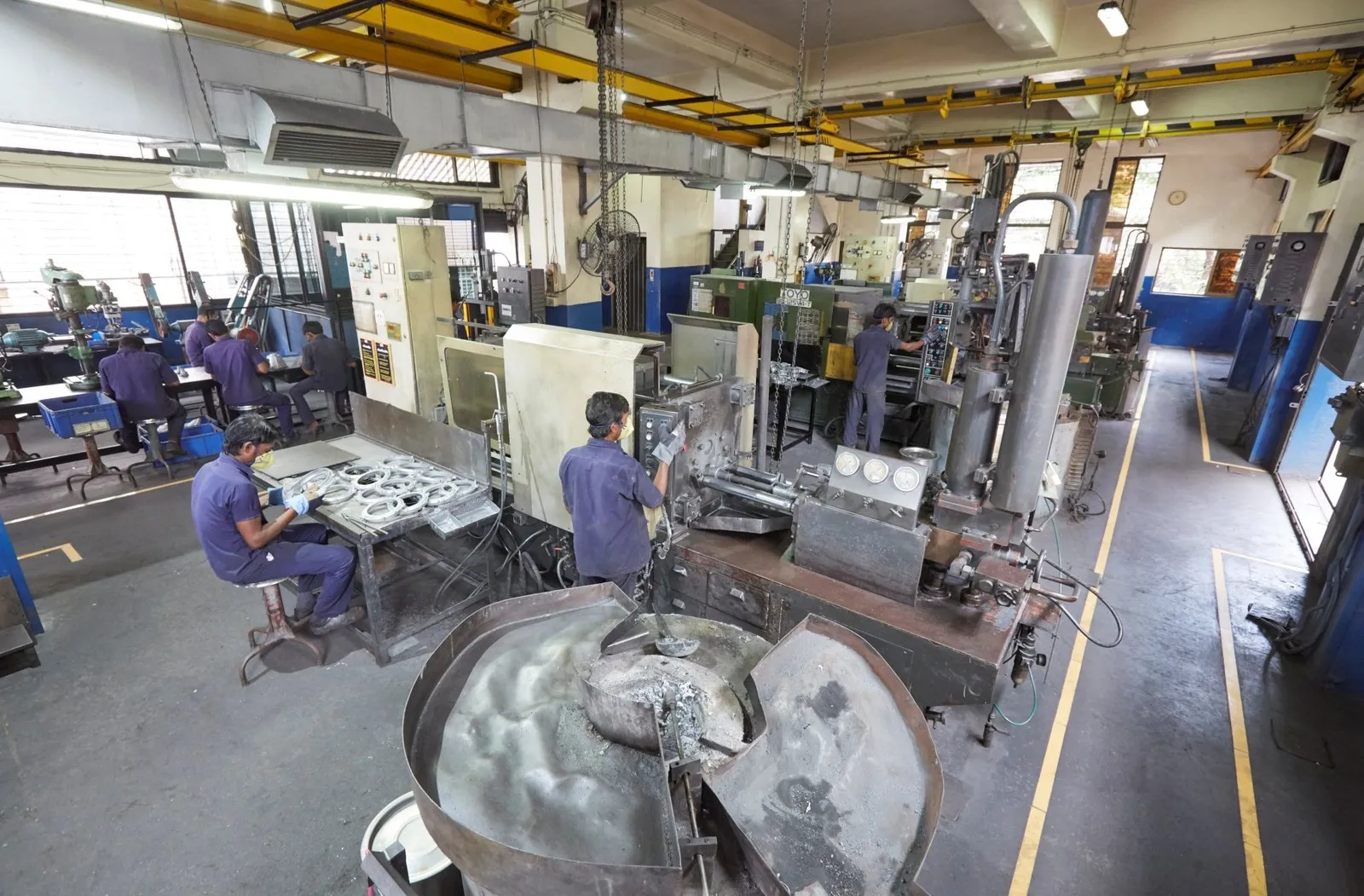
Why Pratishna Engineers is a Preferred Choice for Plastic Injection Moulding Machines in Mumbai
In a competitive market like Mumbai, differentiation comes from execution, not just product range.
Pratishna Engineers positions itself as a manufacturing partner, not just a machine supplier.
What Industrial Buyers Typically Value:
Application-Based Machine Selection
Machines are recommended after understanding:
- product geometry
- material behavior
- production requirement
This reduces trial-and-error after installation.
Complete Product Range
Buyers can evaluate:
- standard injection moulding machines for general use
- specialized machines for packaging, insert moulding, and PET applications
- energy-efficient hybrid systems
Focus on Long-Term Performance
- stable cycle time
- reduced power consumption
- durable machine structure
Reliable After-Sales Support
- quick service response
- spare parts availability
- technical troubleshooting
👉 Practical takeaway:
Buyers who focus on long-term efficiency prefer manufacturers who understand production challenges, not just machine specifications.
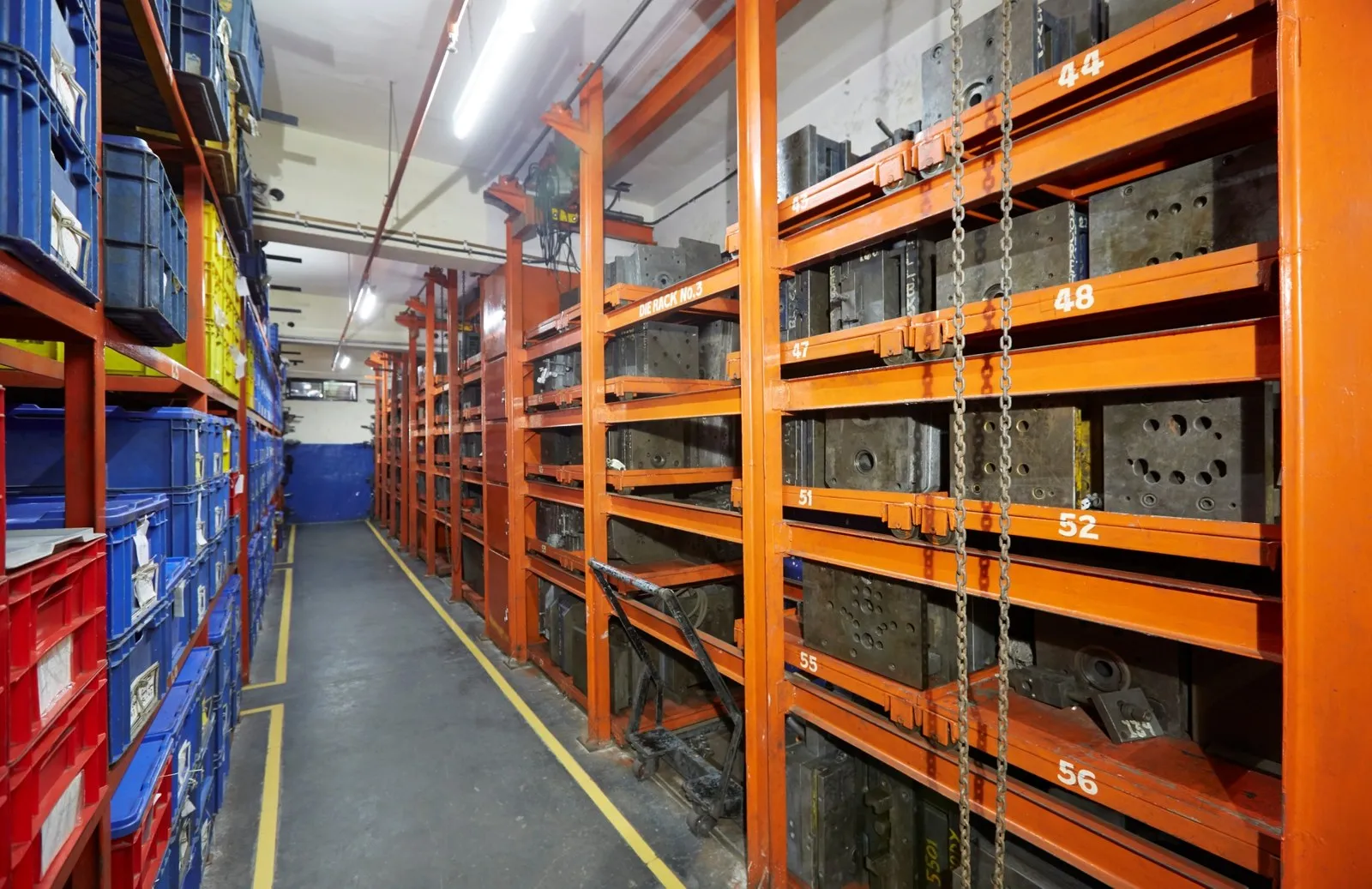
Real Buyer Scenarios: What Actually Works on the Shop Floor
In industrial environments, machines are not judged by specifications — they are judged by how they perform across long production cycles.
Scenario 1: Automotive Component Manufacturer
A manufacturer producing precision plastic parts was facing dimensional variation and high rejection.
Issue: Inconsistent injection pressure and poor cycle stability
Approach: Correct machine selection + parameter tuning
Result:
- Reduction in rejection rate
- Improved dimensional consistency
- Stable multi-shift production
Scenario 2: Packaging Industry (High-Speed Production)
A unit manufacturing caps and closures required high output with minimal downtime.
Issue: Cycle fluctuation affecting output
Approach: Machine optimization with proper cooling and control
Result:
- Increased output per shift
- Better repeatability
- Reduced operator dependency
Scenario 3: Export-Oriented Manufacturing Unit
A buyer supplying to African markets needed:
- cost-effective machine
- reliable remote support
Outcome:
- machine installed with guided commissioning
- spare kit supplied in advance
- smooth production startup
👉 Key takeaway:
The success of the project depends less on the machine itself and more on how well it is matched to the application.
Final Buying Checklist Before You Invest in a Machine
Before placing the order, experienced buyers validate a few non-negotiable points.
Technical Validation
- check actual production performance
- confirm real cycle time
- evaluate injection consistency
Commercial Clarity
- total cost (not just machine price)
- power consumption over time
- maintenance requirement
Support Evaluation
- response time for service
- spare parts availability
- training and commissioning support
Application Matching
- mould compatibility
- material behavior
- production target
👉 Straight advice:
A correct decision at this stage saves years of operational problems.
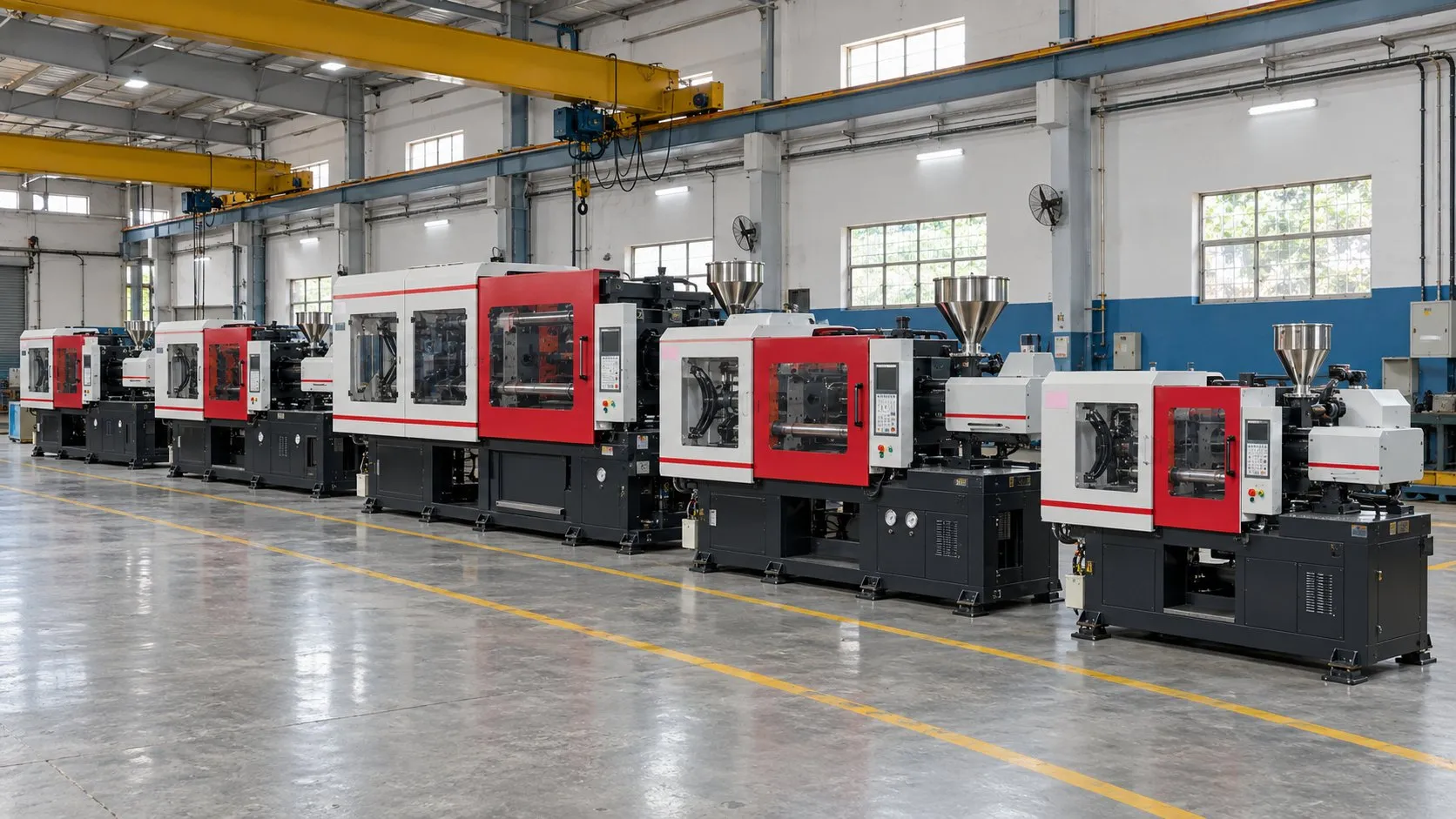
Master Technical Data Sheet for Plastic Injection Moulding Machines
| Parameter | Typical Range | Production Impact | Buyer Focus |
|---|---|---|---|
| Clamping Force | 50T – 1000T+ | Mould holding capacity | Must match mould size |
| Injection Pressure | High (application-based) | Filling accuracy | Critical for precision parts |
| Shot Capacity | Product dependent | Part size handling | Align with design requirement |
| Cycle Time | 5–60 sec | Output efficiency | Direct ROI factor |
| Power Consumption | System dependent | Operating cost | Servo/hybrid preferred |
| Machine Type | Hydraulic / Servo / Hybrid | Control & efficiency | Choose based on usage |
| Control System | PLC / Advanced | Repeatability | Important for consistency |
| Cooling System | Integrated | Cycle stability | Affects speed |
| Material Compatibility | PP, ABS, Nylon, PET | Product quality | Must be verified |
| Automation Support | Optional | Labor reduction | Required for scaling |
👉 Practical insight:
This table should guide your final decision more than marketing brochures.
When Should You Upgrade Your Existing Machine
Many manufacturers continue using outdated machines longer than they should.
You should consider upgrading when:
- rejection rate is increasing
- cycle time is inconsistent
- power consumption is high
- maintenance frequency is rising
- production demand is growing
👉 Real-world observation:
In many cases, upgrading improves profitability faster than expected because it reduces hidden losses.
Frequently Asked Questions
What is the cost of plastic injection moulding machines in Mumbai?
Cost depends on machine type, tonnage, and automation level. It varies significantly based on configuration.
Which machine is better for plastic moulding?
The best machine depends on your application. Servo and hybrid machines are preferred for efficiency.
What is the difference between horizontal and vertical machines?
Horizontal machines are used for high-volume production, while vertical machines are used for insert moulding and compact setups.
Can one machine process different plastic materials?
Yes, but configuration and screw design must match the material.
How important is energy efficiency?
Very important. Power consumption directly impacts long-term operating cost.
What industries use these machines?
Automotive, packaging, electronics, medical, and consumer goods industries.
How long does a machine last?
With proper maintenance, typically 10–15 years or more.
What is cycle time?
Time required to complete one moulding cycle.
Are servo machines better than hydraulic machines?
Servo machines are more efficient and precise, but hydraulic machines are cost-effective.
Do manufacturers provide installation support?
Yes, reliable manufacturers provide installation and training.
Can machines be customized?
Yes, customization is common based on application needs.
What certifications are needed for export?
Depending on region, CE and other compliance may be required.
Is after-sales support important?
Yes, it directly affects production continuity.
Can Mumbai manufacturers supply globally?
Yes, many supply to GCC, Africa, and Southeast Asia.
What should I check before buying?
Performance, support, energy consumption, and application compatibility.
Get the Right Plastic Injection Moulding Machine for Your Production
If you are planning to invest in plastic injection moulding machines in Mumbai, the decision should be based on long-term performance, not just price.
Pratishna Engineers works with industrial buyers to:
- understand production requirements
- recommend suitable machine configurations
- ensure smooth installation and operation
For serious buyers looking for reliable solutions, you can directly reach out through the contact page to discuss your requirement with the technical team.
You can also explore the complete range of machines and configurations available on the official website to understand what fits your production needs best.
👉 Final advice:
Choose a manufacturer who supports your production — not just someone who sells you a machine.