






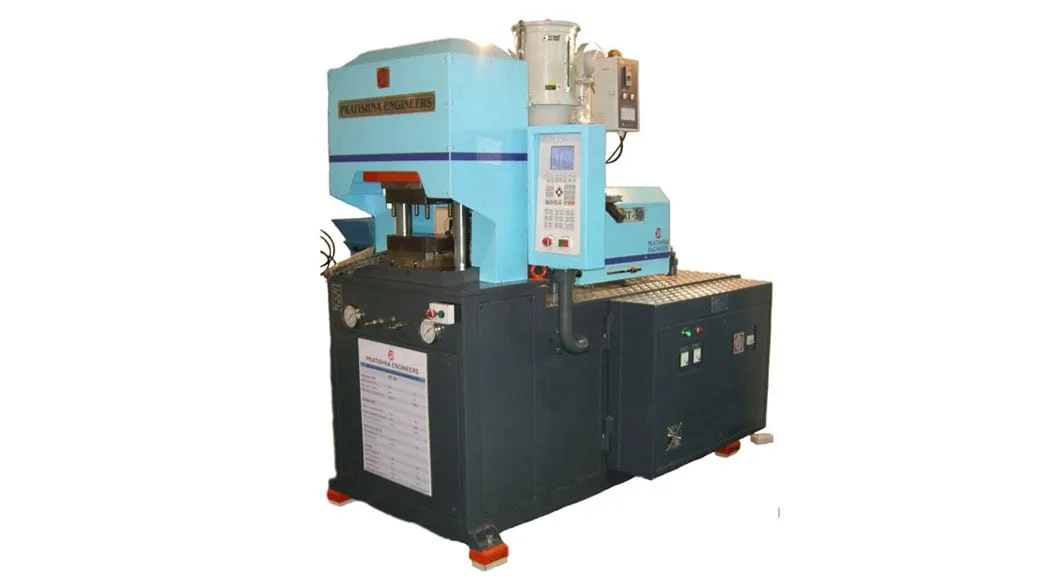

A servo driven injection moulding machine pays back through lower base load, lower idle draw and cooler oil, not through a faster cycle. Before you sign for one in Mumbai, run this checklist on your own shop floor.
1. Log one existing machine for a full shift with a clamp meter, recording moulding and idling separately.
2. Count how many hours a day each machine sits idle between jobs, during mould changes and in breakdowns.
3. Check the oil temperature at the end of a hot afternoon shift, and how hard the oil cooler is working.
4. Read your MSEDCL bill for kVAh and power factor, not only units.
5. Decide whether the frame and clamp of the old machine deserve a retrofit or retirement.
Key Takeaways
- A servo pump turns the hydraulic pump only as fast as the cycle needs, so the saving is largest where a fixed pump wastes the most flow.
- Idle time between jobs and during breakdowns often decides the saving more than the moulding cycle, so measure idle hours before comparing machines.
- Less wasted flow means less heat in the oil, which can reduce cooling water demand and slow oil ageing on long shifts.
- A retrofit makes sense only on a sound frame and clamp; on a worn machine it cuts energy but leaves the scrap rate where it was.
What does a servo driven injection moulding machine save at base load?
Base load is the power a machine draws regardless of output. On a standard hydraulic machine it can be 75% or more of total energy, because a fixed pump keeps turning at full speed. A servo drive slows the pump when no flow is needed, so the wasted share shrinks.
The energy guide published by ExxonMobil, AMI and Tangram Technology puts all-electric and hybrid base loads at about 10 to 20%, mostly barrel heating. A servo-hydraulic machine sits between the two: the pump is still there, but it stops wasting flow during hold, cooling and mould-open time.
The same guide warns that a high base load can mean the machine is too large for the job. Keep that in mind when you compare offers. A 250 t machine running a mould that needs 120 t carries a big pump for a small job, and a servo drive hides part of that mistake rather than fixing it.
Cooling time is where the gap opens. On a thick part, much of the cycle passes with the mould closed and the screw already recovered. A fixed pump spins through all of it. The servo pump drops to a low speed, holds the pressure the clamp needs, and ramps up again for the next shot.
Where the pump energy goes in each phase (qualitative)
| Cycle phase | Fixed pump hydraulic | Servo pump hydraulic |
|---|---|---|
| Injection and hold | Full pump speed | High speed only while flow is needed |
| Cooling, mould closed | Pump keeps turning, flow returns to tank | Pump slows and holds clamp pressure |
| Mould open and ejection | Full pump speed | Speed follows clamp and ejector demand |
| Idle between jobs | Close to the moulding draw | Low draw while heaters hold temperature |
| Heat put into the oil | High, from throttled flow | Lower, as less flow is throttled |
How much energy does an idling machine waste?
Often a large share of the day. Measurements reported by PlasticsToday found idling machines drawing 52% to 97.5% of their full moulding energy, and one machine idled at 64%. If your machines wait for moulds, material or operators for hours each day, idle draw can outweigh the cycle.
The same article suggests an idle period longer than about 1.5 hours may be cheaper to switch off and restart, and reports one hydraulic machine using 22% less energy with its variable-frequency drive switched on. Both points say the same thing: idle hours, not catalogue kilowatts, set the size of the saving.
A servo pump attacks idle draw directly. With no flow demand, the motor slows and the main remaining load is barrel heating. The heaters still have to hold melt temperature, so the machine never drops to zero, but the pump stops turning electricity into hot oil.
Measure it rather than guess. A clamp-meter data logger can profile a machine in as little as 30 minutes, and averaging heater load over 10 to 15 minutes gives a fair figure. Log one shift of moulding and one stretch of idling on your worst machine before you ask anyone for a servo proposal.
How does a servo pump change oil temperature and cooling?
A fixed pump pushes full flow even when the circuit needs little, and the surplus is throttled back to tank as heat. A servo pump delivers closer to the actual demand, so less energy ends up in the oil, the cooler works less and the oil ages more slowly.
Oil temperature matters on a Mumbai shop floor in May, when the cooling tower water is already warm. Hot oil thins, internal leakage across valves and seals rises, and pressure and speed repeatability can drift through the afternoon. Operators then compensate with setting changes that do not hold the next morning.
Cooling water has its own energy bill. The ExxonMobil guide puts chilled and cooling water at 11 to 16% of plant energy. A machine that dumps less heat into its oil puts less load on the tower or chiller serving it, although mould cooling stays the same because the plastic still has to give up its heat.
Under MSEDCL kVAh billing, power factor also counts: at a power factor of 0.85, 15% of the power drawn does no useful work, and capacitors or an APFC panel are the usual fix. Ask the supplier for the oil temperature the hydraulic system is designed for and the cooler sizing for your water.
Should you retrofit a servo pump or buy a new machine?
Retrofit when the frame, clamp and injection unit are sound and the job will stay on that machine for years. Buy new when the platens have lost parallelism, the screw and barrel are worn, or the controls cannot manage a variable-speed pump properly.
Robin Kent of Tangram lists the retrofit routes for older hydraulic machines in SPE Plastics Engineering: variable-speed motors, variable-volume pumps, and servo motors driving fixed pumps. He also notes that an electric screw drive can cut peak power enough to let you downsize the main motor. Start by listing the motor and pump type on every machine.
The catch is everything around the pump. Valves sized for constant flow, an old proportional card and a controller that cannot command pump speed all limit what a retrofit delivers. Plan for the hydraulic redesign and the control changes, not only the motor and drive.
Our flat view: do not put a servo pump on a machine that already makes scrap because of a leaking clamp or worn platens. You will save kilowatts on parts you throw away. Fix the mechanics or replace the machine first, then chase energy.
Where Pratishna Engineers' hybrid machines fit
Pratishna Engineers has built injection moulding machines in Mumbai since 1991, with design, manufacturing, assembly, testing and service done in-house. The range covers horizontal, vertical, vertical-horizontal combination, hydro-mechanical and hybrid machines. The hybrid machines use hydraulic locking with electric injection, which takes injection off the hydraulic circuit.
The company began with machine rebuilding, indigenisation and technology adaptation before moving to complete machine design, and the group also builds hydraulic systems and automation. That background helps when you are weighing a retrofit against a new machine, because the frame, hydraulics and controls can be judged together.
- PH-120: 120 t mould clamping force and 20.5 kW total connected load, as listed in the hybrid series data.
- PH-140: 140 t mould clamping force and 23.7 kW total connected load. Connected load is a rating, not measured consumption.
What should you measure before you request a servo proposal?
Send one logged shift from your heaviest-running machine, the idle hours per day, the part, material and mould, and your latest MSEDCL bill. That lets the comparison run on your numbers rather than a brochure. See the hybrid injection moulding machine range for the hydraulic-locking, electric-injection option.
Frequently Asked Questions About Servo Driven Injection Moulding Machines
Is a servo driven machine faster than a fixed-pump hydraulic machine?
Not necessarily. Cycle speed depends on the mould, the cooling time and the clamp and injection hardware. The servo drive changes how much energy the pump wastes between movements. Some servo machines also respond quicker at low speed, but judge cycle time on a trial with your own mould, not on the drive type.
Does a servo pump need a different hydraulic oil?
Usually the oil grade stays the same, but follow the pump and valve makers' oil specification and filtration level. Because the oil runs cooler, it may last longer between changes. Keep testing it on a schedule rather than stretching intervals on assumption, since dirty oil wears a servo pump as fast as a fixed one.
How do I measure the energy saving after installation?
Log the same machine on the same job before and after, with the same cycle, mould temperature and material. Use a clamp-meter logger over a full shift, record moulding and idle separately, and convert the result to energy per kg of good parts. Energy per kg is the fair comparison, not kW at one moment.
Can every old hydraulic machine take a servo retrofit?
Most hydraulic machines can physically take a servo motor on a fixed pump, but not all are worth it. Check the frame, platen parallelism, clamp leakage, screw wear and controller first. If the machine already struggles to hold its process, the retrofit money is better put toward a replacement.
Does power factor change with a servo drive?
It can, in either direction, depending on the drive and its filtering. Variable-speed drives draw non-linear current, so ask for the drive's power factor and harmonic data. Under MSEDCL kVAh billing a poor power factor raises billed units, so plan capacitors or an APFC panel with your electrician.
Does Pratishna offer hybrid machines?
Pratishna Engineers builds hybrid machines with hydraulic locking and electric injection, including the PH-120 and PH-140 at 120 t and 140 t clamping force. Share your part, material, mould and a logged shift from your current machine, and the team will compare the options on your actual job.
Related Articles
- Industrial Injection Moulding Machines in Mumbai
- The Role of Vertical Injection Moulding Machines in Footwear Manufacturing
- Hybrid Injection Moulding Machine for High-Efficiency Manufacturing
- Hybrid Injection Moulding Machine: Revolutionizing Production
Sources & References
- ExxonMobil, AMI and Tangram Technology: An Energy Saving Guide for Injection Moulders
- PlasticsToday, R. Kent: Getting to know your real energy use and cost (Jan 2010)
- SPE Plastics Engineering, R. Kent (Tangram Technology): Energy-Saving Tip 67: Injection Molding: get the right motor (Sept 2016)
- MSEDCL: kVAh Billing: Frequently Asked Questions
Technical Disclaimer
Disclaimer: The information provided in this document is for general informational and educational purposes only. It is based on technical references and industry information available at the time of preparation and may be subject to change. It does not constitute engineering, technical, commercial or professional advice, nor does it constitute a quotation, specification, warranty or contractual commitment by Pratishna Engineers.
Actual injection moulding machine and process requirements vary according to the component design, material, mould, production volume, machine configuration and operating conditions. The information, examples, calculations and recommendations provided should be independently evaluated and verified for the specific application before making any equipment, process or production decision. Information obtained from third-party sources remains subject to the accuracy and limitations of those sources.
Limitation of Liability: Pratishna Engineers makes no representation or warranty, express or implied, regarding the completeness, accuracy or suitability of the information for any particular application. To the extent permitted by applicable law, Pratishna Engineers shall not be liable for any loss, damage, cost or consequence arising from reliance on or use of the information contained in this document. Final machine selection, configuration and application suitability should be confirmed with Pratishna Engineers based on complete and accurate project requirements.

