
In threaded insert moulding, pull-out strength comes from insert length, the knurl or groove the plastic locks into, and enough plastic around and beneath the bush. Torque-out comes mainly from diameter and knurl. Get the boss right, keep resin out of the thread and test both loads on moulded parts.
This article covers brass bushes moulded into the part on a vertical machine, and compares that with fitting the bush after moulding by heat staking, ultrasonics or pressing.
Key Takeaways
- Pull-out resistance rises with insert length; torque capacity rises with insert diameter.
- Straight knurls resist torque best, grooves between knurl bands add pull-out, and diamond knurls resist both.
- DuPont guidance sets plastic beneath the insert at one sixth of its diameter or more and a boss of about 1.5 times the insert diameter.
- Through-threaded bushes need contact with both mould halves to keep resin out of the thread; blind bushes need only one.
What Sets Pull-Out and Torque-Out in Threaded Insert Moulding?
Two loads, two features. A Plastics Technology article from fastener maker PennEngineering states that a longer insert resists pulling out better and a larger diameter carries more torque. The knurl pattern then decides how that grip is shared, so choose it for the load that matters most.
Knurl patterns and what they resist, from the Plastics Technology threaded inserts article
| Knurl pattern | Resists best | Where it suits |
|---|---|---|
| Straight (parallel to the axis) | Torque; less pull-out | Screws tightened hard, light axial load |
| Straight with grooves between knurl bands | Torque, with added pull-out | Joints loaded both ways |
| Diagonal or helical | A balance of both directions | General fastening |
| Diamond (hexagonal) | All directions | The general-purpose choice |
Brass is the most common insert material, the same article says, with stainless steel and aluminium as alternatives. Aluminium inserts are about 70% lighter than brass, while stainless offers more strength and corrosion resistance.
Size the insert from the load case. A cover screw opened for service needs torque capacity and repeated use, so diameter and a torque-resisting knurl come first. A bracket that hangs weight from the bush needs pull-out, so length and grooves come first. The two can need different inserts in the same part.
How Much Plastic Does a Bush Need Around It?
Enough to carry the load without cracking as the plastic shrinks onto the metal. A PlasticsToday summary of DuPont insert guidance asks for at least one sixth of the insert diameter beneath it and a boss about 1.5 times the insert diameter, for inserts up to 12.9 mm.
The same guidance asks the insert to protrude at least 0.4 mm into the cavity, recommends rounded inserts or rounded knurling with no sharp corners, and an undercut for pull-out. Sharp knurl edges concentrate the shrinkage stress and start cracks.
That stress is the long-term risk. The plastic shrinks around a bush that does not shrink with it, and the resulting hoop stress can crack a boss days or weeks after moulding. Toughened grades and preheated inserts reduce it; the plug pins and terminals article for 40 t machines works through an example.
Thin bosses also fill poorly behind the insert. Melt splits around the bush and meets on the far side, so the weld line sits exactly where the boss is under most stress.
How Do You Hold the Bush and Keep Resin Out of the Thread?
Seat the bush on a pin machined into or fitted to the mould core, with a close fit between pin and thread. On a vertical machine the lower mould faces up, so the bush stays on its pin under gravity while the operator loads the rest of the cavities.
The threaded inserts article distinguishes two types. A through-threaded bush is open at both ends, so it needs solid contact with both the core and the cavity surface to keep resin out. A blind bush is closed at one end and needs contact on one side only.
Resin in the thread is the costly fault, because it can stay hidden until assembly. Size the locating pins to the bush thread tolerance, replace worn pins on a schedule, and gauge threads on parts from every cavity during the first article check.
Watch the pins for heat as well as wear. A steel pin in a hot core expands slightly, and a bush that fitted cold can bind or seat high once the mould is at temperature. Check the fit at running temperature, not only at the bench.
Should the Bush Be Moulded In or Fitted Later?
Moulding in gives the best pull-out and torque, according to the Plastics Technology article, but needs close-tolerance core pins and adds loading time every cycle. Heat staking and ultrasonic fitting remelt plastic around a moulded hole, so they work only on thermoplastics; thermosets need moulding in or cold pressing.
The same article notes that heat staking is easy to control, lower in cost and suits automation, with several inserts pressed in at once. Ultrasonic fitting is comparable in speed but needs closer control and can chip the material around the hole.
Enclosures are one place the choice shows. BIS's summary of IS 14772:2020, for boxes and enclosures for electrical accessories up to 440 V a.c., asks that lids, covers and screw fixings protect against ingress of solids and water. A cover screw that pulls its bush out breaks that protection.
Our view: if the screw will be removed and refitted in service, mould the bush in. If it is tightened once at assembly, compare heat staking on cost per good part before you add loading time to every shot.
What Should You Test Before Approving the Part?
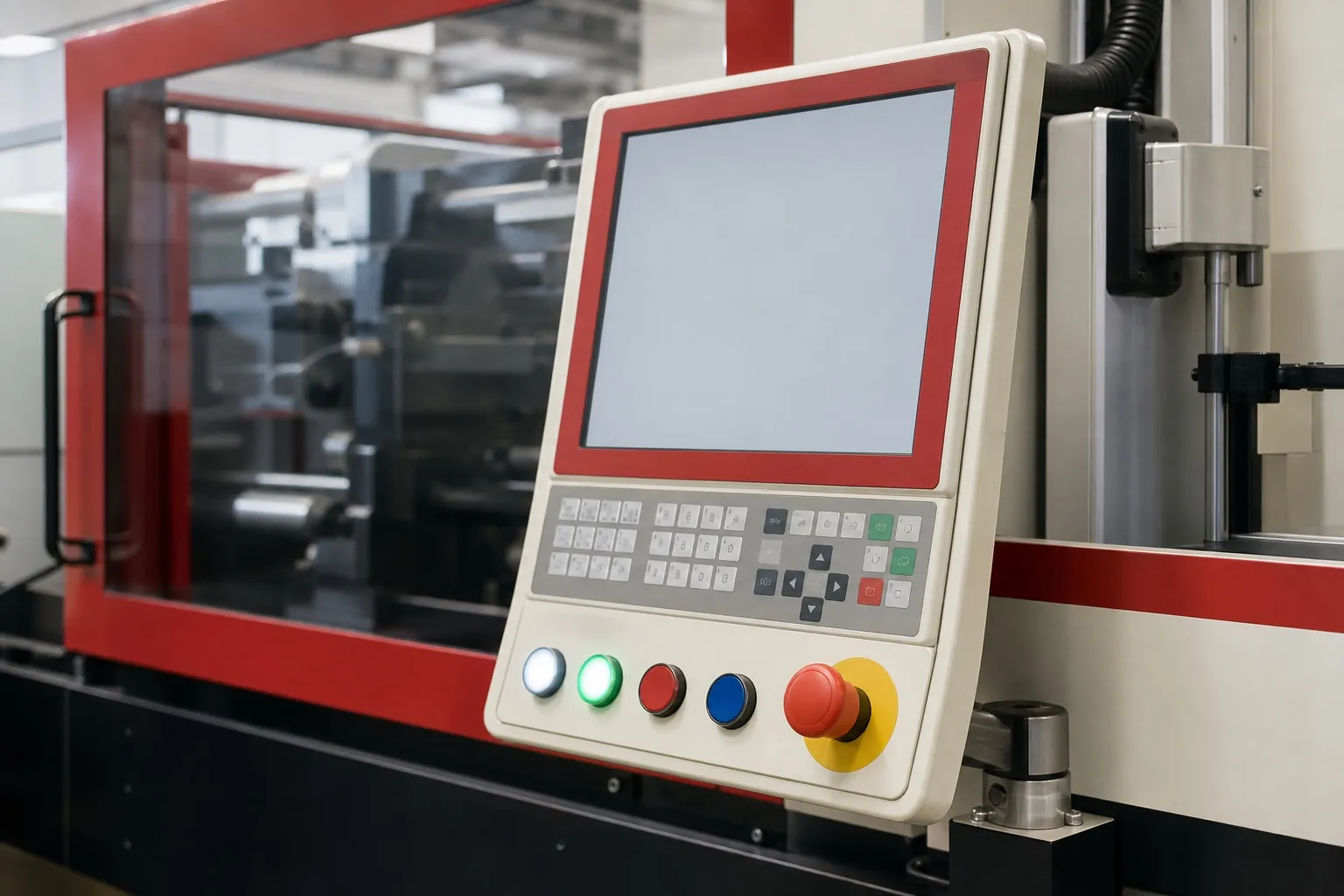
Agree the pull-out force, torque-out value and screw tightening torque with the customer, then test parts from every cavity after temperature cycling. Send the part drawing, bush drawing and resin grade for a machine and mould review. See the 60 ton vertical injection moulding machine page.
Frequently Asked Questions About Threaded Insert Moulding
Why does the bush spin when the screw is tightened?
Torque-out resistance is too low for the tightening torque. Causes include a straight-sided or worn knurl, too small an insert diameter, voids around the knurl, or a boss that cracked on cooling. Check fill around the knurl on a cut section and compare the screw torque with the insert maker's rating.
Should brass bushes be preheated?
Preheating is recommended in DuPont insert guidance because it reduces post-mould shrinkage onto the insert and improves weld lines. A warm bush also chills the melt less as it flows around the knurl. Preheat in batches to a set temperature, and protect operators from hot inserts.
Can glass-filled nylon hold a moulded-in bush?
Yes, and its lower shrinkage reduces hoop stress. The trade-off is at the weld line behind the bush, where heavily filled grades may keep only 60% of unfilled strength, according to DuPont guidance. Place the gate so the weld forms away from the most loaded side of the boss.
How many times can a moulded-in bush be reused?
That depends on the thread, the screw and the insert design, so ask the insert maker for its rating. The Plastics Technology article recommends metal threaded inserts for parts that must be taken apart and reassembled, which is the main reason to use one.
Can bushes be loaded automatically?
Yes. Bushes are round and uniform, so they suit vibratory bowl feeders and pick-and-place loading onto core pins. Check that the feeder presents the bush the right way up, especially for blind bushes, and confirm seating before the mould closes. Hand loading remains simpler for low volumes.
Related Articles
- What Can You Make on a 60 Ton Vertical Insert Moulding Machine?
- Plug Tops With Brass Pins on a 60 Ton Vertical Machine
- Connector Insert Moulding: Terminal Location and Flash Control
Sources & References
- Plastics Technology (PennEngineering, sponsored): Four Ways to Tackle Threaded Inserts for Plastics (Jan 2018)
- PlasticsToday, summarising A. Miller (DuPont): Design and material advice from the pros, Part 3: Insert molding essentials
- Bureau of Indian Standards: IS 14772: 2020 Boxes and Enclosures for Electrical Accessories (summary)
Technical Disclaimer
Disclaimer: The information provided in this document is for general informational and educational purposes only. It is based on technical references and industry information available at the time of preparation and may be subject to change. It does not constitute engineering, technical, commercial or professional advice, nor does it constitute a quotation, specification, warranty or contractual commitment by Pratishna Engineers.
Actual injection moulding machine and process requirements vary according to the component design, material, mould, production volume, machine configuration and operating conditions. The information, examples, calculations and recommendations provided should be independently evaluated and verified for the specific application before making any equipment, process or production decision. Information obtained from third-party sources remains subject to the accuracy and limitations of those sources.
Limitation of Liability: Pratishna Engineers makes no representation or warranty, express or implied, regarding the completeness, accuracy or suitability of the information for any particular application. To the extent permitted by applicable law, Pratishna Engineers shall not be liable for any loss, damage, cost or consequence arising from reliance on or use of the information contained in this document. Final machine selection, configuration and application suitability should be confirmed with Pratishna Engineers based on complete and accurate project requirements.