
A setter moves a 165 ton press from PP caps to uPVC tees. By the afternoon the tees show yellow streaks and the bay smells sharp and acidic. The clamp was never the problem. The melt sat too long in a barrel and tip set up for polyolefins, and the PVC began to degrade.
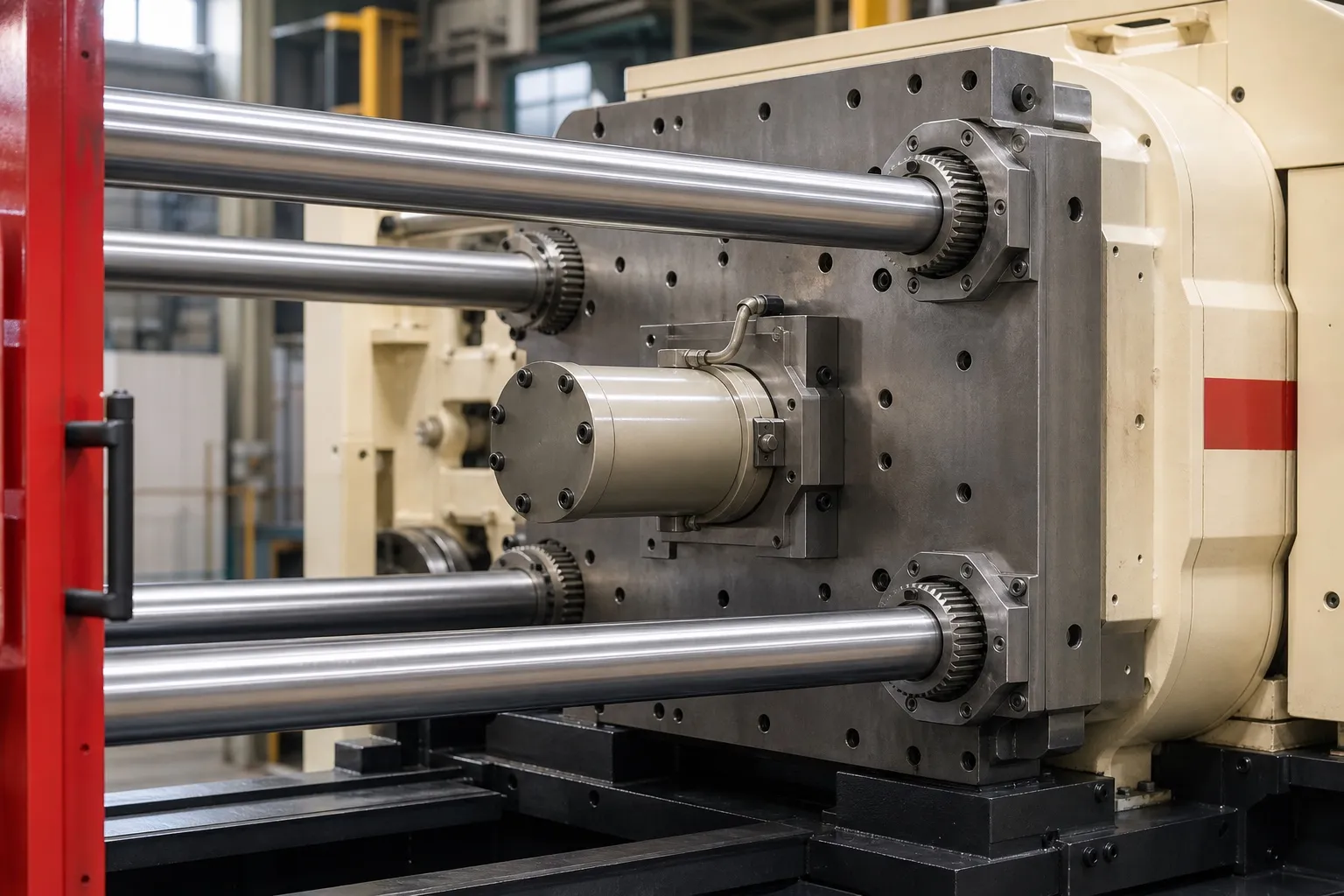
That is the point of this article: a pipe fitting making machine is judged by its screw, barrel, tip and heat control as much as by its clamp. A 165 ton machine can mould many PVC socket fittings, provided the injection unit is set up for rigid PVC and the shot sits in the right share of the barrel.
Key Takeaways
- Rigid PVC is heat and shear sensitive. GEON's guide asks for a streamlined melt path, a corrosion-resistant barrel, a low-compression screw near 2.2:1 and no ball check tip.
- PVC fittings typically need 2 to 2.5 US t/in² of clamp, so on fittings the shot and barrel, not the clamp, can set the limit for the job.
- Keep the shot at 50% to 80% of barrel capacity, and remember that PVC is denser than the PS used to rate barrels.
- In India, solvent-cement PVC socket fittings for water supply follow IS 7834, for use with pipes to IS 4985.
What Should a Pipe Fitting Making Machine Have for PVC?
It needs a melt path with no dead spots, a barrel and screw that resist hydrochloric acid, a screw of modest compression and a screw tip that lets melt flow freely. GEON's rigid PVC moulding guide adds accurate nozzle heat control, since PVC degrades when it stalls or overheats.
On metallurgy, the guide prefers a bimetallic barrel with a corrosion-resistant inner layer, ideally a nickel-based alloy high in chromium. A nitrided single-layer barrel is common and can work if well maintained. Barrel metals high in iron or cobalt are unacceptable, because they cause pinking or streaking in the part.
Screw and tip choices follow the same logic: keep the melt moving and avoid sharp restrictions. Stainless steel screws are highly recommended, and a tool-steel screw needs protection such as triple chrome plating. Ball check tips trap PVC that later shows up as black specks.
Injection unit set-up for rigid PVC fittings (GEON moulding guide)
| Item | Guide recommendation | Why it matters |
|---|---|---|
| Barrel | Bimetallic with a corrosion-resistant liner; nitrided single layer workable if maintained; no high-iron or cobalt alloys | Resists hydrochloric acid; avoids pink or streaky parts |
| Screw | Compression about 2.2:1 (2.0 to 3.0 used); 35% feed, 50% transition, 15% metering | Above 2.8:1 the window narrows; below 2.2:1 air stays in the melt |
| Screw tip | Free-flow sliding check ring; smear tip only for stiff fitting compounds; no ball check | Dead spots and restrictions cause burning and black specks |
| Nozzle | 2.5 to 15.2 cm long, own heater control and thermocouple | Long or restrictive nozzles cause shear burning |
| Barrel use | Shot at 50% to 80% of capacity | Small shots on long cycles degrade in the barrel |
How Much Clamp and Shot Do PVC Fittings Need?
GEON gives 2 to 2.5 US t/in² of projected area as typical clamp for rigid PVC, more for thin walls or long flows. That is low, so a 165 ton clamp covers sizeable fitting moulds. The shot can be tighter, because fittings are thick and heavy.
The clamp method itself, projected area times factor plus a reserve, is explained in the applications article in this series.
For the barrel, the guide recommends a shot of 50% to 80% of capacity for rigid PVC, and says 30% to 90% may be possible. A small shot on a long cycle leaves melt in the barrel for too long and invites degradation, which is why a fittings job should not run on an oversized injection unit.
Density changes the arithmetic. Barrels are rated in PS, with a specific gravity near 1.0, while rigid PVC typically sits at 1.3 to 1.4. GEON's example is a barrel rated at 80 ounces of PS holding about 105 ounces of PVC. Convert your shot to a PS-equivalent before you compare it with any rating.
How Do You Stop PVC Degrading in the Barrel?
Keep melt temperature in the compound supplier's window, keep the melt moving and purge before every stop. GEON's moulding grades run at about 199 to 207 °C. If a stop will last more than 15 minutes, pull the injection unit back and make occasional air shots, or purge fully.
Purge with natural general-purpose ABS, polystyrene or acrylic regrind, or a commercial purge. Do not purge PVC with PE or PP: they do not mix with PVC and cause delamination in the next parts. Never shut a machine down with PVC still in the barrel.
Acetal is the serious hazard. GEON warns that PVC's acidic vapours can make acetal depolymerise rapidly into formaldehyde, leading to a violent release of gas. DuPont's Delrin moulding tips say the same: never process acetal with PVC. Run them on separate machines, or purge and clean the screw and barrel mechanically between them.
Our opinion is plain: if PVC fittings are your main product, dedicate a machine to them. Changing back and forth between PVC and other resins costs purge material, risks contamination, and wears a barrel faster than steady running does.
Which Indian Standard Covers Injection Moulded PVC Fittings?
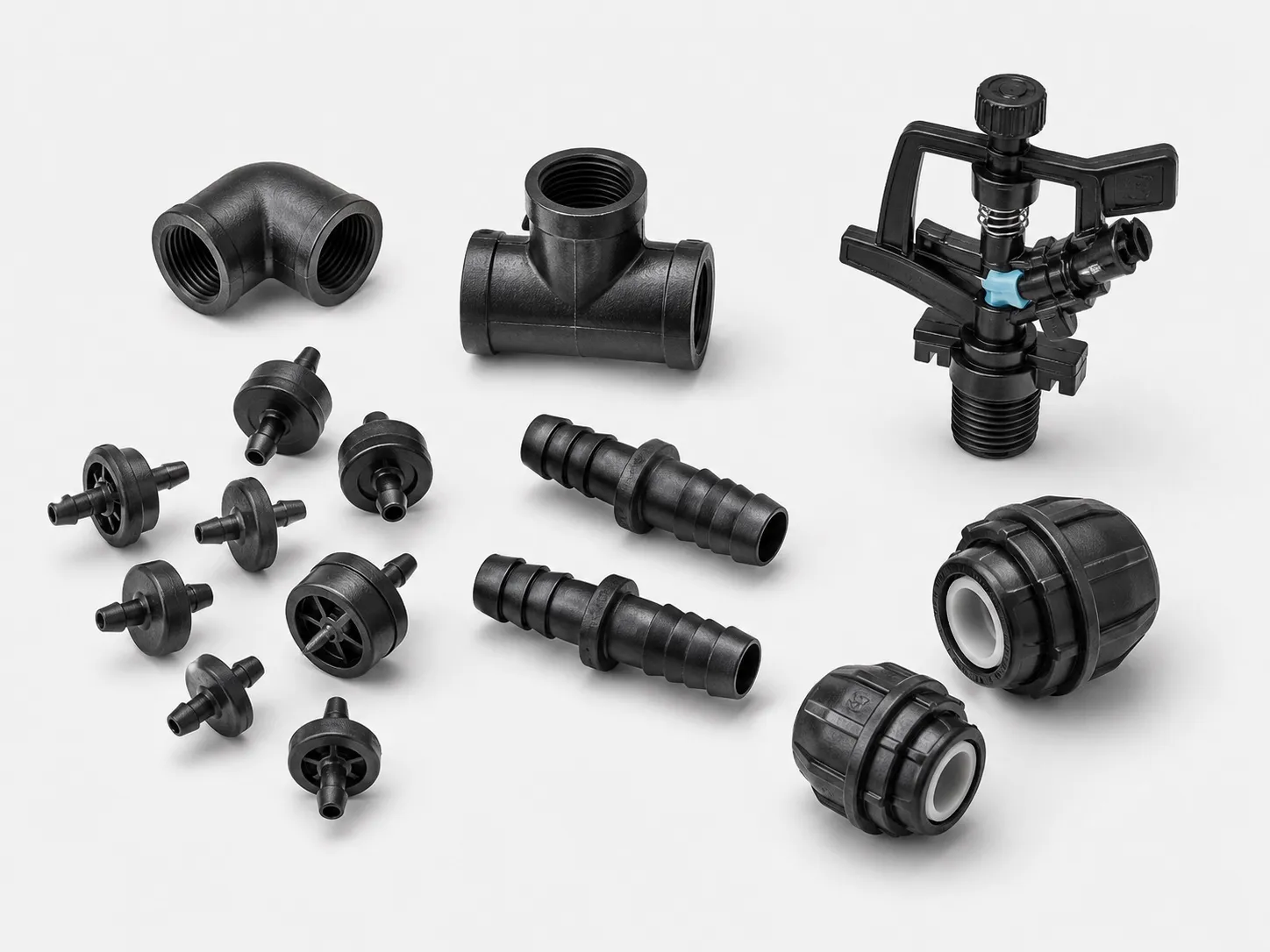
IS 7834 covers injection moulded PVC socket fittings with solvent cement joints for water supplies. Part 1 sets general requirements for materials, manufacture, test methods, inspection and marking, for fittings joined to unplasticized PVC pipes made to IS 4985. Further parts give each fitting type's own dimensions.
BIS lists separate parts for fittings such as 45° elbows, 45° tees and caps, each laying down manufacture, dimensions, tolerances and marking. For the moulder, that means the socket dimensions and markings are fixed by the standard before the mould is designed, not chosen at the trial.
Plumbing ranges can include other families, such as CPVC hot-water fittings, PPR fittings and soil and waste fittings. Each follows its own standard, with its own material and test rules, so confirm the right Indian Standard for every product line before you order a mould or plan a machine.
What Should You Send Before Moulding Fittings?
Send the fitting drawings or samples, the sizes and pressure classes, the PVC compound and its supplier, cavities per mould, the mould's outside size and shut height, and your monthly quantity per size. With those, clamp, shot share and screw choice can be checked together. See the 165 ton horizontal injection moulding machine page.
Frequently Asked Questions About Pipe Fitting Making Machines
Can the same machine run PVC fittings and PP fittings?
It can, with care. Purge PVC out with natural ABS, polystyrene or acrylic regrind before switching, because PP and PE do not mix with PVC and cause delamination. Frequent switching wastes purge and time, so a plant with steady PVC volume can keep one machine for PVC alone.
Why do PVC fittings turn yellow, pink or streaky?
Yellowing points to the melt is overheating or staying too long in the barrel, and degrading PVC also releases hydrogen chloride. GEON notes that barrel metals high in iron or cobalt cause pinking or streaking. Check heater zones, screw speed, residence time and barrel metallurgy, in that order.
Do PVC compounds need drying before moulding?
Usually not. GEON says rigid PVC rarely needs drying, but surface moisture can form on pellets in hot, humid months or tropical locations. Store the material covered in a cool, dry place. When drying is needed, the guide suggests about two hours at 49 to 66 °C.
How much regrind can go back into PVC fittings?
GEON recommends 10% to 25% regrind, with higher levels used in non-UL applications. Grind with sharp blades and cool the regrind below about 66 °C before storing, since warm regrind can degrade. For IS-marked fittings, also confirm any limits in the standard and with your compound supplier.
What should you do if power fails with PVC in the barrel?
GEON's procedure: switch off barrel and nozzle heaters and cool the barrel. After power returns, hold heaters at 121 °C for an hour, then raise them about 14 °C every 30 minutes to 177 °C. Jog the screw until it turns freely, then purge before restarting production.
Related Articles
- What Can You Make on a 165 Ton Injection Moulding Machine?
- Moulding Appliance Parts on a 165 Ton Machine
- 165 Ton vs 180 Ton: Tie-Bar Space and Platen Size Compared
Sources & References
- GEON Performance Solutions: Injection Molding Guide: GEON PVC Molding Formulations (PG0019BC, 2021)
- Bureau of Indian Standards: IS 7834 (Part 1): Injection moulded PVC socket fittings with solvent cement joints for water supplies, general requirements (preview)
- DuPont: Delrin Acetal Homopolymer Resin Molding Tips
Technical Disclaimer
Disclaimer: The information provided in this document is for general informational and educational purposes only. It is based on technical references and industry information available at the time of preparation and may be subject to change. It does not constitute engineering, technical, commercial or professional advice, nor does it constitute a quotation, specification, warranty or contractual commitment by Pratishna Engineers.
Actual injection moulding machine and process requirements vary according to the component design, material, mould, production volume, machine configuration and operating conditions. The information, examples, calculations and recommendations provided should be independently evaluated and verified for the specific application before making any equipment, process or production decision. Information obtained from third-party sources remains subject to the accuracy and limitations of those sources.
Limitation of Liability: Pratishna Engineers makes no representation or warranty, express or implied, regarding the completeness, accuracy or suitability of the information for any particular application. To the extent permitted by applicable law, Pratishna Engineers shall not be liable for any loss, damage, cost or consequence arising from reliance on or use of the information contained in this document. Final machine selection, configuration and application suitability should be confirmed with Pratishna Engineers based on complete and accurate project requirements.