
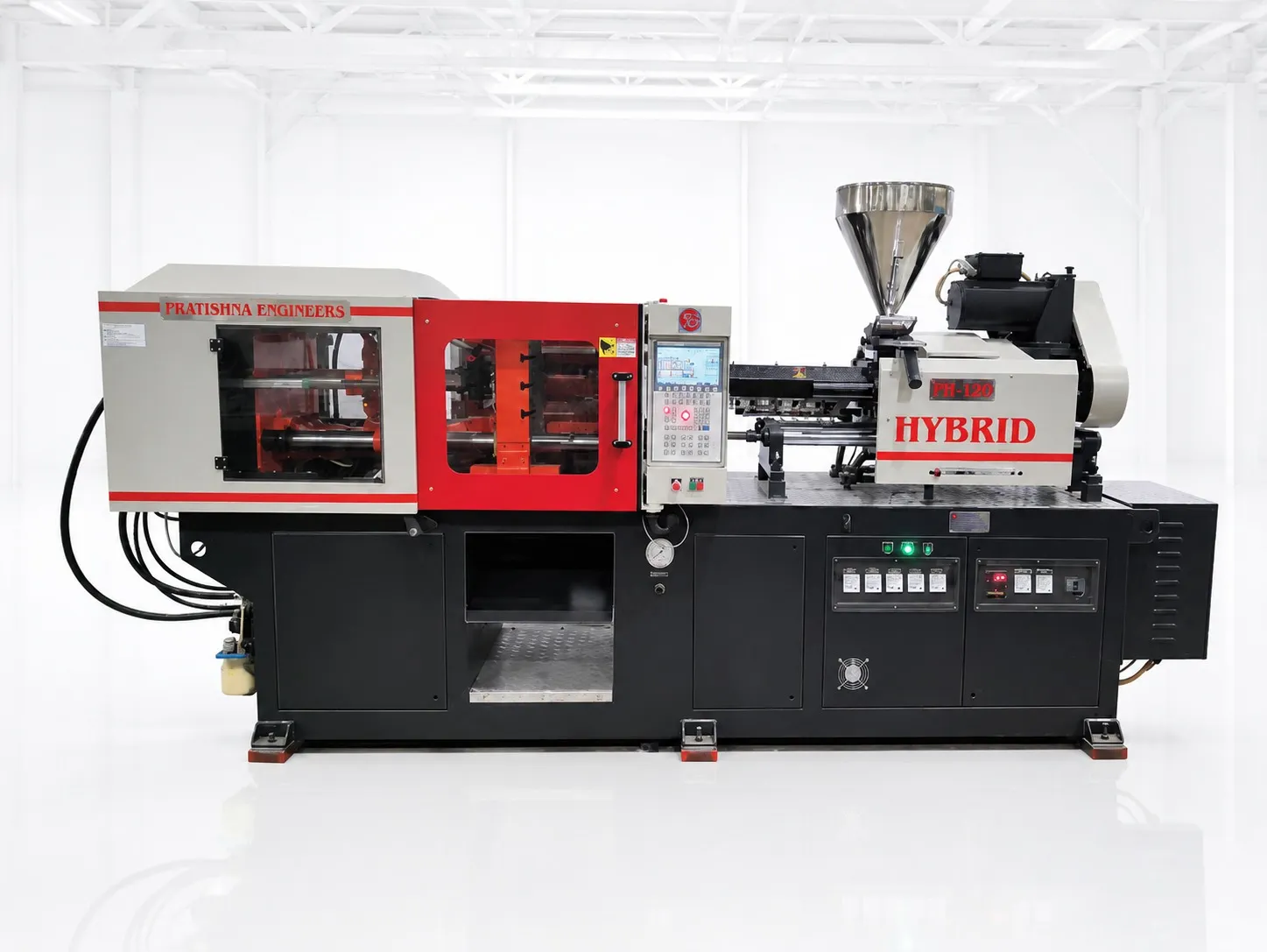
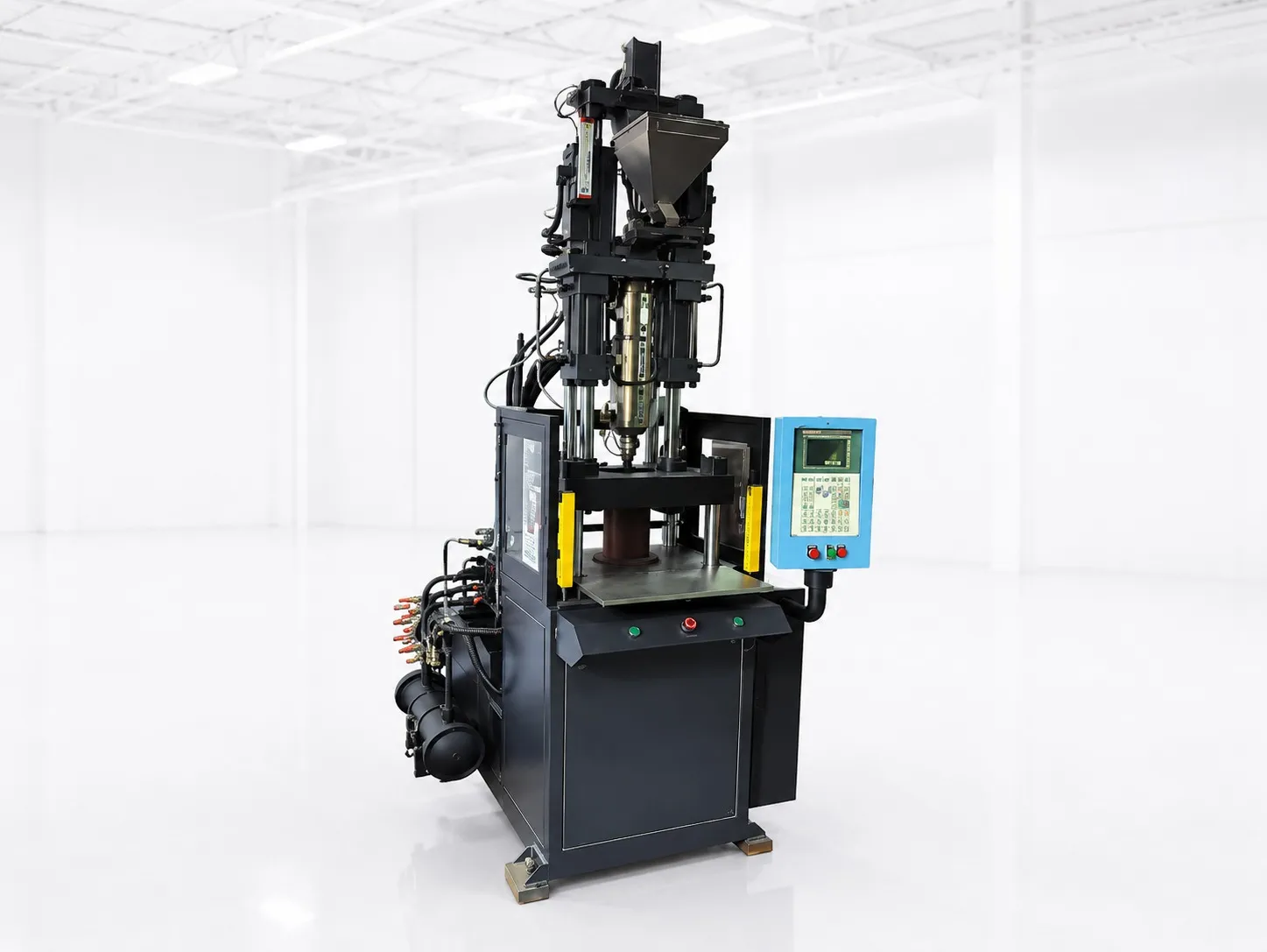
Injection Moulding Machine for Needle Hubs and Catheter Hubs
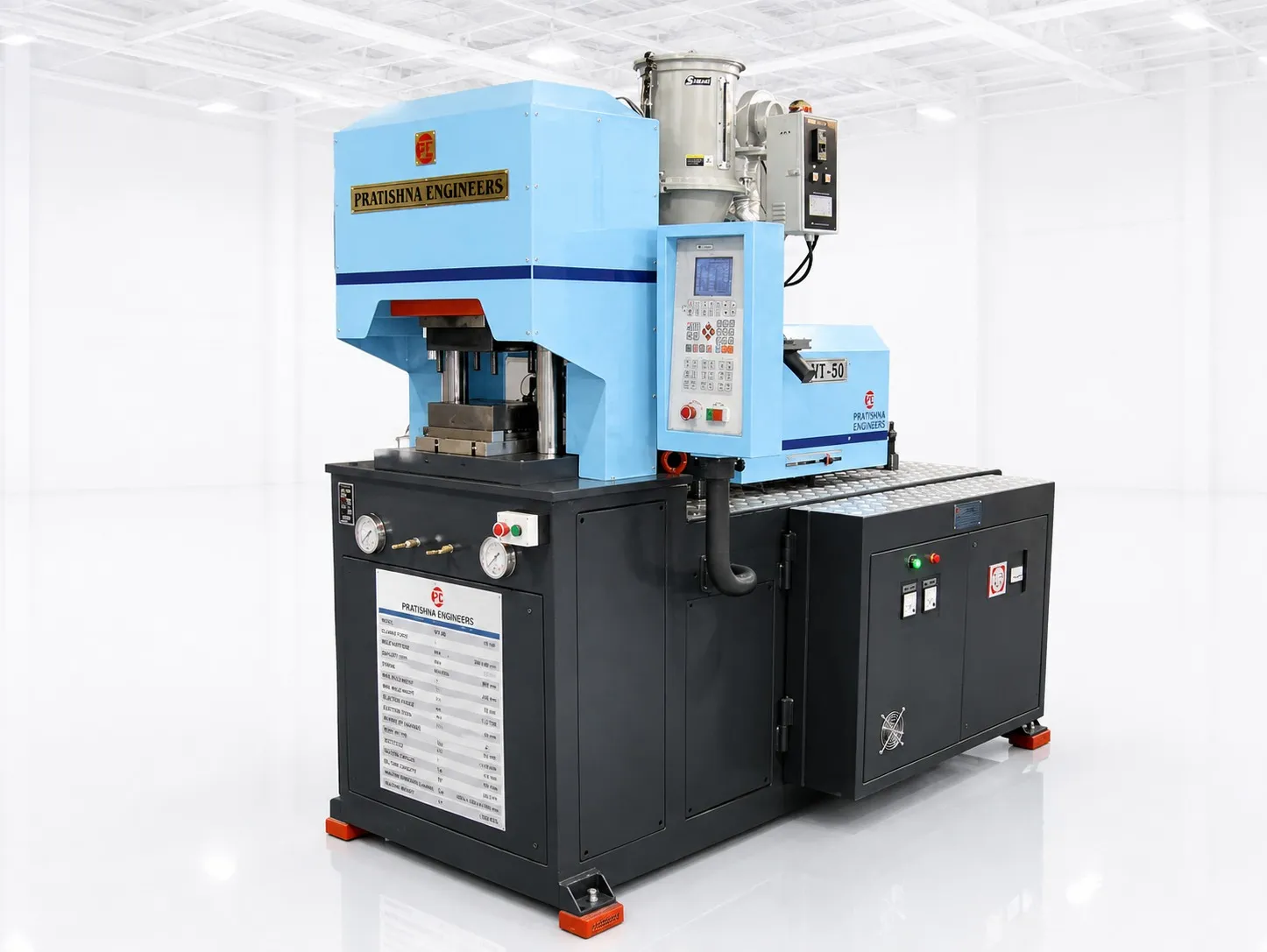
Needle hubs and catheter hubs moulded over a cannula are made on vertical injection moulding machines, with the cannula placed in the lower mould before each shot, from PP or PC. Insert count per shot and cavity layout set the machine size. Clean shut-off around the cannula matters most, since flash in the flow path fails the part.
Selection for hub moulding focuses on how the cannulas are loaded, by hand or by an automated needle feeder, and on repeatable clamping that does not bend the insert. Pratishna Engineers supplies vertical injection moulding machines for needle and catheter hubs and can recommend a configuration for your hub and loading plan.
Moulding Needle or Catheter Hubs?
Share the hub drawing, cannula details and loading method, and Pratishna Engineers will recommend a machine.
Machine Requirements for Needle and Catheter Hub Moulding
The hub is moulded around a fine steel tube, so the machine and mould are planned around insert handling:
- Vertical clamp so cannulas stay located by gravity
- Mould shut-off that keeps melt out of the cannula bore
- Holding pressure set for hub-to-cannula pull-out strength
- Space and interface for automated needle loading
- Accurate masterbatch dosing for gauge colour coding
- Drying for PC hubs before moulding
Recommended Machine for Needle and Catheter Hubs
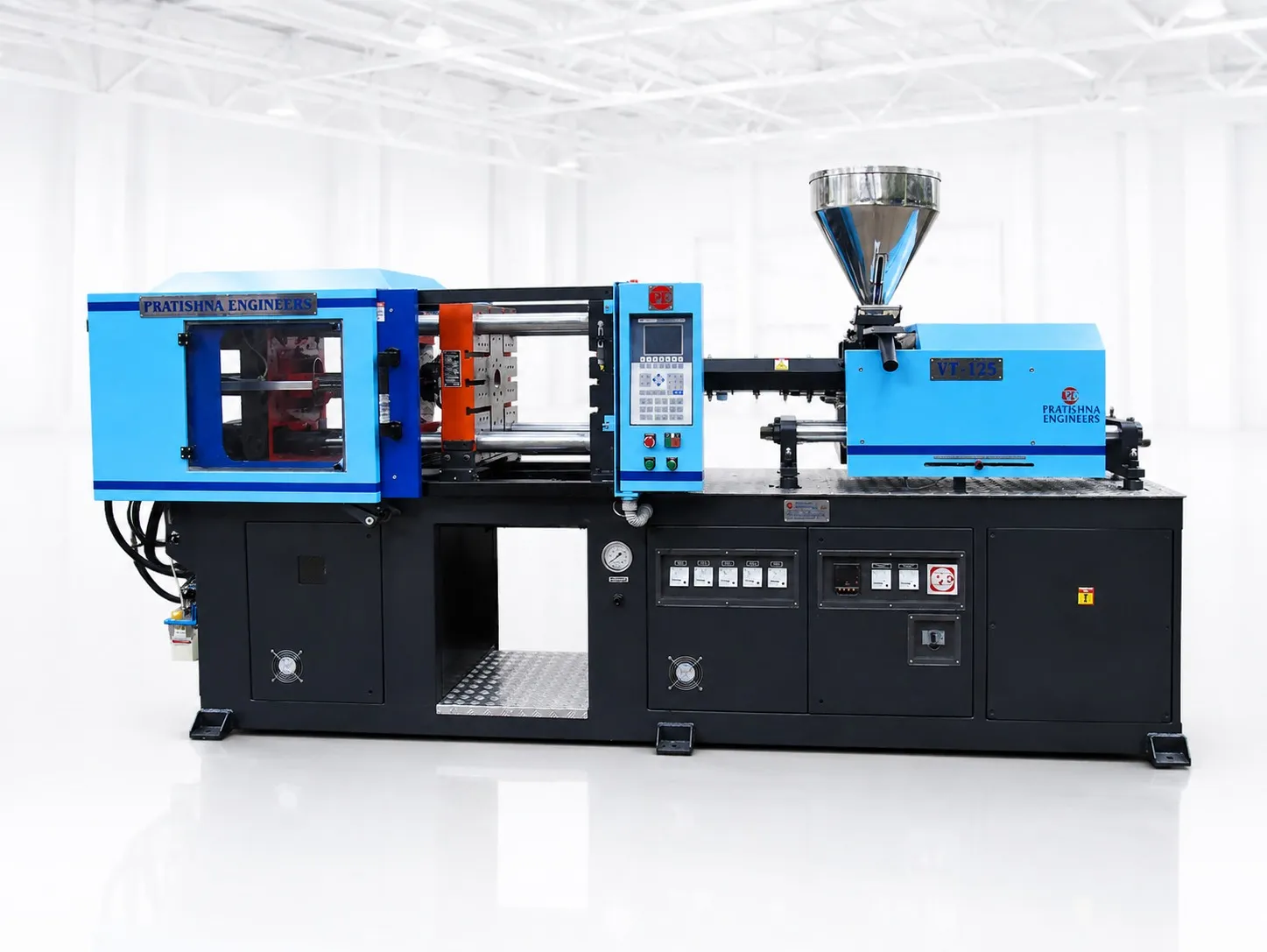
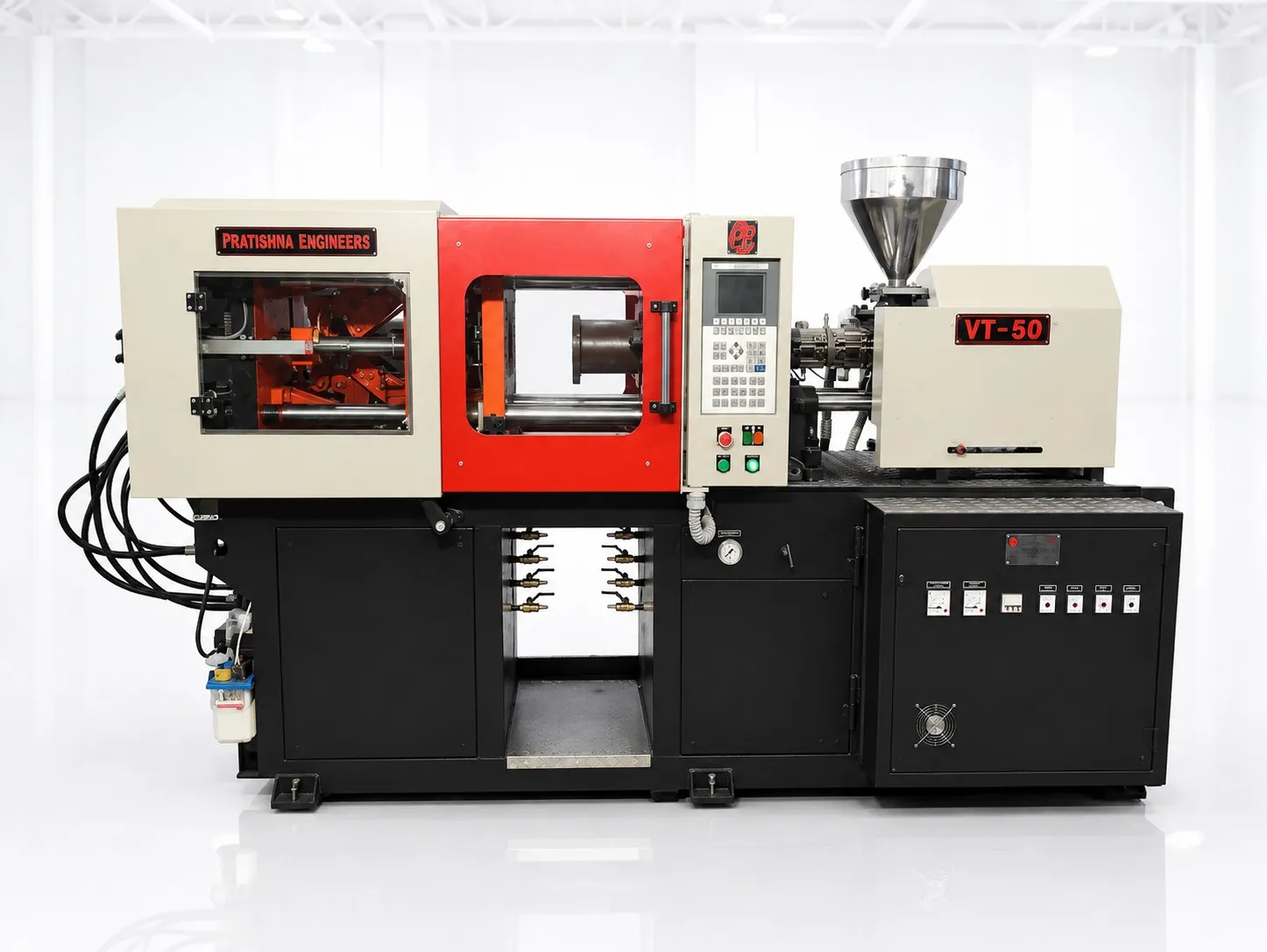
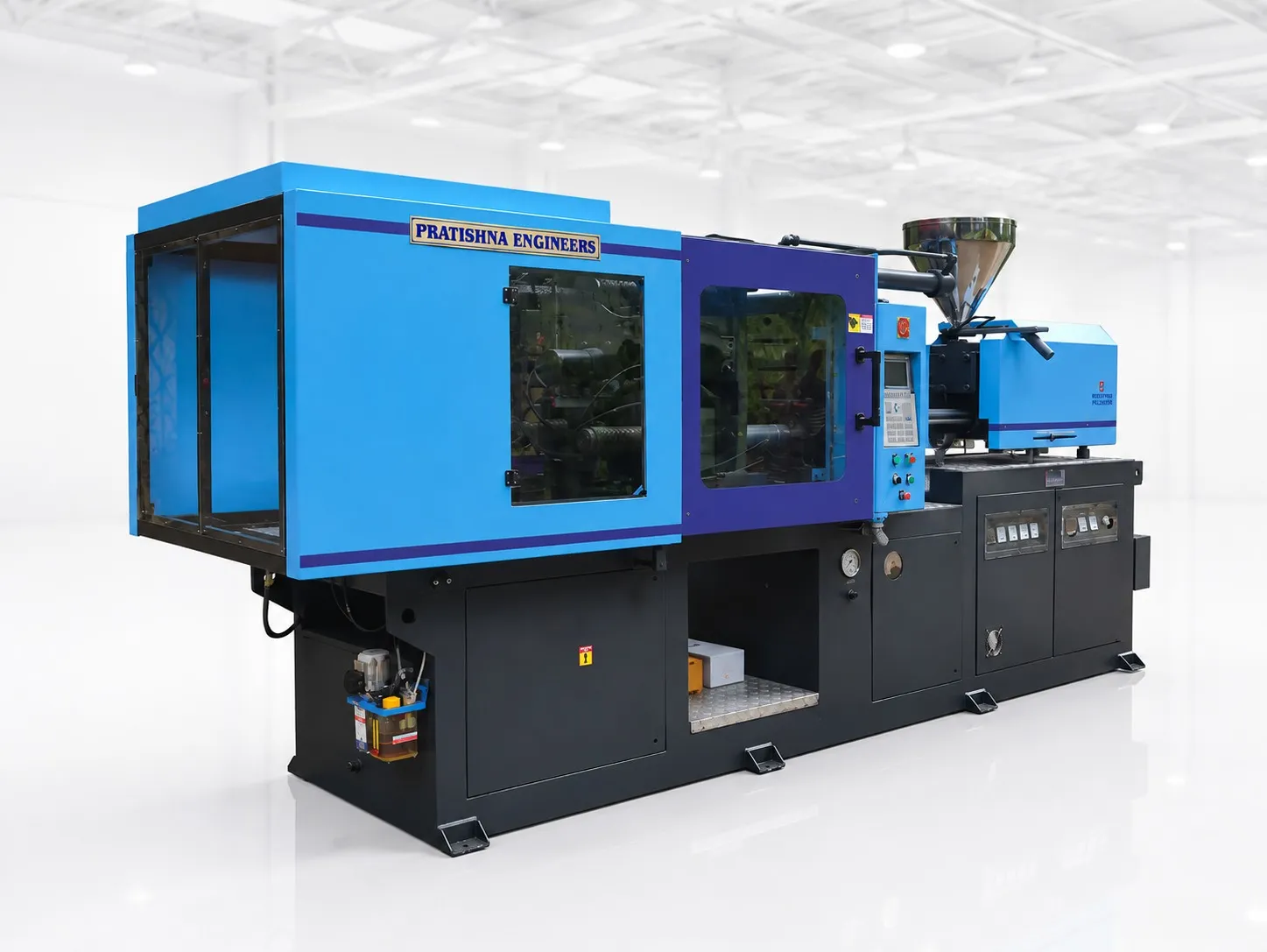
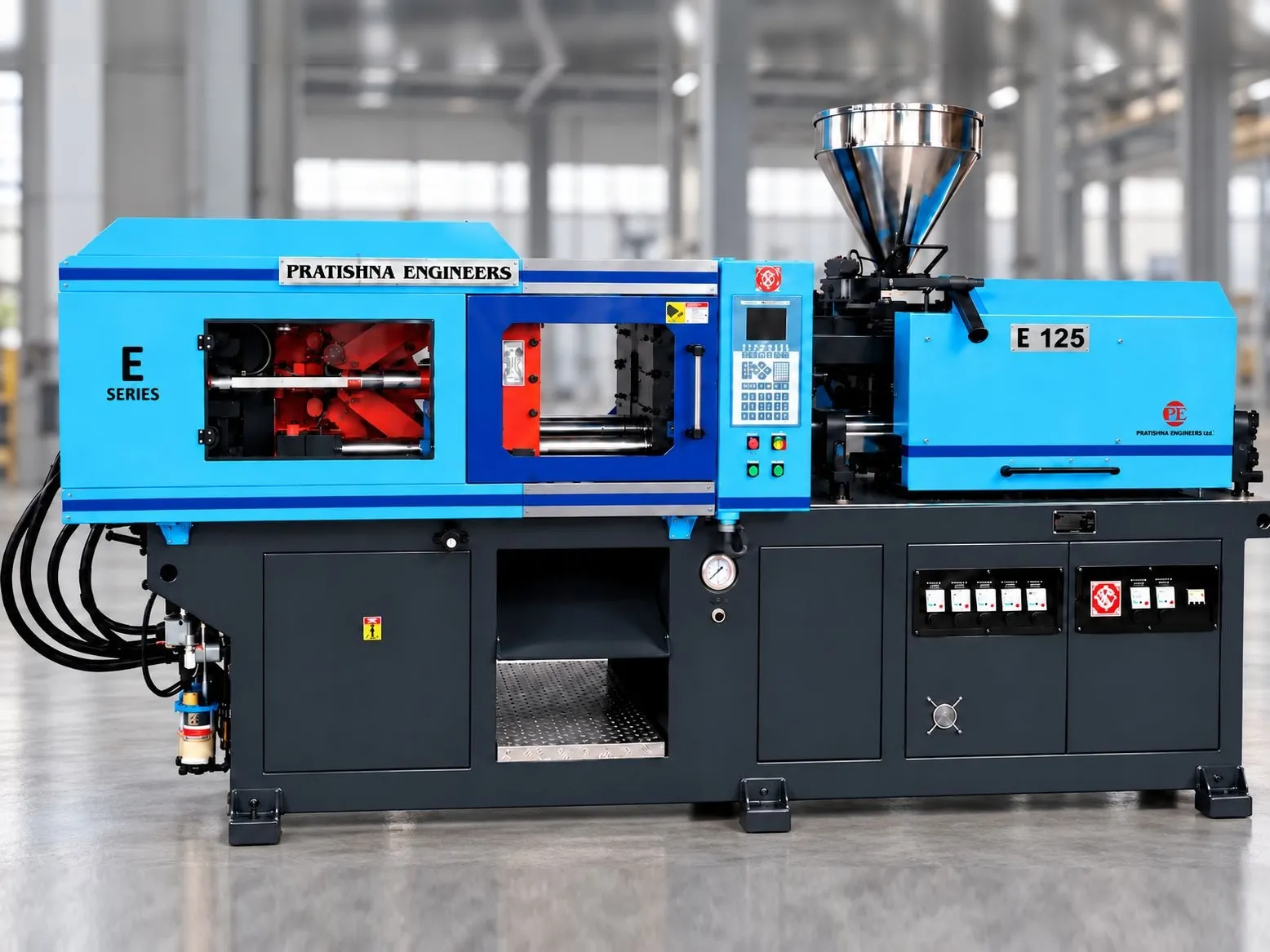
Insert-moulded hubs are small, so loading time and cavity count drive the choice more than clamping force. A Vertical PVDL Series (40-80 T) machine holds cannulas in an upward-facing lower mould. For long inserts passing through the parting line, a Vertical PV Series (40-55 T) machine fits. Hubs and caps moulded without a cannula run on the E Series (75-180 T).
Not Sure Which Machine You Need?
Share your hub drawing and cannula loading method for a machine recommendation.
Why Choose Pratishna Engineers?
- Application-Based Machine Selection
- In-House Engineering & Manufacturing
- Multiple Machine Series
- Production-Focused Solutions
- End-to-End Technical Support
- Industry-Specific Solutions
- Machine Lifecycle Support
Injection Moulding Machine Buyer Resources
Download practical resources to help you select, size and specify the right machine.
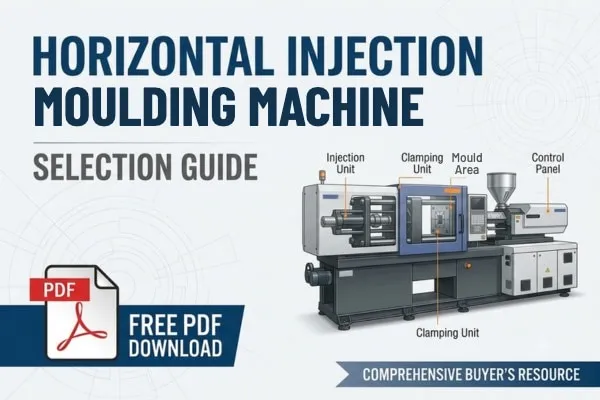
Vertical Injection Moulding Machine Selection Guide
A step-by-step guide covering the key inputs needed to select the right machine: product weight, insert type and loading method, projected area, number of cavities, plastic material, required clamping force, shot / injection capacity, mould dimensions, production quantity, cycle time and automation requirement.
Download PDFPDF · 265 KB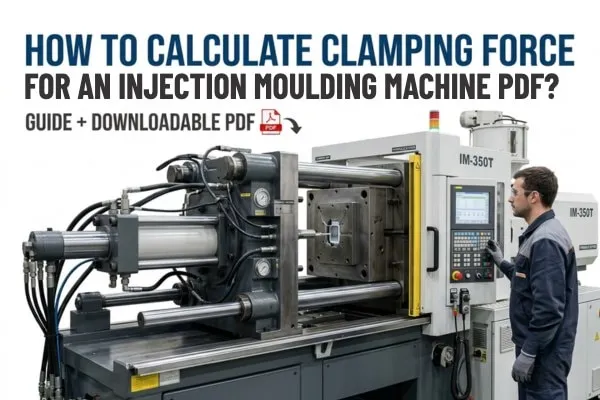
How to Calculate Clamping Force for an Injection Moulding Machine
A clear methodology that explains how clamping force is calculated, covering projected area, injection pressure, safety factor, number of cavities and material considerations.
Download PDFPDF · 363 KBMedical Sector Components & Machine Guide
A guide to Medical Sector components, covering syringes, IV set parts, luer fittings, connectors, pipette tips, petri dishes, test cassettes and device housings. It explains medical-grade materials, clean moulding area needs, dimensional control, and how to match each part to a suitable machine.
Download PDFPDF · 206 KB
FAQs / Buyer Questions
Points needle and cannula makers check before choosing a press.
Which Injection Moulding Machine Is Used to Make Needle and Catheter Hubs?
For hubs moulded onto the cannula, a small vertical machine. PVDL Series machines suit most needle loading layouts, PV Series machines suit inserts that pass through the parting line, and E Series machines run hubs and caps without an insert.Why Are Needle Hubs Moulded on Vertical Machines?
The lower mould faces upward, so a loaded cannula stays in position by gravity while the mould closes. That makes manual or robotic needle loading simpler and lowers the risk of a displaced or bent insert.How Is Hub Bond and Pull-Out Strength Controlled?
Bond strength depends on the resin grade, melt and mould temperature, and holding pressure around the cannula. Pull-out tests on sampled hubs from each cavity confirm the setting, and a change of resin lot or process is retested.
Can Hubs Be Moulded First and the Cannula Glued in Later?
Yes. Some needle lines mould an empty hub on a horizontal machine and bond the cannula afterwards. That moves the bond check to the assembly line, so the route is decided before tooling.Can Pratishna Recommend a Machine for My Needle or Catheter Hub?
Yes. Share the hub drawing, cannula size and length, resin, cavities, loading method and target output, and Pratishna Engineers will recommend a suitable machine.Does the Machine Suit Other Syringe and Infusion Parts Too?
Yes, subject to the mould. Hubs and caps without inserts share a horizontal machine class with luer lock fittings, syringe plungers and IV set components, while the vertical machines run other insert-moulded parts.
Technical Disclaimer
Disclaimer: The information provided in this webpage is for general informational and educational purposes only. It is based on technical references and industry information available at the time of preparation and may be subject to change. It does not constitute engineering, technical, commercial or professional advice, nor does it constitute a quotation, specification, warranty or contractual commitment by Pratishna Engineers.
Actual injection moulding machine and process requirements vary according to the component design, material, mould, production volume, machine configuration and operating conditions. The information, examples, calculations and recommendations provided should be independently evaluated and verified for the specific application before making any equipment, process or production decision. Information obtained from third-party sources remains subject to the accuracy and limitations of those sources.
Limitation of Liability: Pratishna Engineers makes no representation or warranty, express or implied, regarding the completeness, accuracy or suitability of the information for any particular application. To the extent permitted by applicable law, Pratishna Engineers shall not be liable for any loss, damage, cost or consequence arising from reliance on or use of the information contained in this webpage. Final machine selection, configuration and application suitability should be confirmed with Pratishna Engineers based on complete and accurate project requirements.
Talk to Our Engineers
Planning a New Injection Moulding Project?
Share your component, material, mould and production target. Our engineering team will help you identify the right machine configuration.
- Machine Sales
- +91 99690 38542
- Service Support
- +91 97689 28259
- Sales Email
- [email protected]