A PET preform neck finish fixes the closure, the capper and part of the preform weight. Here is how the main families compare at a glance.
Common PET preform neck finishes compared
| Neck finish | Typical use | What to know at the machine |
|---|---|---|
| PCO 1810 | Older 28 mm neck for carbonated soft drinks, 250 ml to 2 L | Neck about 5.1 g and 21 mm tall; three thread starts |
| PCO 1881 | Shorter replacement for PCO 1810 on carbonated soft drinks | Neck about 3.8 g and 17 mm tall; two thread starts; saves about 1.3 g of PET per preform and about 0.5 g per closure |
| 26/22 | Short, light neck sold for water and soda bottles | Preforms offered for 500 ml from about 19 g; take thread, bore and ledge sizes from the neck drawing |
| Wide mouth | Jars and containers with large openings | Wide support ledge raises clamp per cavity; a 63 mm ledge projects about 3.6 times the area of a 33 mm ledge |
Each family asks something different of the mould and the press, from neck insert cooling to clamp per cavity. The sections below explain what each neck means for preform weight, tooling and machine sizing, and which neck faults start at the moulding machine.
Key Takeaways
- The neck is moulded to its final size and is not stretched in the blow moulder, so any neck error goes straight to the capper.
- PCO 1881 saves about 1.3 g of PET per preform against PCO 1810, but converting needs new preform and closure tooling.
- Wide-mouth necks raise clamp per cavity, because projected area grows with the square of the ledge diameter.
- Neck roundness depends on neck insert cooling, hold pressure, hold time and handling, not only on the mould steel.
What does a PET preform neck finish define?
It defines the thread, the sealing surface, the support ledge used for handling and the tamper band bead. The neck is moulded to its final size in the injection mould and stays amorphous, because the blow moulder stretches only the body. Any neck error therefore reaches the capper unchanged.
In the mould, split neck inserts form the thread. They sit on slides and open during ejection to release the thread undercuts. Cores and cavities are always water-cooled, but neck inserts may or may not be, and that choice affects how fast the neck sets and how round it stays.
The neck also decides the closure. In India, still-beverage closures can be moulded from bimodal HDPE grades such as Relene 54GC016, and a sister grade with slip additive is listed for carbonated drink closures. A neck change is therefore also a closure change, and both suppliers have to work from the same drawing.
How do PCO 1881 and 26/22 differ from older necks?
Both are shorter and lighter. PCO 1881 replaced PCO 1810 on 250 ml to 2 L soft drink bottles, cutting neck height from 21 to 17 mm and neck weight from 5.1 to 3.8 g. 26/22 is a short neck sold for water and soda bottles, with lighter closures.
PCO 1881 saves about 1.3 g of PET per preform and about 0.5 g per 28 mm polyolefin closure, and it uses two thread starts instead of three. Adoption is voluntary, and the cost lands on both sides of the bottle: preform and closure moulds must be retooled, and bottling plants can face conversion costs of up to €250,000.
For 26/22, read the two numbers as nominal neck dimensions and take the exact thread, bore and support ledge values from the drawing, not from the name. Preforms on this neck have been offered for 500 ml bottles at about 19 g and 24 g, and for 2 L bottles at about 43 g, which shows how much of the weight still sits in the body.
Our view: choose a neck with the closure supplier and the bottler at the same table, not at the mould maker's desk. A neck the capper cannot run is scrap, however light it is.
What changes with wide-mouth preform necks?
Wide-mouth necks serve jars and containers with large openings. The support ledge is far wider than on a bottle neck, so projected area and clamp per cavity rise steeply, and the wall around the neck can be thicker. Expect fewer cavities per mould and, where the wall grows, longer cooling.
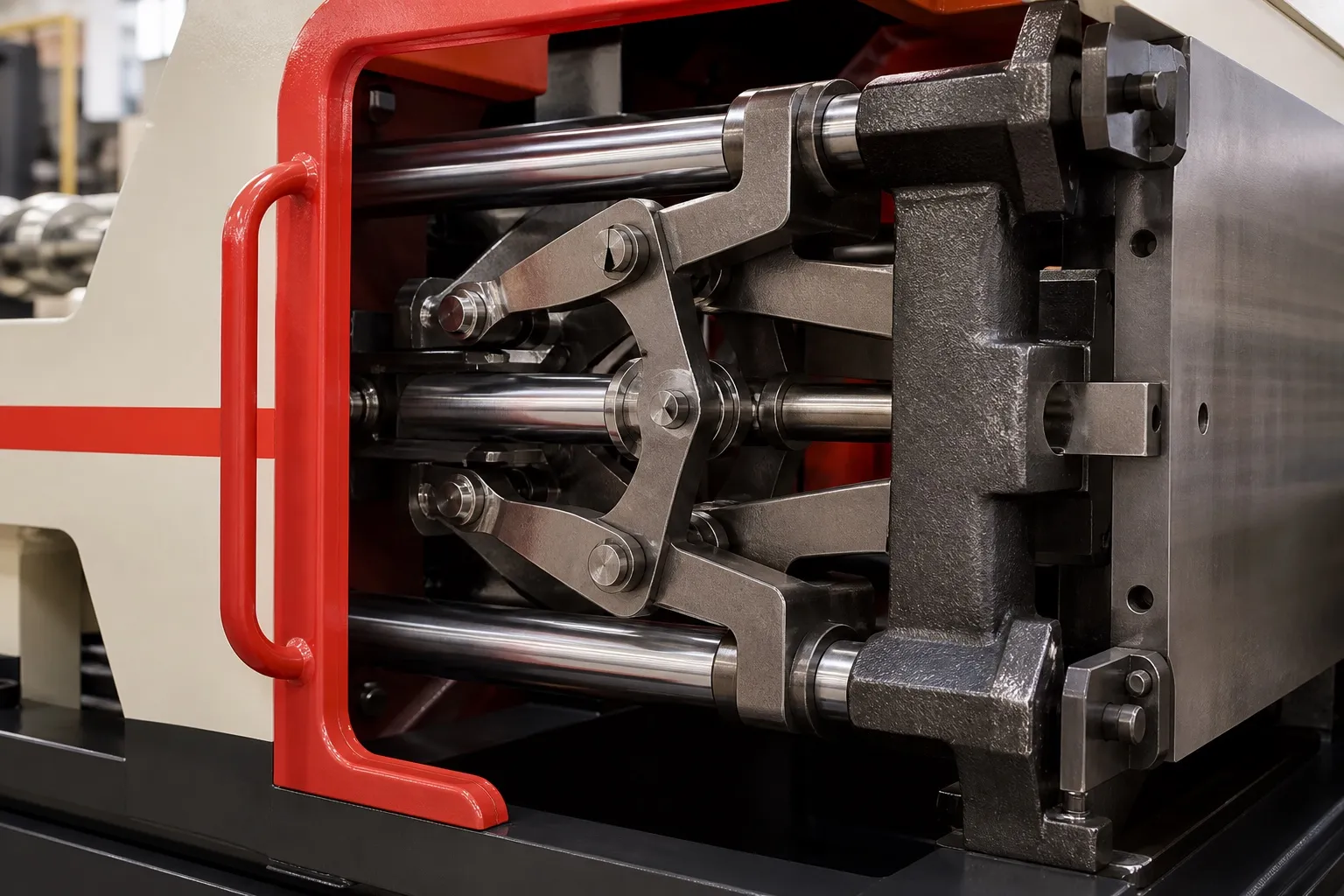
Projected area follows the square of the ledge diameter. A 63 mm ledge projects about 31.2 cm², which is 3.6 times a 33 mm ledge. Eight cavities with 63 mm ledges need about 112 t at the 400 bar guide value with a 10% reserve (a starting margin, not a rule), or about 193 t at a cautious 5 US t/in². The tonnage article in this series sets out the method.
Shot weight per cavity is also higher for jar preforms, so barrel size and injection rate come into play sooner than on bottle work. Short, wide preforms also change how the take-out tubes hold and cool them.
Clamp for eight cavities by support ledge diameter, with a 10% reserve (ledge sizes assumed for illustration)
| Ledge (mm) | Area per cavity (cm²) | At 400 bar guide (t) | At 5 US t/in² (t) |
|---|---|---|---|
| 33 | 8.55 | 30.7 | 52.9 |
| 38 | 11.34 | 40.7 | 70.2 |
| 48 | 18.10 | 65.0 | 111.9 |
| 63 | 31.17 | 111.9 | 192.8 |
Which neck faults start at the moulding machine?
Three to watch are out-of-round necks, flash at the neck split line and incomplete threads. A neck counts as out of round when its internal diameter varies by more than about 0.25 mm around the circumference. Neck cooling, hold pressure and handling are the first things to check.
For an out-of-round neck, confirm water flow to the neck inserts and cores at the mould maker's rating, with water at 7 to 10 °C. Hold pressure should not be too low, especially early in hold, and hold time must be long enough. Keep melt at about 280 °C, give or take 10 °C, and give the robot as much cooling time as the cycle allows.
Flash at the neck split line comes from melt seeping between mould parts, through low melt viscosity or too little clamp. Worn neck insert faces do the same, so inspect them when flash returns after a fix. Incomplete threads point the other way: check fill, venting and transfer before raising temperatures.
What should you settle before ordering a preform mould?
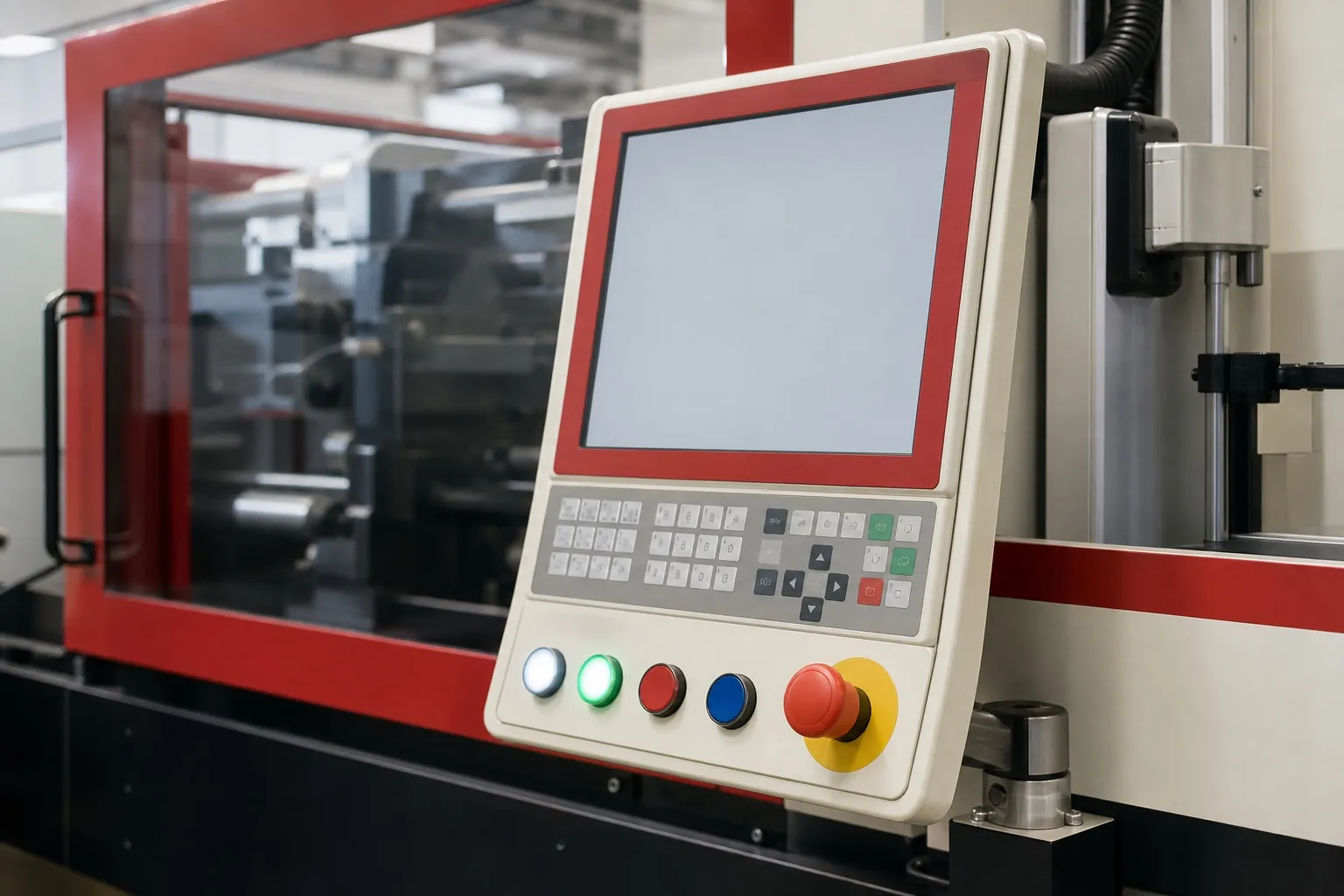
Fix the neck drawing first, with the closure supplier and the bottler. Then confirm preform weight, cavity count and ledge diameter, so clamp and shot can be checked against the machine. On an existing line, ask whether neck inserts and take-out tubes can be swapped or must be replaced. See the PET injection moulding machine range.
Frequently Asked Questions About PET Preform Necks
Can I change the neck finish on an existing preform mould?
Sometimes. If the body and support ledge stay the same, a new set of neck inserts may be enough, but threads, ledge height and take-out tubes all have to match. If the ledge diameter changes, cores, cavities and robot tubes may change too. Ask the mould maker for a conversion quote before you commit.
Does a lighter neck change the closure material?
Not necessarily, but it changes the closure design. A shorter neck needs a shorter closure with matching threads and tamper band. Closures for still and carbonated drinks can use different HDPE grades, the latter with slip additive, so tell the closure moulder which drink the bottle will carry before tooling starts.
Who decides which neck finish a bottle uses?
Normally the brand owner and bottler, because the neck must match their closures, cappers and conveyors. The preform moulder and mould maker then work to that drawing. If you supply several bottlers, keep a list of which neck each one runs, since one neck change touches closure, capper and handling parts together.
Are neck inserts in preform moulds water-cooled?
Cores and cavities in preform moulds are always water-cooled; neck inserts may or may not be, depending on mould design. Neck cooling affects how quickly the neck sets and how round it stays, so ask the mould maker how the inserts are cooled before you set cycle time targets for a new mould.
Can wide-mouth jar preforms run on a bottle preform machine?
Yes, if clamp, shot, mould height and opening stroke all fit. Wide ledges raise clamp per cavity, jar preforms need larger shots per cavity, and short, wide preforms change how the take-out robot holds them. Check each item against the jar mould rather than assuming the bottle mould figures carry over.
Related Articles
- PET Preform Making Machine: How to Choose Tonnage, Cavities and Output
- Moulding With rPET: Meeting India's Recycled Content Rules for PET Bottles
- Lightweighting PET Preforms: Wall Thickness, Cycle Time and Machine Settings
Sources & References
- Packaging Digest, A. Steeman: Short, Shorter, the Shortest (Jan 2014)
- Petainer: Bottle Preform 26/22 GME 30.40, product specifications
- Reliance Industries: Relene 54GC016 Technical Data Sheet (Feb 2026)
- PETplanet Insider, R. Unterlander and O. Brandau: The Rapid Guide to Perfect Preforms, part 20: Neck Finish out of Round (May 2011)
Technical Disclaimer
Disclaimer: The information provided in this document is for general informational and educational purposes only. It is based on technical references and industry information available at the time of preparation and may be subject to change. It does not constitute engineering, technical, commercial or professional advice, nor does it constitute a quotation, specification, warranty or contractual commitment by Pratishna Engineers.
Actual injection moulding machine and process requirements vary according to the component design, material, mould, production volume, machine configuration and operating conditions. The information, examples, calculations and recommendations provided should be independently evaluated and verified for the specific application before making any equipment, process or production decision. Information obtained from third-party sources remains subject to the accuracy and limitations of those sources.
Limitation of Liability: Pratishna Engineers makes no representation or warranty, express or implied, regarding the completeness, accuracy or suitability of the information for any particular application. To the extent permitted by applicable law, Pratishna Engineers shall not be liable for any loss, damage, cost or consequence arising from reliance on or use of the information contained in this document. Final machine selection, configuration and application suitability should be confirmed with Pratishna Engineers based on complete and accurate project requirements.